Cellular Noise Wrap
Create and animate a seamless, wrapping 2D cellular noise texture. This example demonstrates configuring noise cells and wrapping parameters, rendering the output to a texture, and updating noise offsets over time.
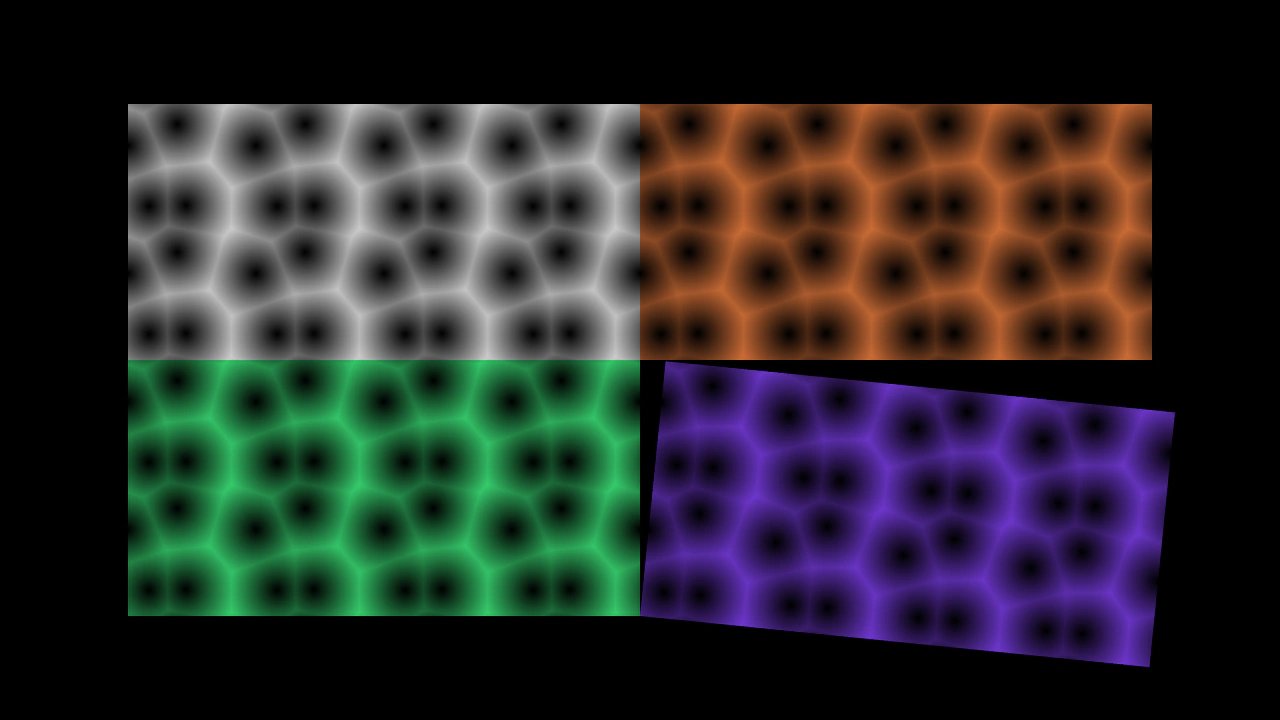
1280 × 720
class Example extends Phaser.Scene
{
    noise;

    create()
    {
        const { width, height } = this.scale;

        // Render a noise texture with internal repetition.
        this.noise = this.add.noisecell2d({
            noiseCells: [ 8, 4 ],
            noiseWrap: [ 2, 2 ] // Wrap every 2 cells in X and Y, relative to noiseCells.
        }, 0, 0, 512, 256).setRenderToTexture('noise');

        // Render several images to show the texture tiles.
        // This happens with any integer cells:wrap ratio.
        this.add.image(width / 2 - 256, height / 2 - 128, 'noise');
        this.add.image(width / 2 + 256, height / 2 - 128, 'noise').setTint(0xff8844);
        this.add.image(width / 2 - 256, height / 2 + 128, 'noise').setTint(0x44ff88);
        this.add.image(width / 2, height / 2 + 256, 'noise').setTint(0x8844ff).setOrigin(0,1).setRotation(0.1);
    }

    update (time)
    {
        const t = time / 5000;
        this.noise.noiseOffset[0] = Math.cos(t);
        this.noise.noiseOffset[1] = Math.sin(t);
    }
}

const config = {
    scale: { mode: Phaser.Scale.FIT },
    type: Phaser.WEBGL,
    parent: 'game-container',
    width: 1280,
    height: 720,
    scene: Example
};

const game = new Phaser.Game(config);
More in Noise33 examples
 Clouds With Simplex NoiseGenerate an atmospheric cloud scene using multiple layers of 3D Simplex noise with parallax scaling, color tinting, and animated noise flow.
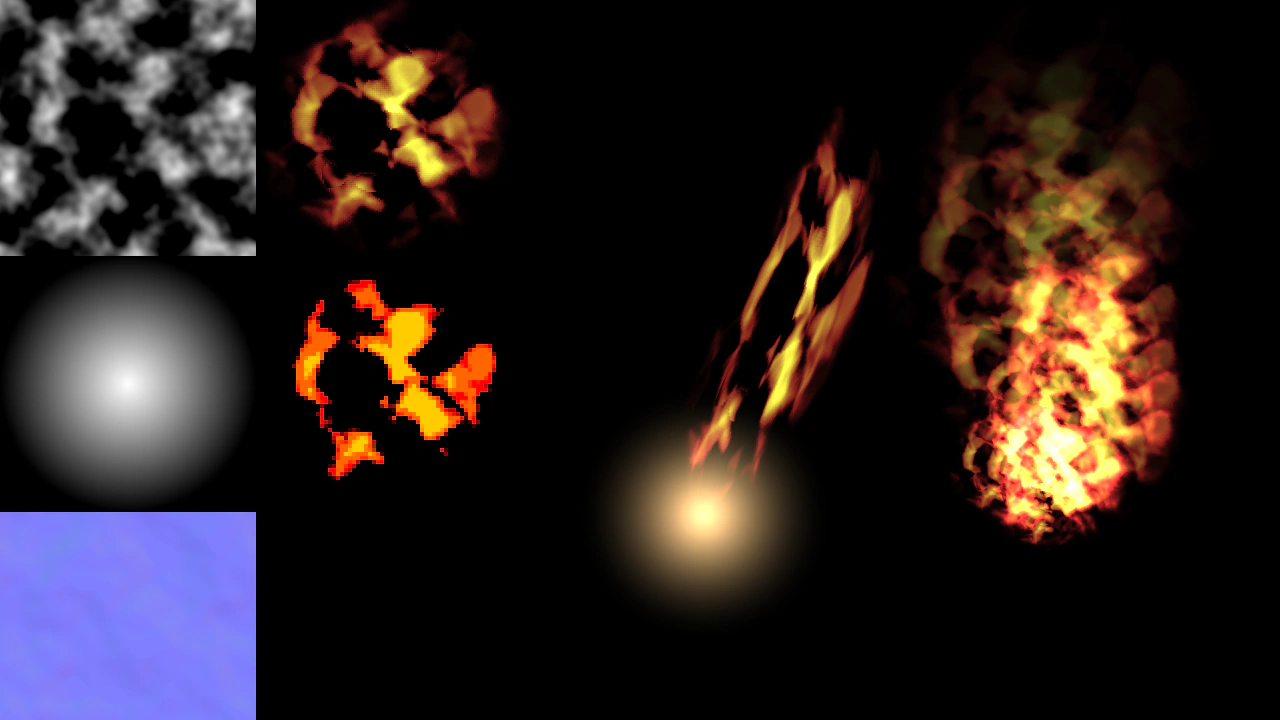 Fire with Simplex NoiseCreate procedural fire effects using Simplex Noise textures, displacement filters, and gradient mapping. This example shows how to generate dynamic textures, apply stylized filters, and animate fire using Rope game objects.
 Heat Haze with Simplex NoiseApply a displacement filter to an image using a procedural Simplex Noise texture to create an animated heat haze or liquid distortion effect.
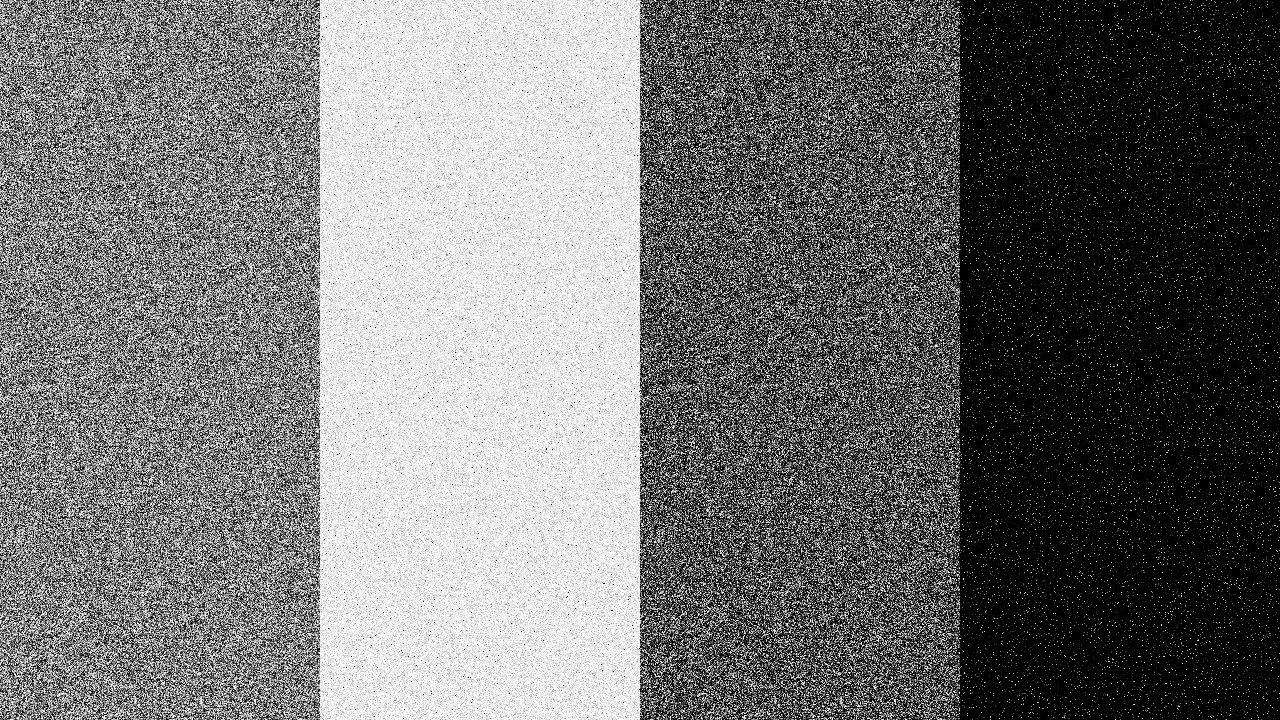 Noise PowerDemonstrates how the noisePower property affects the visual intensity and contrast of Noise Game Objects.