Basic Normal Noise Displacement
Demonstrates how to generate a normal-distributed noise texture and use it as a displacement map to distort an image.
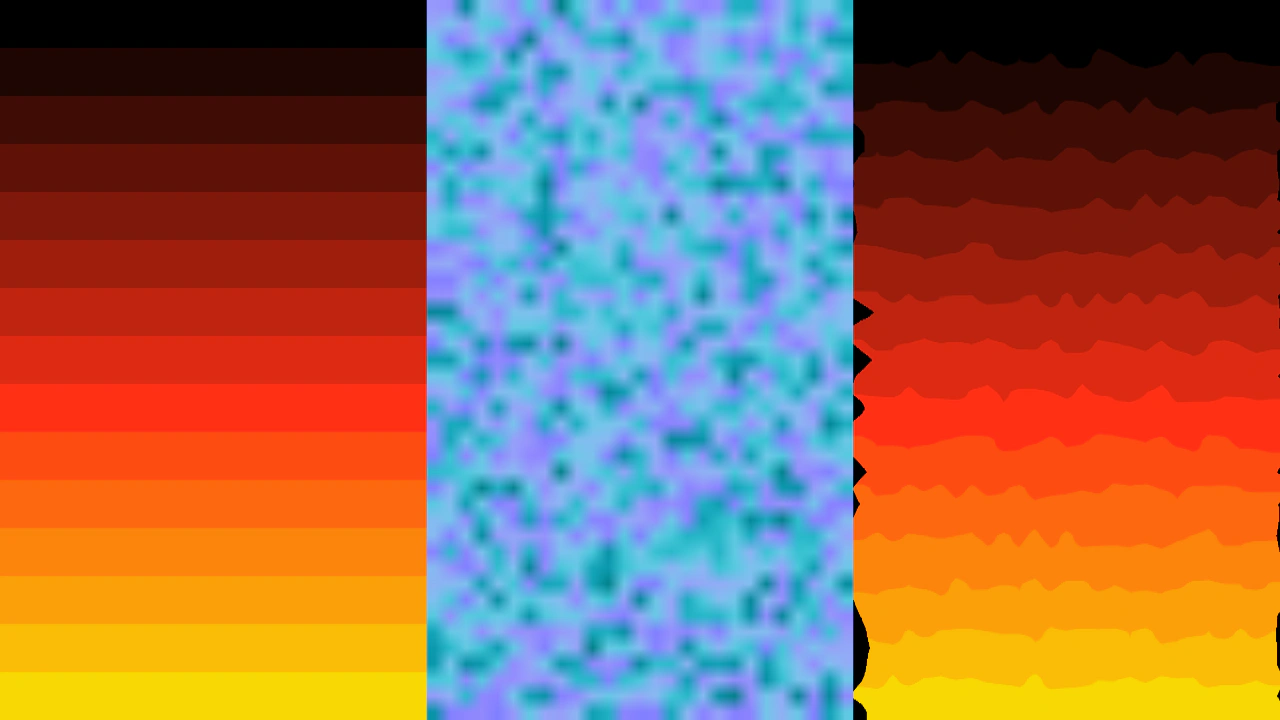
1280 × 720
class Example extends Phaser.Scene
{
    preload ()
    {
        this.load.setBaseURL('https://cdn.phaserfiles.com/v410');
        this.load.image('grad', 'assets/skies/fire.png');
    }

    create()
    {
        const { width, height } = this.scale;

        this.add.noise({
            noiseRandomNormal: true
        }, 0, 0, width / 16 / 3, height / 16)
        .setRenderToTexture('noise');

        // The texture we'll distort.
        const base = this.add.image(width  * 1 / 6, height / 2, 'grad');
        Phaser.Actions.FitToRegion(base, 0, { x: 0, y: 0, width: width / 3, height: height });

        // Visualize the normal noise.
        // Rendering to texture turns off rendering directly to the canvas.
        const noise = this.add.image(width / 2, height / 2, 'noise');
        Phaser.Actions.FitToRegion(noise, 0, { x: width / 3, y: 0, width: width / 3, height: height });

        // Apply normal noise to the texture.
        const image = this.add.image(width * 5 / 6, height / 2, 'grad');
        Phaser.Actions.FitToRegion(image, 0, { x: width * 2 / 3, y: 0, width: width / 3, height: height });
        image.enableFilters().filters.internal.addDisplacement('noise', 0.1, 0.1);
    }
}

const config = {
    scale: { mode: Phaser.Scale.FIT },
    type: Phaser.WEBGL,
    parent: 'game-container',
    width: 1280,
    height: 720,
    scene: Example
};

const game = new Phaser.Game(config);
More in Noise33 examples
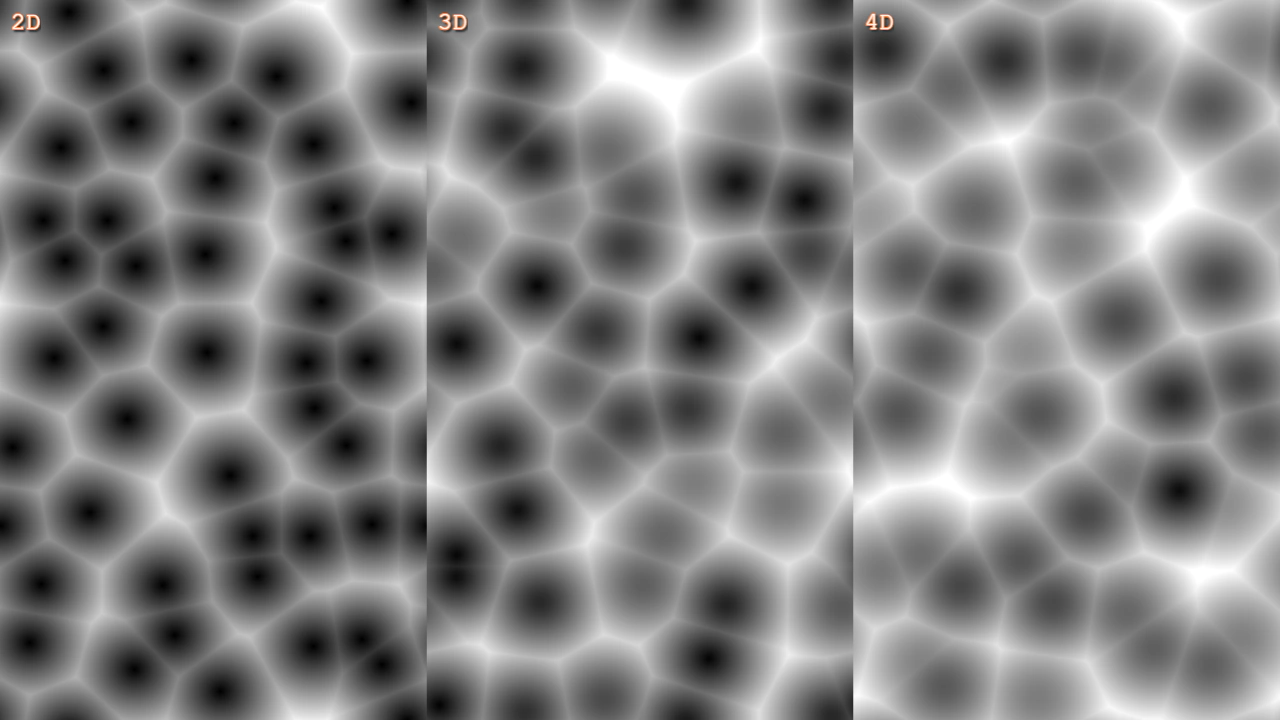 Cellular NoiseDemonstrates how to generate and display 2D, 3D, and 4D cellular (Worley) noise patterns side-by-side using specialized noise Game Objects.
 Cellular Noise 4D LoopCreate a seamless, high-precision looping animation by rotating the offsets of a 4D cellular noise object over time.
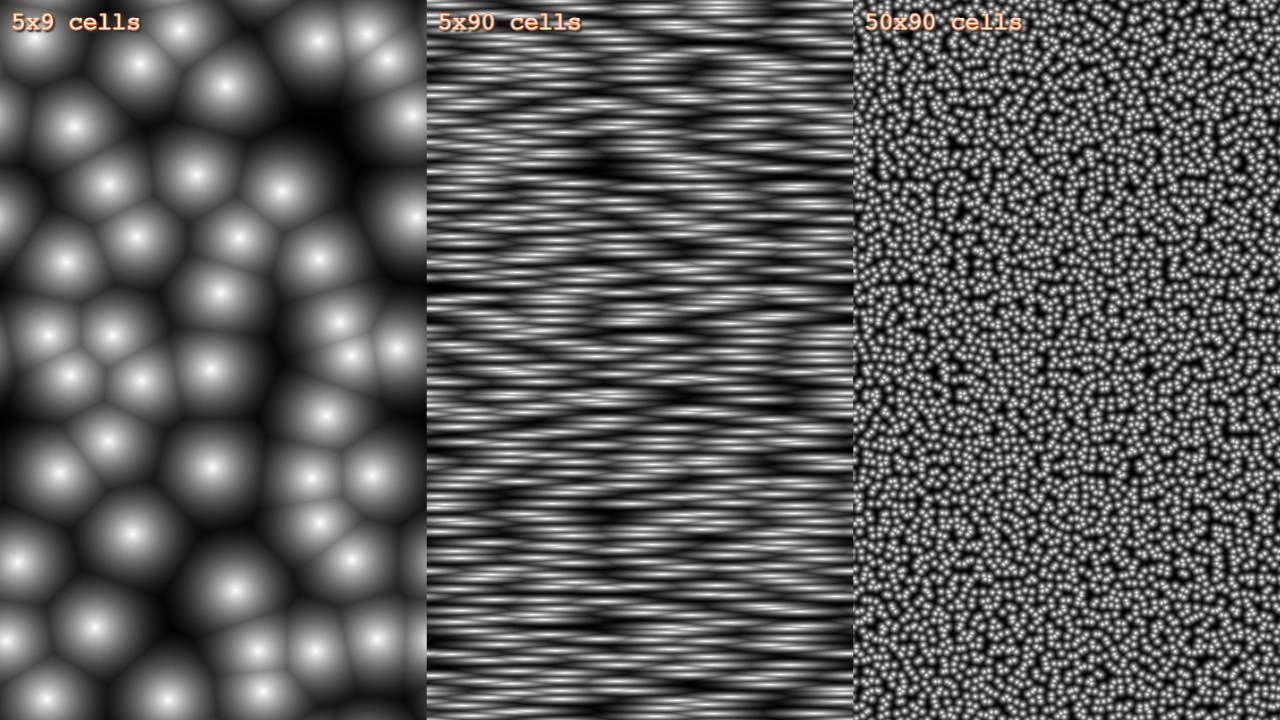 Cellular Noise Grid DensityDemonstrates how to create and animate 2D cellular noise patterns using different grid densities, aspect ratios, and movement offsets.
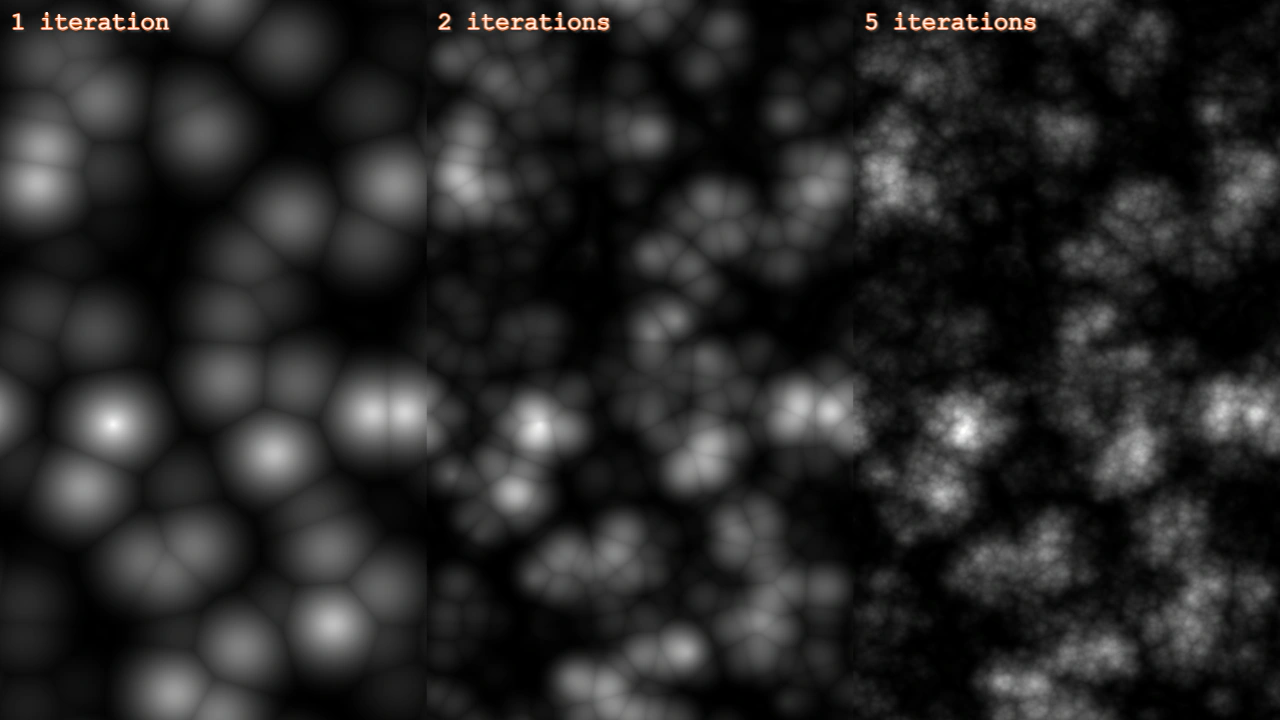 Cellular Noise IterationsThis example demonstrates how varying the number of iterations affects the complexity and detail of a 4D cellular noise Game Object.