Cellular Noise Iterations
This example demonstrates how varying the number of iterations affects the complexity and detail of a 4D cellular noise Game Object.
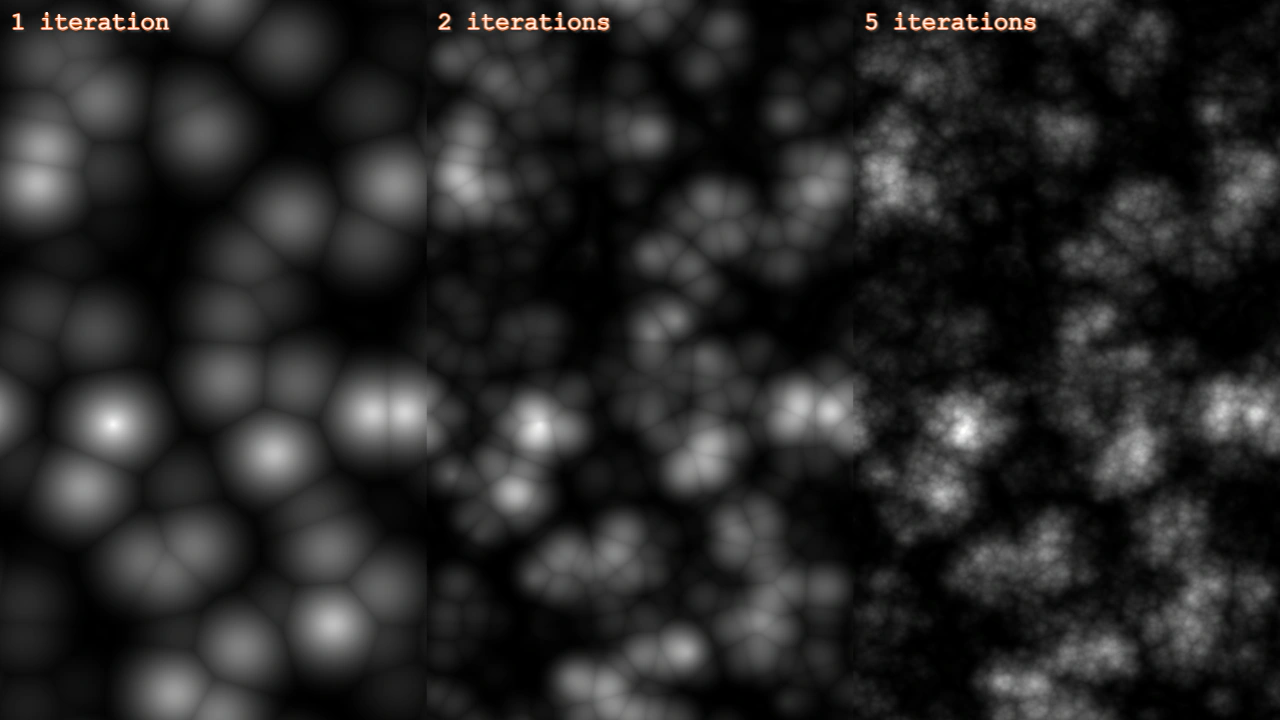
1280 × 720
class Example extends Phaser.Scene
{
    noise1;
    noise2;
    noise3;

    create()
    {
        const { width, height } = this.scale;

        const config = {
            noiseCells: [ 5, 9, 4, 4 ],
            noiseColorStart: 0xffffff,
            noiseColorEnd: [ 0, 0, 0, 0 ]
        };

        this.noise1 = this.add.noisecell4d(config, width * 1 / 6, height / 2, width / 3, height);
        this.noise2 = this.add.noisecell4d({
            ...config,
            noiseIterations: 2
        }, width * 3 / 6, height / 2, width / 3, height);
        this.noise3 = this.add.noisecell4d({
            ...config,
            noiseIterations: 5
        }, width * 5 / 6, height / 2, width / 3, height);

        this.add.text(10, 10, '1 iteration', { fontSize: 24 }).setStroke('#ff8844', 2).setShadow(2, 2, '#333333', 2, true, false);
        this.add.text(width / 3 + 10, 10, '2 iterations', { fontSize: 24 }).setStroke('#ff8844', 2).setShadow(2, 2, '#333333', 2, true, false);
        this.add.text(width * 2 / 3 + 10, 10, '5 iterations', { fontSize: 24 }).setStroke('#ff8844', 2).setShadow(2, 2, '#333333', 2, true, false);
    }

    update (time)
    {
        const t = time / 10000;
        const c = Math.cos(t);
        const s = Math.sin(t);

        this.noise1.noiseOffset[0] = c;
        this.noise1.noiseOffset[1] = s;
        this.noise1.noiseOffset[2] = c / 4;
        this.noise1.noiseOffset[3] = s / 4;

        this.noise2.noiseOffset[0] = c;
        this.noise2.noiseOffset[1] = s;
        this.noise2.noiseOffset[2] = c / 4;
        this.noise2.noiseOffset[3] = s / 4;

        this.noise3.noiseOffset[0] = c;
        this.noise3.noiseOffset[1] = s;
        this.noise3.noiseOffset[2] = c / 4;
        this.noise3.noiseOffset[3] = s / 4;
    }
}

const config = {
    scale: { mode: Phaser.Scale.FIT },
    type: Phaser.WEBGL,
    parent: 'game-container',
    width: 1280,
    height: 720,
    scene: Example
};

const game = new Phaser.Game(config);
More in Noise33 examples
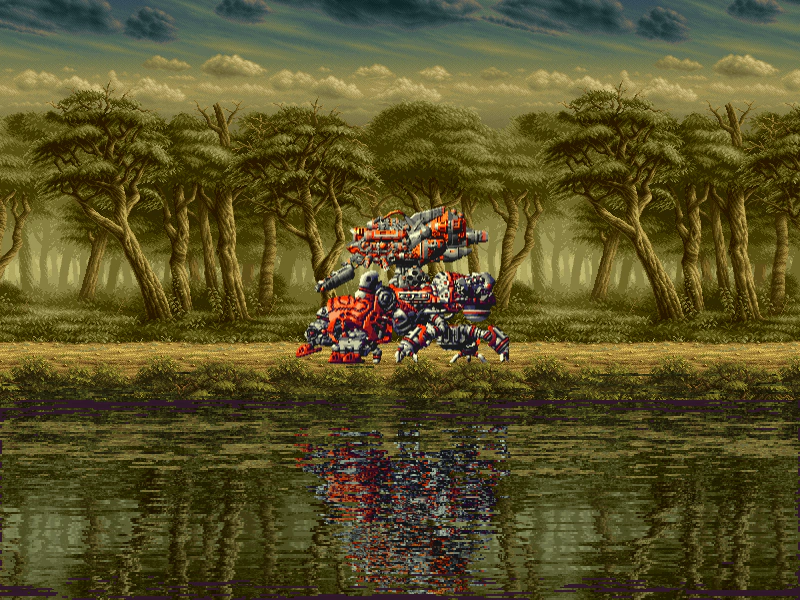 Cellular Noise Normal MapDemonstrates creating an animated water reflection effect using a 4D cellular noise normal map as a displacement filter.
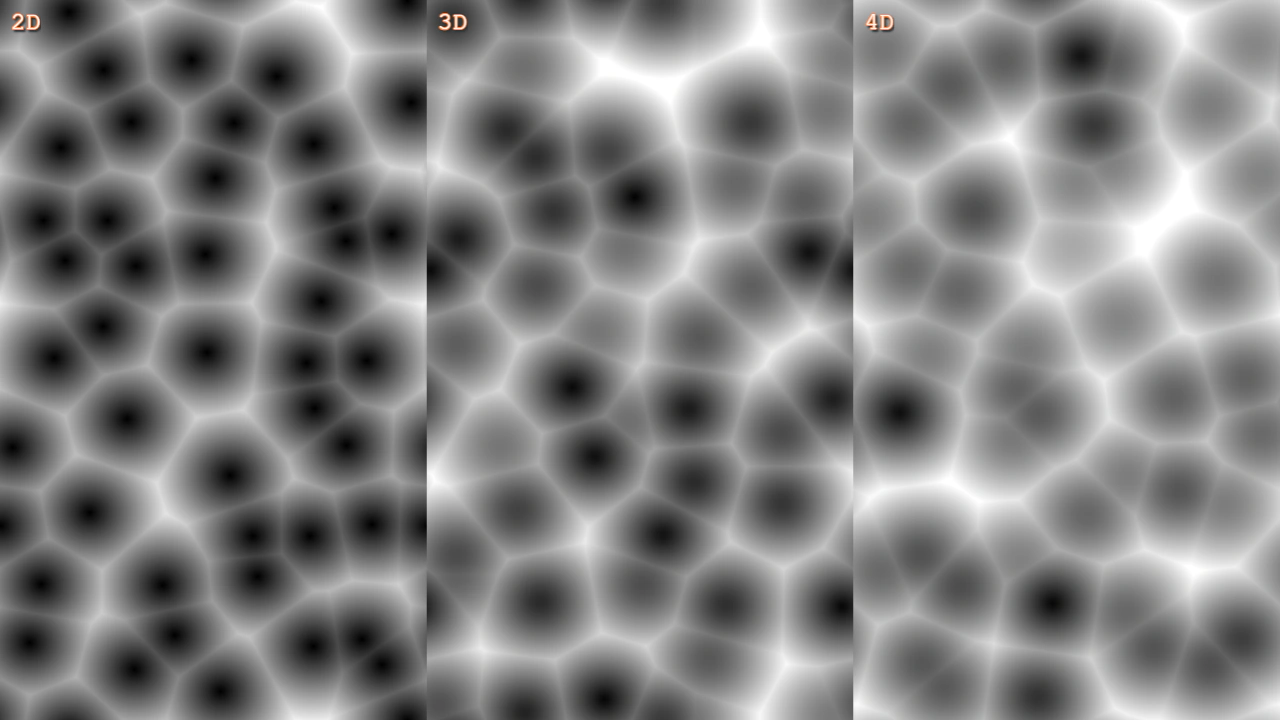 Cellular Noise Scroll ZAnimate 3D and 4D cellular noise by scrolling the Z-axis offset over time.
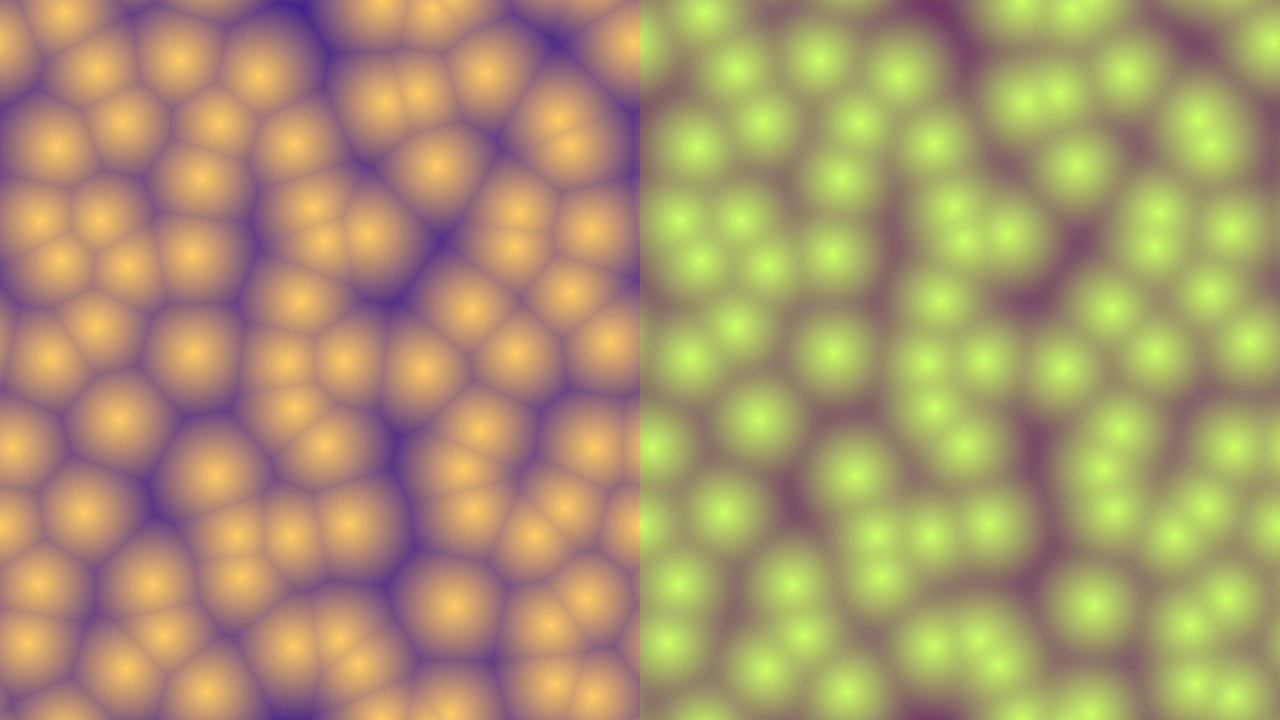 Cellular Noise SmoothingDemonstrates the difference between standard and smoothed 2D cellular noise using different render modes and smoothing values to create organic patterns.
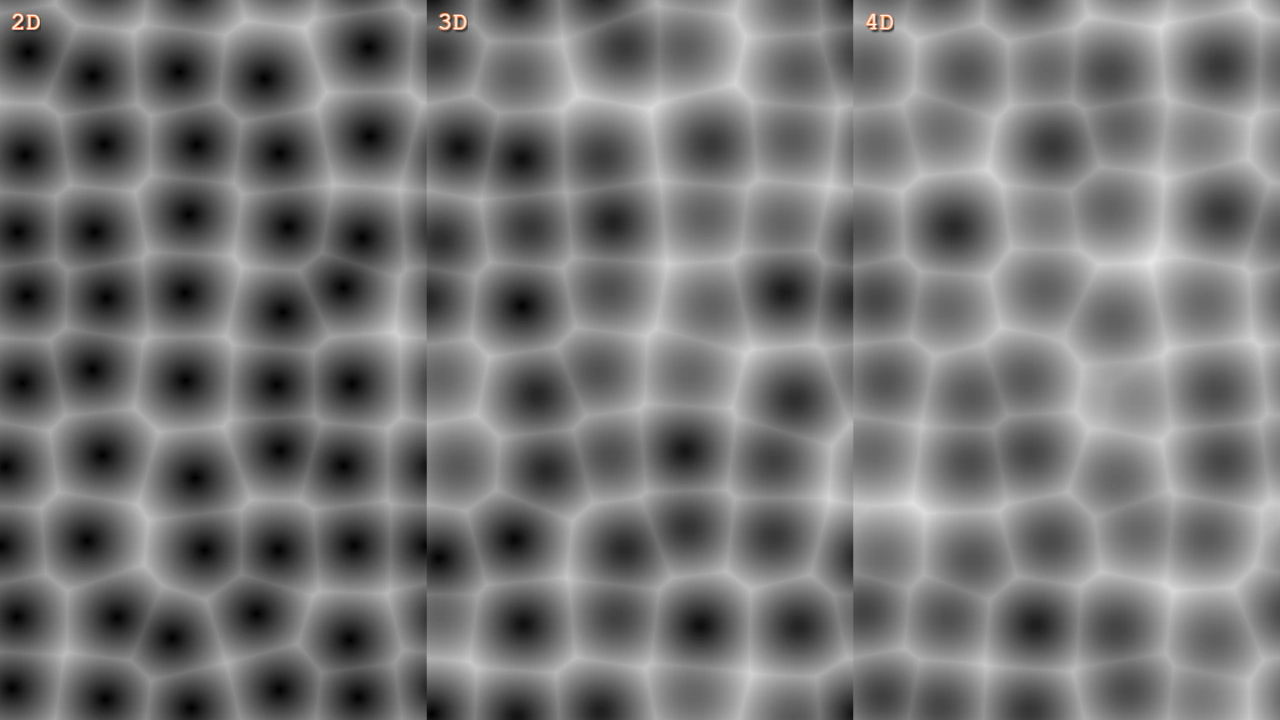 Cellular Noise VariationDemonstrates how to create and animate 2D, 3D, and 4D cellular noise Game Objects by dynamically adjusting their noise variation properties.