Shader Feedback Buffers
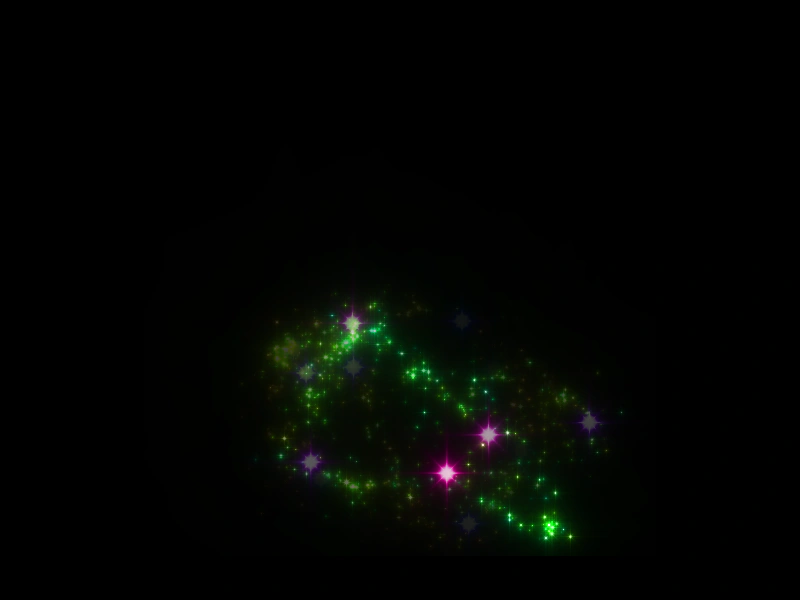
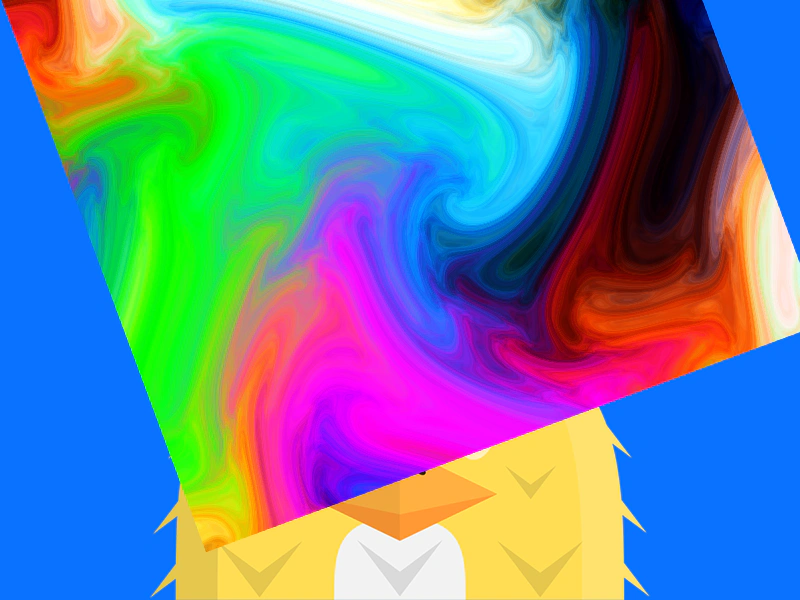
Demonstrates how to create a shader feedback loop by rendering multiple shaders to textures and using the output of one as the input for another.
800 × 600
class Example extends Phaser.Scene
{
    create ()
    {
        const s1 = `
    /*
    "Magic particles" by Emmanuel Keller aka Tambako - December 2015
    License Creative Commons Attribution-NonCommercial-ShareAlike 3.0 Unported License.
    Contact: [email protected]
    */

    precision mediump float;

    uniform float time;
    uniform sampler2D iChannel0;

    varying vec2 outTexCoord;

    #define iTime time

    vec4 texture(sampler2D s, vec2 c) { return texture2D(s,c); }
    vec4 texture(sampler2D s, vec2 c, float b) { return texture2D(s,c,b); }
    vec4 texture(samplerCube s, vec3 c ) { return textureCube(s,c); }
    vec4 texture(samplerCube s, vec3 c, float b) { return textureCube(s,c,b); }


    #define twopi 6.28319
    // Please be careful, setting complexity > 1 may crash your browser!
    // 1: for mac computers
    // 2: for computers with normal graphic card
    // 3: for computers with good graphic cards
    // 4: for gaming computers
    #define complexity 1

    // General particles constants
    #if complexity == 1
    const int nb_particles = 95;                                  // Number of particles on the screen at the same time. Be CAREFUL with big numbers of particles, 1000 is already a lot!
    #elif complexity == 2
    const int nb_particles = 160;
    #elif complexity == 3
    const int nb_particles = 280;
    #elif complexity == 4
    const int nb_particles = 500;
    #endif
    const vec2 gen_scale = vec2(0.60, 0.45);                      // To scale the particle positions, not the particles themselves
    const vec2 middlepoint = vec2(0.35, 0.15);                    // Offset of the particles

    // Particle movement constants
    const vec2 gravitation = vec2(-0., -4.5);                     // Gravitation vector
    const vec3 main_x_freq = vec3(0.4, 0.66, 0.78);               // 3 frequences (in Hz) of the harmonics of horizontal position of the main particle
    const vec3 main_x_amp = vec3(0.8, 0.24, 0.18);                // 3 amplitudes of the harmonics of horizontal position of the main particle
    const vec3 main_x_phase = vec3(0., 45., 55.);                 // 3 phases (in degrees) of the harmonics of horizontal position of the main particle
    const vec3 main_y_freq = vec3(0.415, 0.61, 0.82);             // 3 frequences (in Hz) of the harmonics of vertical position of the main particle
    const vec3 main_y_amp = vec3(0.72, 0.28, 0.15);               // 3 amplitudes of the harmonics of vertical position of the main particle
    const vec3 main_y_phase = vec3(90., 120., 10.);               // 3 phases (in degrees) of the harmonics of vertical position of the main particle
    const float part_timefact_min = 6.;                           // Specifies the minimum how many times the particle moves slower than the main particle when it's "launched"
    const float part_timefact_max = 20.;                          // Specifies the maximum how many times the particle moves slower than the main particle when it's "launched"
    const vec2 part_max_mov = vec2(0.28, 0.28);                   // Maxumum movement out of the trajectory in display units / s

    // Particle time constants
    const float time_factor = 0.75;                               // Time in s factor, <1. for slow motion, >1. for faster movement
    const float start_time = 2.5;                                 // Time in s needed until all the nb_particles are "launched"
    const float grow_time_factor = 0.15;                          // Time in s particles need to reach their max intensity after they are "launched"
    #if complexity == 1
    const float part_life_time_min = 0.9;                         // Minimum life time in s of a particle
    const float part_life_time_max = 1.9;                         // Maximum life time in s of a particle
    #elif complexity == 2
    const float part_life_time_min = 1.0;
    const float part_life_time_max = 2.5;
    #elif complexity == 3
    const float part_life_time_min = 1.1;
    const float part_life_time_max = 3.2;
    #elif complexity == 4
    const float part_life_time_min = 1.2;
    const float part_life_time_max = 4.0;
    #endif

    // Particle intensity constants
    const float part_int_div = 40000.;                            // Divisor of the particle intensity. Tweak this value to make the particles more or less bright
    const float part_int_factor_min = 0.1;                        // Minimum initial intensity of a particle
    const float part_int_factor_max = 3.2;                        // Maximum initial intensity of a particle
    const float part_spark_min_int = 0.25;                        // Minimum sparkling intensity (factor of initial intensity) of a particle
    const float part_spark_max_int = 0.88;                        // Minimum sparkling intensity (factor of initial intensity) of a particle
    const float part_spark_min_freq = 2.5;                        // Minimum sparkling frequence in Hz of a particle
    const float part_spark_max_freq = 6.0;                        // Maximum sparkling frequence in Hz of a particle
    const float part_spark_time_freq_fact = 0.35;                 // Sparkling frequency factor at the end of the life of the particle
    const float mp_int = 12.;                                     // Initial intensity of the main particle
    const float dist_factor = 3.;                                 // Distance factor applied before calculating the intensity
    const float ppow = 2.3;                                      // Exponent of the intensity in function of the distance

    // Particle color constants
    const float part_min_hue = -0.13;                             // Minimum particle hue shift (spectrum width = 1.)
    const float part_max_hue = 0.13;                              // Maximum particle hue shift (spectrum width = 1.)
    const float part_min_saturation = 0.5;                        // Minimum particle saturation (0. to 1.)
    const float part_max_saturation = 0.9;                        // Maximum particle saturation (0. to 1.)
    const float hue_time_factor = 0.035;                          // Time-based hue shift
    const float mp_hue = 0.5;                                     // Hue (shift) of the main particle
    const float mp_saturation = 0.18;                             // Saturation (delta) of the main particle

    // Particle star constants
    const vec2 part_starhv_dfac = vec2(9., 0.32);                 // x-y transformation vector of the distance to get the horizontal and vertical star branches
    const float part_starhv_ifac = 0.25;                          // Intensity factor of the horizontal and vertical star branches
    const vec2 part_stardiag_dfac = vec2(13., 0.61);              // x-y transformation vector of the distance to get the diagonal star branches
    const float part_stardiag_ifac = 0.19;                        // Intensity factor of the diagonal star branches

    const float mb_factor = 0.73;                                 // Mix factor for the multipass motion blur factor

    // Variables
    float pst;
    float plt;
    float runnr;
    float time2;
    float time3;
    float time4;

    // From https://www.shadertoy.com/view/ldtGDn
    vec3 hsv2rgb (vec3 hsv) { // from HSV to RGB color vector
        hsv.yz = clamp (hsv.yz, 0.0, 1.0);
        return hsv.z*(0.63*hsv.y*(cos(twopi*(hsv.x + vec3(0.0, 2.0/3.0, 1.0/3.0))) - 1.0) + 1.0);
    }

    // Simple "random" function
    float random(float co)
    {
        return fract(sin(co*12.989) * 43758.545);
    }

    // Gets the time at which a paticle is starting its "life"
    float getParticleStartTime(int partnr)
    {
        return start_time*random(float(partnr*2));
    }

    // Harmonic calculation, base is a vec4
    float harms(vec3 freq, vec3 amp, vec3 phase, float time)
    {
       float val = 0.;
       for (int h=0; h<3; h++)
          val+= amp[h]*cos(time*freq[h]*twopi + phase[h]/360.*twopi);
       return (1. + val)/2.;
    }

    // Gets the position of a particle in function of its number and the time
    vec2 getParticlePosition(int partnr)
    {
       // Particle "local" time, when a particle is "reborn" its time starts with 0.0
       float part_timefact = mix(part_timefact_min, part_timefact_max, random(float(partnr*2 + 94) + runnr*1.5));
       float ptime = (runnr*plt + pst)*(-1./part_timefact + 1.) + time2/part_timefact;
       vec2 ppos = vec2(harms(main_x_freq, main_x_amp, main_x_phase, ptime), harms(main_y_freq, main_y_amp, main_y_phase, ptime)) + middlepoint;

       // Particles randomly get away the main particle's orbit, in a linear fashion
       vec2 delta_pos = part_max_mov*(vec2(random(float(partnr*3-23) + runnr*4.), random(float(partnr*7+632) - runnr*2.5))-0.5)*(time3 - pst);

       // Calculation of the effect of the gravitation on the particles
       vec2 grav_pos = gravitation*pow(time4, 2.)/250.;
       return (ppos + delta_pos + grav_pos)*gen_scale;
    }

    // Gets the position of the main particle in function of the time
    vec2 getParticlePosition_mp()
    {
       vec2 ppos = vec2(harms(main_x_freq, main_x_amp, main_x_phase, time2), harms(main_y_freq, main_y_amp, main_y_phase, time2)) + middlepoint;
       return gen_scale*ppos;
    }

    // Gets the rgb color of a particle in function of its intensity and number
    vec3 getParticleColor(int partnr, float pint)
    {
       float hue;
       float saturation;

       saturation = mix(part_min_saturation, part_max_saturation, random(float(partnr*6 + 44) + runnr*3.3))*0.45/pint;
       hue = mix(part_min_hue, part_max_hue, random(float(partnr + 124) + runnr*1.5)) + hue_time_factor*time2;

       return hsv2rgb(vec3(hue, saturation, pint));
    }

    // Gets the rgb color the main particle in function of its intensity
    vec3 getParticleColor_mp( float pint)
    {
       float hue;
       float saturation;

       saturation = 0.75/pow(pint, 2.5) + mp_saturation;
       hue = hue_time_factor*time2 + mp_hue;

       return hsv2rgb(vec3(hue, saturation, pint));
    }

    // Main function to draw particles, outputs the rgb color.
    vec3 drawParticles(vec2 uv, float timedelta)
    {
        // Here the time is "stetched" with the time factor, so that you can make a slow motion effect for example
        time2 = time_factor*(iTime + timedelta);
        vec3 pcol = vec3(0.);
        // Main particles loop
        for (int i=1; i<nb_particles; i++)
        {
            pst = getParticleStartTime(i); // Particle start time
            plt = mix(part_life_time_min, part_life_time_max, random(float(i*2-35))); // Particle life time
            time4 = mod(time2 - pst, plt);
            time3 = time4 + pst;
           // if (time2>pst) // Doesn't draw the paricle at the start
            //{
               runnr = floor((time2 - pst)/plt);  // Number of the "life" of a particle
               vec2 ppos = getParticlePosition(i);
               float dist = distance(uv, ppos);
               //if (dist<0.05) // When the current point is further than a certain distance, its impact is neglectable
               //{
                  // Draws the eight-branched star
                  // Horizontal and vertical branches
                  vec2 uvppos = uv - ppos;
                  float distv = distance(uvppos*part_starhv_dfac + ppos, ppos);
                  float disth = distance(uvppos*part_starhv_dfac.yx + ppos, ppos);
                  // Diagonal branches
                  vec2 uvpposd = 0.707*vec2(dot(uvppos, vec2(1., 1.)), dot(uvppos, vec2(1., -1.)));
                  float distd1 = distance(uvpposd*part_stardiag_dfac + ppos, ppos);
                  float distd2 = distance(uvpposd*part_stardiag_dfac.yx + ppos, ppos);
                  // Initial intensity (random)
                  float pint0 = mix(part_int_factor_min, part_int_factor_max, random(runnr*4. + float(i-55)));
                  // Middle point intensity star inensity
                  float pint1 = 1./(dist*dist_factor + 0.015) + part_starhv_ifac/(disth*dist_factor + 0.01) + part_starhv_ifac/(distv*dist_factor + 0.01) + part_stardiag_ifac/(distd1*dist_factor + 0.01) + part_stardiag_ifac/(distd2*dist_factor + 0.01);
                  // One neglects the intentity smaller than a certain threshold
                  //if (pint0*pint1>16.)
                  //{
                     // Intensity curve and fading over time
                     float pint = pint0*(pow(pint1, ppow)/part_int_div)*(-time4/plt + 1.);

                     // Initial growing of the paricle's intensity
                     pint*= smoothstep(0., grow_time_factor*plt, time4);
                     // "Sparkling" of the particles
                     float sparkfreq = clamp(part_spark_time_freq_fact*time4, 0., 1.)*part_spark_min_freq + random(float(i*5 + 72) - runnr*1.8)*(part_spark_max_freq - part_spark_min_freq);
                     pint*= mix(part_spark_min_int, part_spark_max_int, random(float(i*7 - 621) - runnr*12.))*sin(sparkfreq*twopi*time2)/2. + 1.;

                     // Adds the current intensity to the global intensity
                     pcol+= getParticleColor(i, pint);
                  //}
               //}
            //}
        }

        // Main particle
        vec2 ppos = getParticlePosition_mp();
        float dist = distance(uv, ppos);

            // Draws the eight-branched star
            // Horizontal and vertical branches
            vec2 uvppos = uv - ppos;
            float distv = distance(uvppos*part_starhv_dfac + ppos, ppos);
            float disth = distance(uvppos*part_starhv_dfac.yx + ppos, ppos);
            // Diagonal branches
            vec2 uvpposd = 0.7071*vec2(dot(uvppos, vec2(1., 1.)), dot(uvppos, vec2(1., -1.)));
            float distd1 = distance(uvpposd*part_stardiag_dfac + ppos, ppos);
            float distd2 = distance(uvpposd*part_stardiag_dfac.yx + ppos, ppos);
            // Middle point intensity star inensity
            float pint1 = 1./(dist*dist_factor + 0.015) + part_starhv_ifac/(disth*dist_factor + 0.01) + part_starhv_ifac/(distv*dist_factor + 0.01) + part_stardiag_ifac/(distd1*dist_factor + 0.01) + part_stardiag_ifac/(distd2*dist_factor + 0.01);

            if (part_int_factor_max*pint1>6.)
            {
                float pint = part_int_factor_max*(pow(pint1, ppow)/part_int_div)*mp_int;
                pcol+= getParticleColor_mp(pint);
            }

        return pcol;
    }

    void mainImage(out vec4 fragColor, in vec2 outTexCoord)
    {
        vec2 uv = outTexCoord.xy;

        // Multipass motion blur
        vec2 uv2 = outTexCoord.xy;
        vec3 pcolor = texture(iChannel0,uv2).rgb*mb_factor;

        // Background gradient
        //vec3 pcolor = vec3(0., (0.6 - uv.y)/10., (1. - uv.y)/9.);
        //vec3 pcolor = texture(iChannel0,uv).rgb*0.4;

        pcolor+= drawParticles(uv,0.)*0.9;

        // We're done!
        fragColor = vec4(pcolor, 0.);
    }

    void main(void)
    {
        mainImage(gl_FragColor, outTexCoord.xy);
    }
        `;

        const s2 = `
    precision mediump float;

    uniform sampler2D iChannel0;

    varying vec2 outTexCoord;

    vec4 texture(sampler2D s, vec2 c) { return texture2D(s,c); }
    vec4 texture(sampler2D s, vec2 c, float b) { return texture2D(s,c,b); }

    void mainImage( out vec4 fragColor, in vec2 outTexCoord )
    {
        vec2 uv = outTexCoord.xy;
        fragColor = texture(iChannel0,uv);
    }

    void main(void)
    {
        mainImage(gl_FragColor, outTexCoord.xy);
    }
        `;

        const shader1 = this.add.shader(
            {
                name: 'BufferA',
                fragmentSource: s1,
                setupUniforms: (setUniform, drawingContext) => {
                    setUniform('time', this.game.loop.getDuration());
                },
                initialUniforms: {
                    iChannel0: 0
                }
            },
            400, 300, 512, 512, [ '__DEFAULT' ]
        );

        shader1.setRenderToTexture('blah');

        const shader2 = this.add.shader(
            {
                name: 'BufferB',
                fragmentSource: s2,
                initialUniforms: {
                    iChannel0: 0
                }
            },
            400, 300, 512, 512, [ '__DEFAULT' ]
        );

        shader2.setRenderToTexture('blah2');

        shader1.setTextures([ 'blah2' ]);
        shader2.setTextures([ 'blah' ]);

        this.add.image(400, 300, 'blah2');
    }
}

const config = {
    scale: { mode: Phaser.Scale.FIT },
    type: Phaser.WEBGL,
    parent: 'game-container',
    width: 800,
    height: 600,
    scene: Example
};

const game = new Phaser.Game(config);
More in Shaders15 examples
 Shader Render to TextureDemonstrates how to render a GLSL shader to a texture and then use that texture across multiple Game Objects simultaneously.
 Shader Render-to-Texture FeedbackDemonstrates how to create a feedback loop between multiple shaders by rendering each to a texture and passing those textures as sampler inputs to one another.
 Shader SandboxDemonstrates layering multiple shaders with standard images and animating shader uniforms using the Tween Manager.
 Shader TransformsLearn how to manipulate a Shader Game Object using standard properties such as scale, rotation, and position, including how to apply tweens to them.