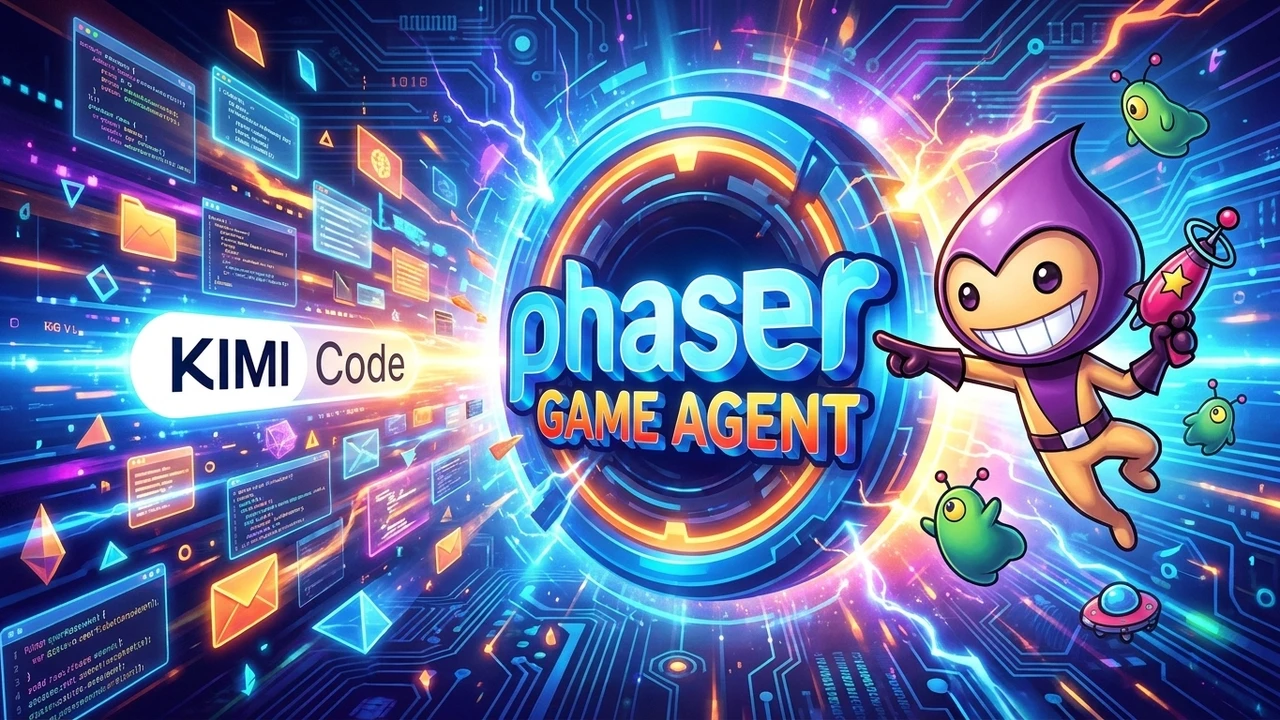
You can select Kimi K3 in the Phaser Game Agent from today. It's the cheapest capable model we've added so far, and for most games it produces results close enough to the more expensive options that the price difference is hard to argue with.
The cost story
In our benchmarking, a game generated with K3 typically costs a little under half what the same game costs on Claude Opus. Some runs came in lower than that. Quality was broadly comparable — not identical on every prompt, but close enough that we'd happily ship either result.
Two things stood out in testing:
3D spatial reasoning. K3 is unusually good at holding a 3D scene in its head — camera framing, object placement, collision volumes, movement in three axes. If you're building anything in 3D, this is the model we'd point you at first. Moonshot's own K3 write-up leans on the same strength, describing how the model iterates between code and live screenshots rather than working blind.
It works well with Phaser AE. This is the one that actually matters. The Game Agent doesn't write Phaser 4 code — it builds against Phaser AE, the engine we wrote from scratch for LLMs rather than humans. No model has ever seen it in training data. It can't read the engine source. It asks for the features it needs, gets back type definitions and task-shaped documentation, and has to work it out from there. That's a much harder test than "does it remember the Phaser API", and K3 handled it about as well as anything we've plugged in.
The trade-off: it's slow
We're not going to dress this up. A typical game takes around 40 minutes to generate. Some take longer. K3 runs at maximum thinking effort and it works through a problem thoroughly, which is a large part of why the output holds up — but it does mean you're not watching a game appear in real time.
So don't watch it. The workflow we'd recommend:
- Write the best prompt you can. Be specific about mechanics, feel, and art style.
- Start the run and close the tab.
- We'll email you when it's finished.
- Play it, then ask for edits.
Edits are fast and cheap by comparison, because the agent is working against an existing codebase rather than starting from nothing.
Two games we made with it
Crazy Cats — snowboarding cats pulling tricks down a mountain.

Verdant Prism Strike — a 3D tank battler. The entire prompt was:
a battlezone-style 3D tank battle — wireframe tanks on an open plain, slow shells, sharp turns. Art style: Solar Punk
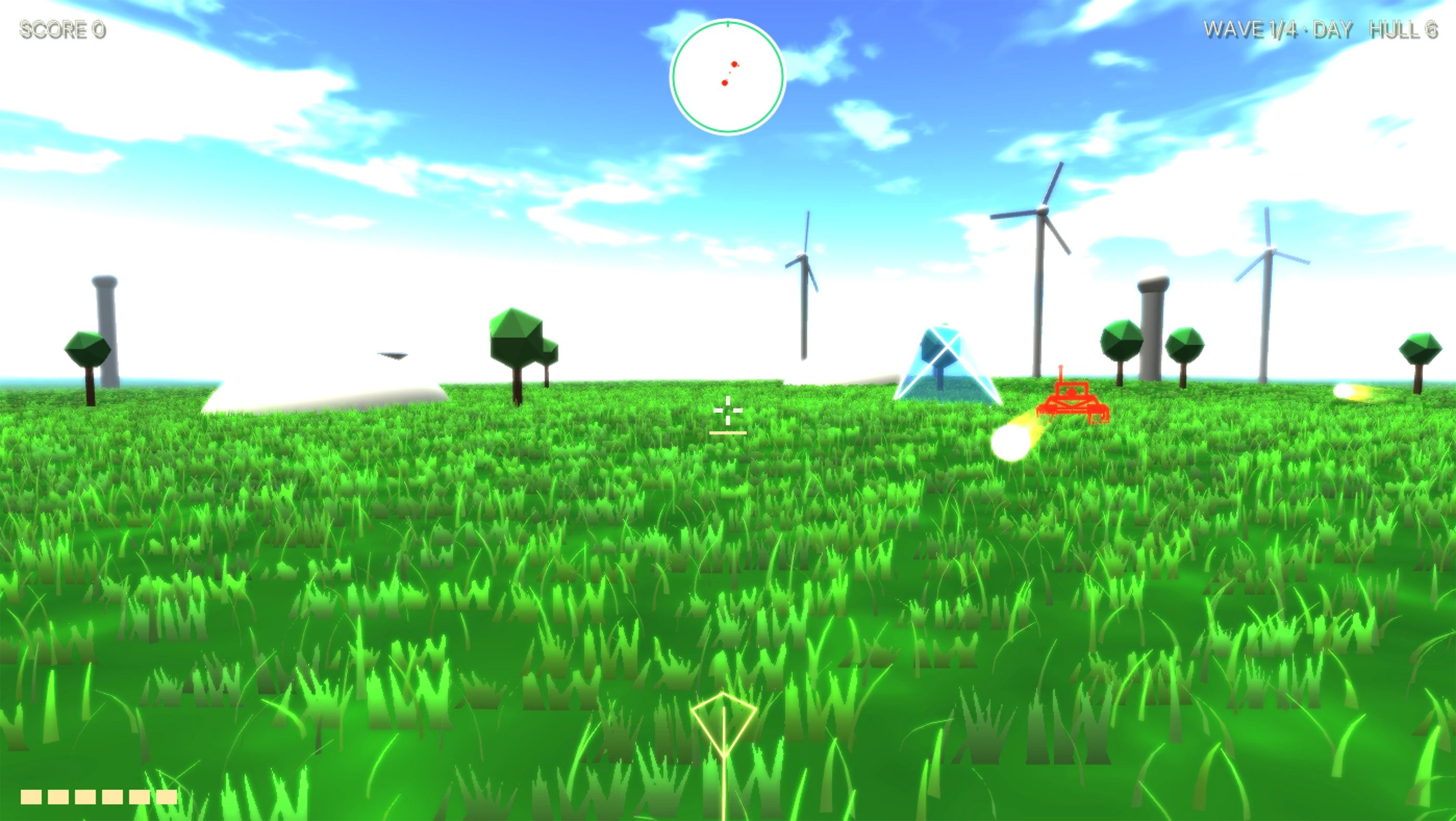
That run took 36 minutes and used 3,344 credits. A follow-up edit to add a day/night cycle used 149.
Why we added it
Cost per game is the number that decides whether you experiment or ration yourself. Every model we add is measured against that, and K3 moves it in the right direction by a meaningful margin. It won't be the right pick for everything — if you need a result in the next five minutes, choose a faster model — but for anything you can walk away from, it's now our default recommendation.
Pick Kimi K3 from the model selector in the Phaser Game Agent, write a proper prompt, and go and do something else for half an hour.