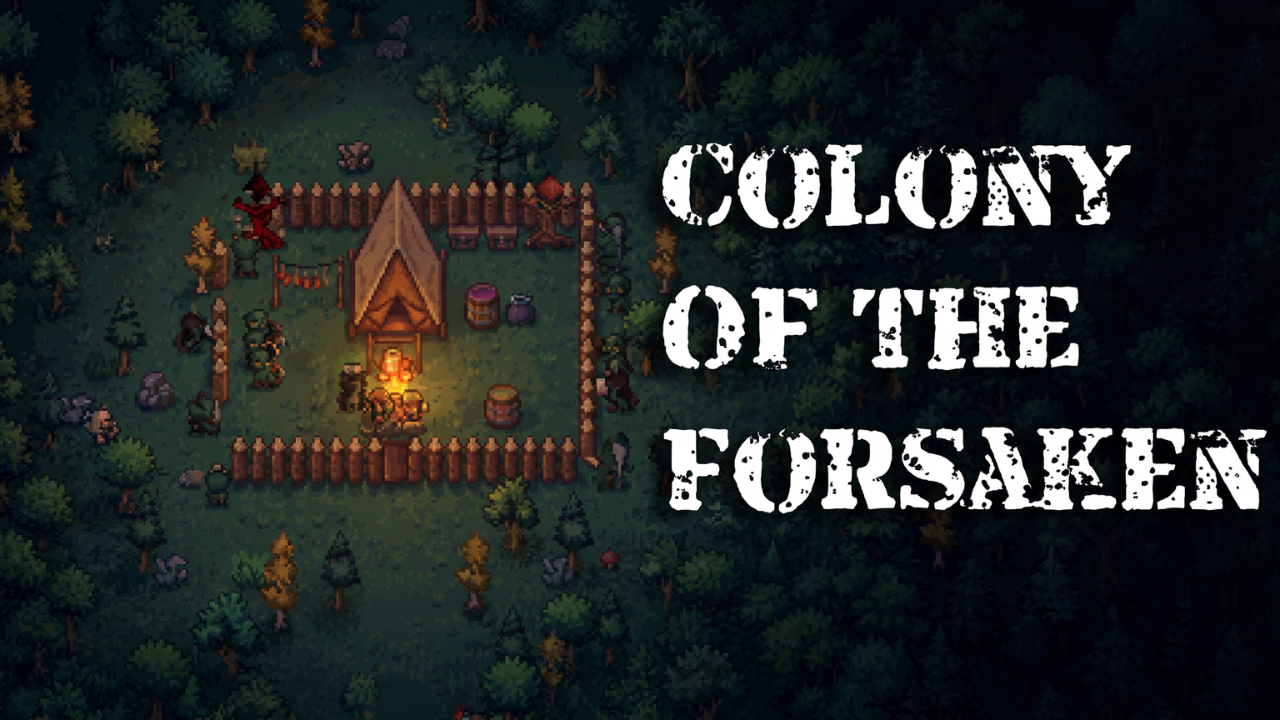
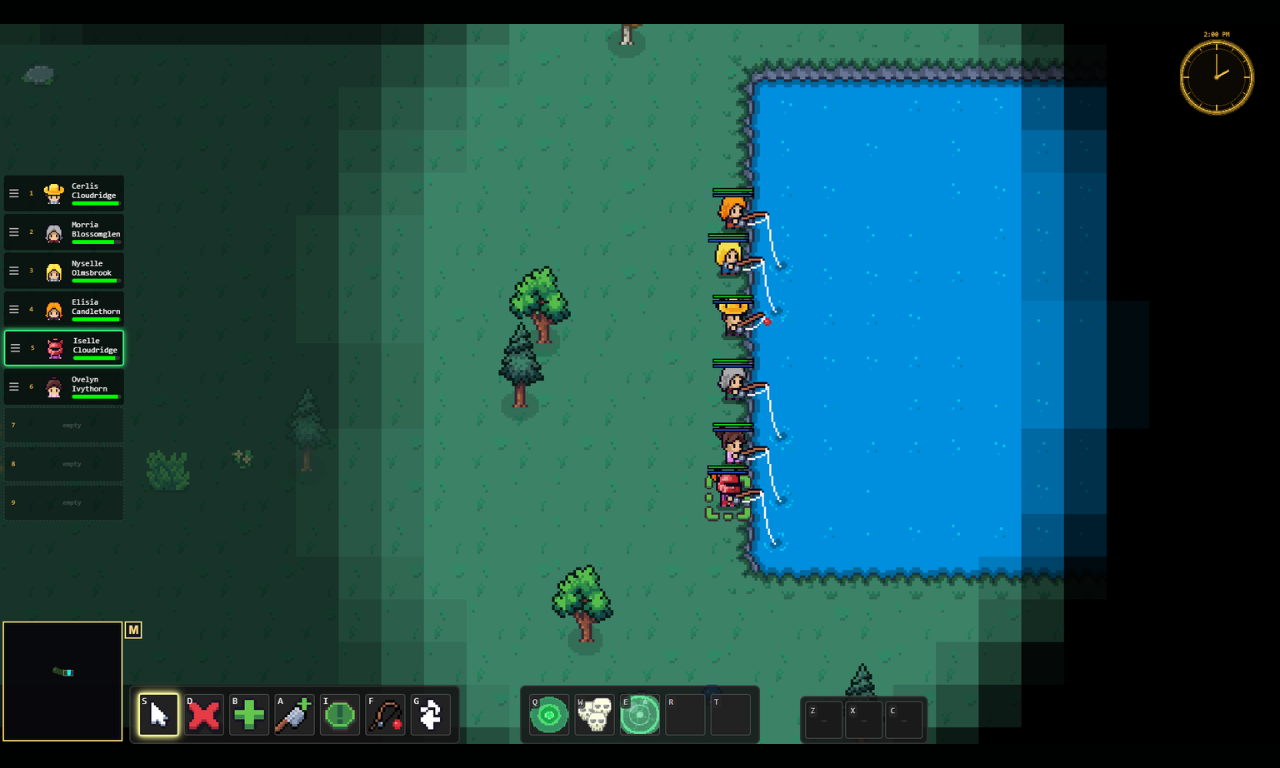
Tazdingol is a software engineer, a new father, and a solo game developer who builds between midnight and early morning when everything is quiet. Colony of the Forsaken is his game: a survival colony sim where you build a colony during the day, recruit and manage survivors, and defend it from enemy waves at night. Each villager has their own attributes, skills, and spells. If one dies, they're gone for good. The game features procedurally generated maps, a day-night loop, fishing, farming, crafting, taming animals, and a spell system heavily inspired by Warcraft III. There's a playable demo on itch.io and a Steam page open for wishlisting, with a planned Q1 2027 release. We sat down with Tazdingol to find out more about the game, the design decisions behind it, and what it's like building something this ambitious alone.
The Interview
Colony of the Forsaken: Game Design and Core Loop
Q: Where did the idea for Colony of the Forsaken come from?
I've always loved strategy, survival, and RPG games. I spent countless hours playing titles like Warcraft, Project Zomboid, and Diablo, and making games had been a dream of mine for as long as I can remember.
After finishing my Software Engineering studies and spending nearly a decade working in software development, I decided to stop treating game development as something I would do "one day" and commit to a long-term project in my spare time.
The idea for Colony of the Forsaken came from a simple question: what if I combined the aspects I loved most from my favorite games into a single experience? I took inspiration from Warcraft's rich spell system, Project Zomboid's exploration and base-building, and Diablo's character progression and stat systems. From there, the concept evolved into a survival strategy RPG where players build a colony, recruit survivors, explore a dangerous world, and fight to survive each night.
What started as a hobby project quickly became something much bigger, and I've been steadily expanding and refining the game ever since.
"I decided to stop treating game development as something I would do 'one day' and commit to a long-term project in my spare time."
Q: The day/night cycle is central to the game. How did you design that core loop?
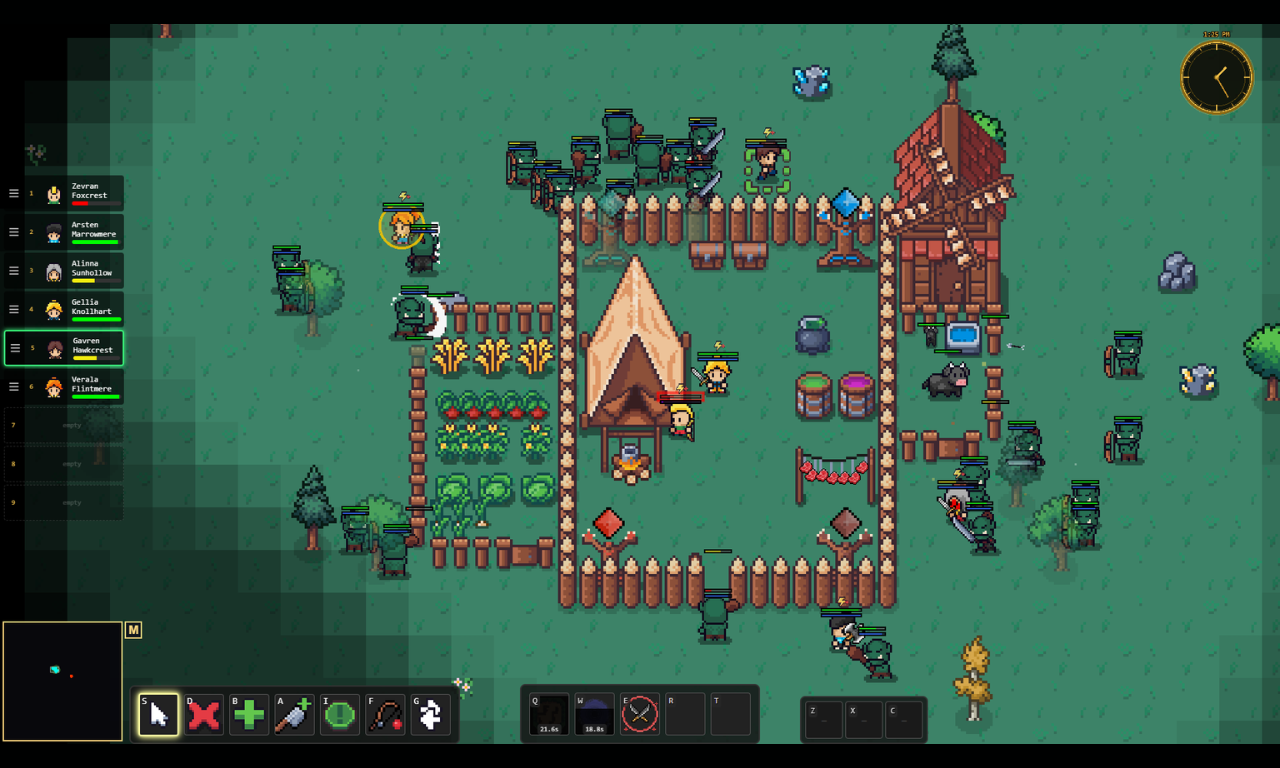
From the beginning, I wanted the game to have a clear cycle of preparation, tension, and reward. During the day, players can explore, gather resources, recruit survivors, construct buildings, and strengthen their colony. When night falls, everything they've built is put to the test as enemy attacks begin.
The goal was to create a meaningful connection between the two phases. Every decision made during the day has consequences at night. Did you invest enough in defenses? Did you recruit the right survivors? Did you spend your resources wisely? The night phase provides answers to those questions.
I also wanted players to feel a sense of progression after surviving each night. Every morning can bring new opportunities, whether that's loot recovered from defeated enemies, rumors that reveal new locations to explore, or new survivors looking to join the colony. This creates a continuous loop of growth, challenge, and discovery that keeps pushing the player forward while steadily increasing the stakes.
Spell System, Permadeath and Procedural Generation in Colony of the Forsaken
Q: What makes the spell system different from what you see in other colony sims?
One of my biggest inspirations has always been Warcraft III. In many colony simulators, combat is often secondary to resource management, and magic, if present, usually serves a supporting role. I wanted spells to be a core part of gameplay and decision-making.
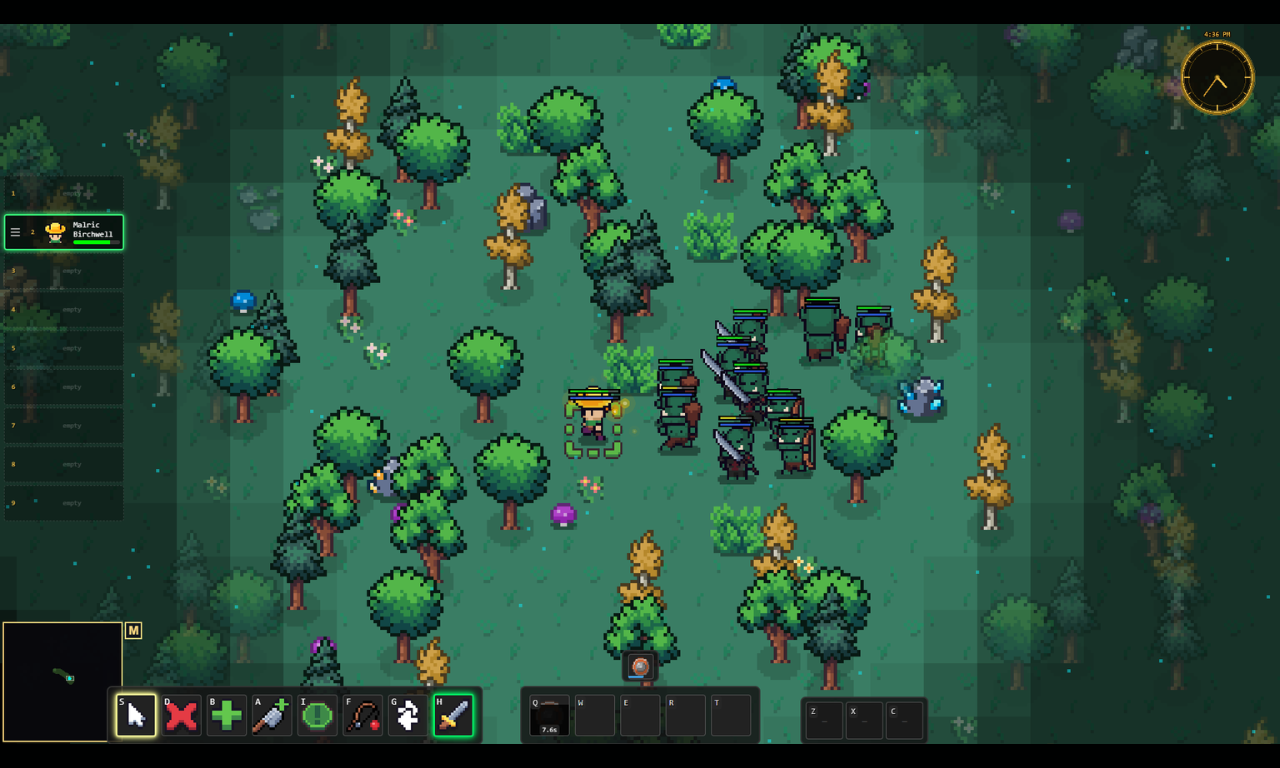
The spell system in Colony of the Forsaken is heavily inspired by Warcraft's approach to heroes and abilities. Rather than relying on simple stat bonuses or passive effects, many spells are designed to have a direct impact on combat, exploration, colony defense, and how the player approaches different situations.
My goal was to bring some of the excitement and tactical decision-making you find in RTS and RPG games into a colony survival experience. Players aren't just managing a settlement, they're actively participating in battles, combining abilities, adapting to threats, and developing their character throughout a run.
That combination of colony management, survivor recruitment, RPG progression, and Warcraft-inspired spellcasting is what makes the system feel different from many traditional colony sims.
Q: Permadeath is a big commitment for the player. Why did you decide to include it?
Permadeath was included because I wanted the survival aspect of the game to feel meaningful. When every survivor matters, the decisions you make throughout the day carry more weight, and defending the colony at night becomes much more tense and rewarding.
At the same time, I didn't want failure to feel repetitive. Each run takes place on a procedurally generated map, with different survivors, opportunities, and challenges, so starting over should create a new experience rather than simply repeating the same steps.
That said, game development is an iterative process, and I'm paying close attention to community feedback. The current design is built around meaningful consequences and replayability, but I'm open to adjusting how forgiving or punishing the system feels if players believe it would improve the overall experience.
Q: Which system took the longest to get right?
The movement and pathfinding systems have definitely taken the longest to get right.
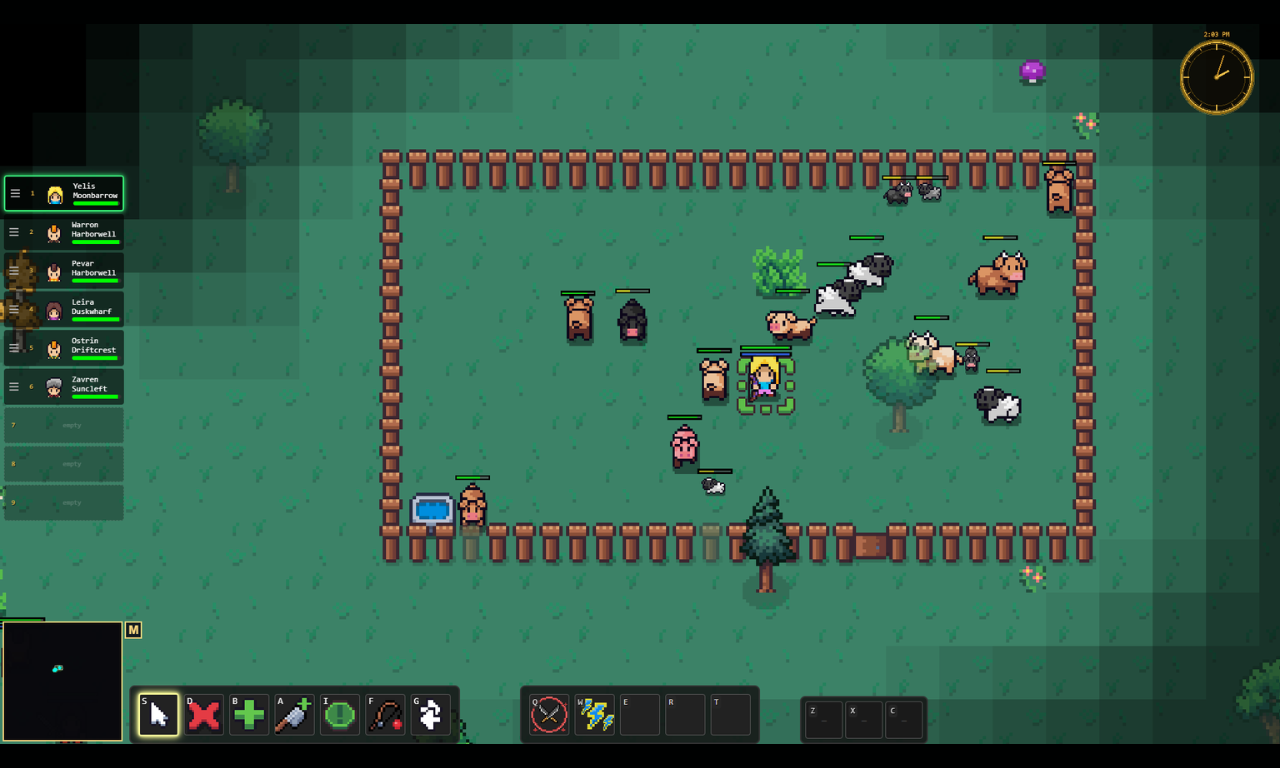
Because Colony of the Forsaken can have large numbers of survivors, enemies, and animals active at the same time, I spent a significant amount of development time making sure units could move efficiently and reliably without impacting performance. What seems simple from a player's perspective often becomes surprisingly complex when hundreds of entities are navigating the world simultaneously.
There were many iterations, countless tweaks, and more than a few late nights spent tracking down edge cases and performance issues. It's one of those systems that affects almost every aspect of the game, so getting it right was incredibly important.
Even today, I still see opportunities to improve and optimize it further. I think that's the nature of game development, some systems are never truly finished, they're continually refined as the project grows.
"I think that's the nature of game development, some systems are never truly finished, they're continually refined as the project grows."
Building a Colony Sim with Phaser as a Solo Developer
Q: How has your experience with Phaser been, and what has it made possible in this project?
Phaser has been a great fit for this project and has allowed me to move much faster as a solo developer than I would have otherwise.
One of the biggest advantages has been how much is available out of the box when it comes to rendering, performance, and game structure. Features like efficient sprite handling, culling, batching, camera systems, and texture management made it possible to scale up to large maps with many active entities without spending all my time building low-level systems.
That has been especially important for Colony of the Forsaken, where there can be hundreds of enemies, survivors, and environmental objects active at once. Phaser gave me a solid foundation to focus on gameplay systems, balancing, and content rather than low-level optimization from scratch.
It has also made iteration very fast. Adding new assets, animations, UI elements, and effects is straightforward, which is extremely valuable when you're constantly experimenting and refining gameplay as a solo developer.
Overall, Phaser has made it possible for me to bring a fairly ambitious real-time strategy and survival concept to life in the browser in a practical and scalable way.
"Phaser gave me a solid foundation to focus on gameplay systems, balancing, and content rather than low-level optimization from scratch."
"Adding new assets, animations, UI elements, and effects is straightforward, which is extremely valuable when you're constantly experimenting and refining gameplay as a solo developer."
Q: What other tools have been essential during development?
For pixel art and visual assets, I use Aseprite, which has been great for creating and iterating on sprites and animations quickly. For world building and level design, Tiled is a key part of my pipeline, especially given the scale of the maps in Colony of the Forsaken.
On the development side, Visual Studio Code is my main environment, where I handle all the game logic, systems, and integration work.
Overall, I've tried to keep the toolchain simple and efficient so I can stay focused on building and iterating on gameplay rather than managing a complex pipeline.
Indie Game Development: Midnight Coding and Community Feedback
Q: You're building this alongside a full-time job. What keeps you going?
Alongside my full-time job as a software engineer, I recently became a father, so my time is quite limited and structured around family life.
Most of my development happens during late-night hours, usually between midnight and early morning, when things are quiet. During the day and weekends, my priority is my full-time job and my family, so development naturally slows down during those periods.
What keeps me going is the feedback and interest from players. Seeing people play the demo, join the Discord, and share comments or encouragement really helps a lot. It gives me motivation to keep improving the game step by step, even when progress comes in smaller increments.
"What keeps me going is the feedback and interest from players. Seeing people play the demo, join the Discord, and share comments or encouragement really helps a lot."
Q: What is next before the Q1 2027 release?
Right now, my main focus is expanding and polishing the core gameplay loop: improving combat, AI behavior, and progression systems, while also adding more content, events, and variety to each run.
In terms of visibility and player feedback, I'm planning to participate in upcoming Steam events such as Steam Next Fest, as well as other showcases and community events where players can try the game and provide feedback. Getting the game in front of more players at that stage will be an important step toward shaping the final experience.
Before the planned Q1 2027 release, I want to make sure the core loop feels both challenging and rewarding, and that each run creates its own unique story.
Try Colony of the Forsaken
Thanks to Tazdingol for taking the time to share the story behind Colony of the Forsaken.
The game is still in development and the he is actively looking for feedback. Try the free demo on the link below and leave a comment. It genuinely makes a difference for a solo dev building this late at night. And if it looks like your kind of game, the Steam page is open for wishlisting ahead of the Q1 2027 release.