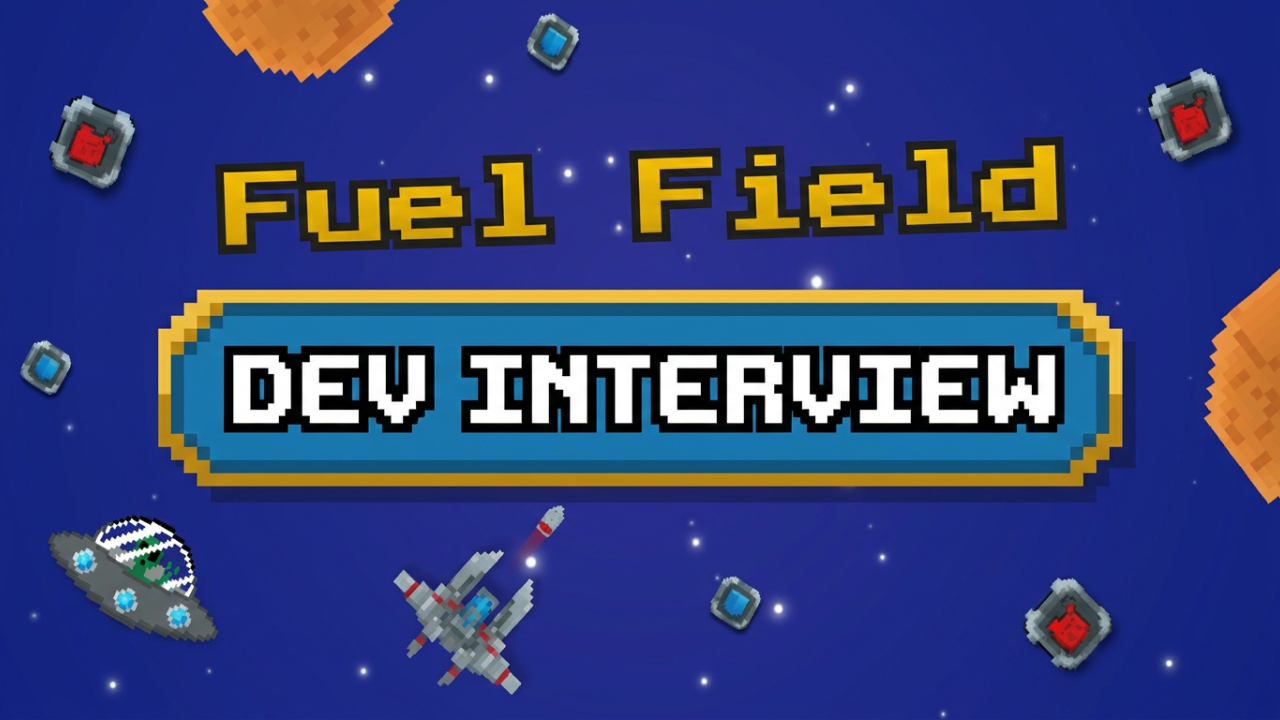
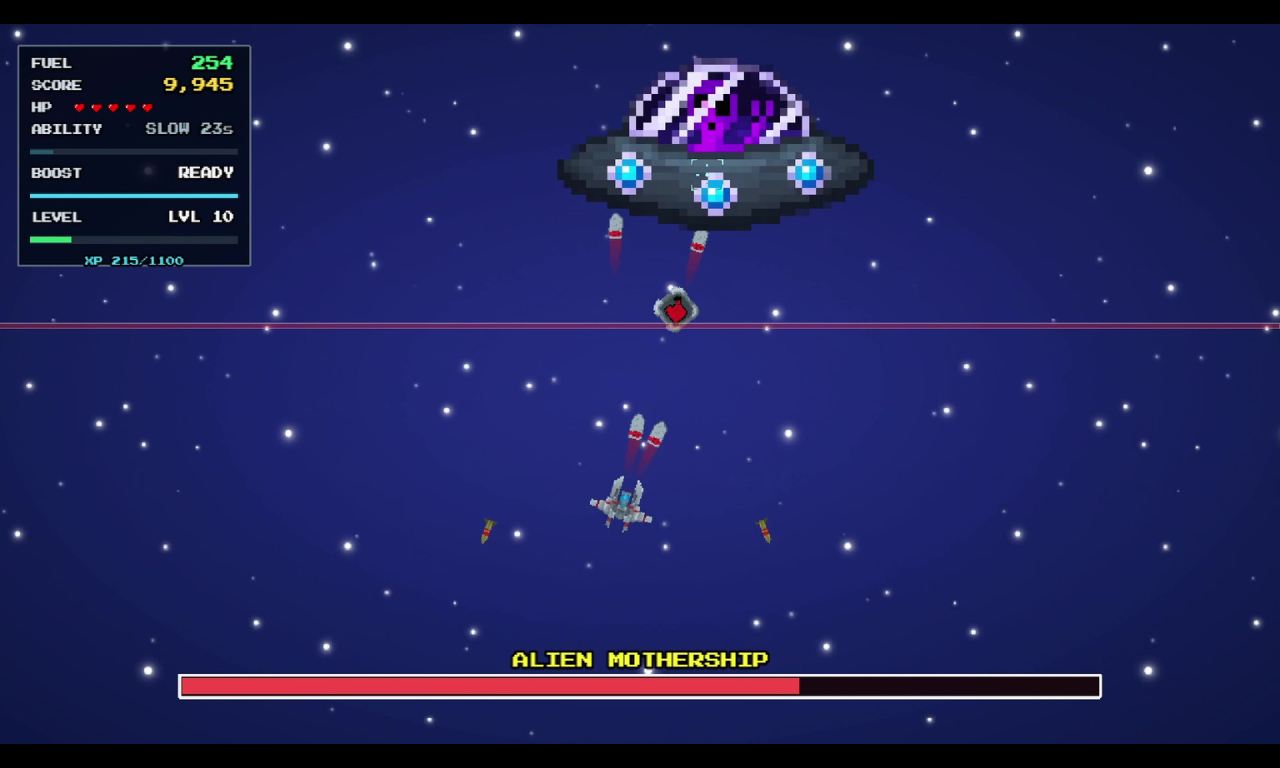
Fuel Field is a fast-paced arcade roguelite built entirely with Phaser 3. You manage your fuel while fighting increasingly difficult enemy waves, levelling up, unlocking abilities, and taking on bosses. Every boost and dodge burns fuel, so every decision counts.
The game started as a university assignment by Finley Nye, a second-year student who had never written a line of JavaScript before. He kept working on it after the deadline, and what began as coursework became a complete published game. Below, Finley breaks down how he built it, how he shipped it on Android via Capacitor, and what it taught him about finishing and releasing a game as a solo developer.
Fuel Field is available now on Google Play, iOS, and itch.io. Finley has also been documenting the full development journey on YouTube.
From Zero JavaScript to a Shipped Phaser Roguelite
Q: Fuel Field started as a university project. At what point did you decide to turn it into a full release?
Fuel Field originally started as a university project at the beginning of my second year. I hadn't ever written a line of JavaScript before and, honestly, I wasn't particularly excited to learn it either. Mostly because my peers would constantly criticise the language, its syntax, and its structure, I found myself influenced by those opinions despite never having written a single line of JavaScript myself.
Once the university module began, though, that changed surprisingly quickly. Our assignment was to create a game using Phaser 3 (October 2025), and I soon realised JavaScript wasn't nearly as intimidating as I had expected. I approached development much like I would in Unity, just without the visual editor. That was definitely a challenge at first, but once the initial framework of the game began to take shape, thanks to the documentation, my lecturer's guidance, and the way Phaser is structured, everything started to click. Before long, Fuel Field had grown far beyond what was required for the assignment.
When the project was graded in January 2026, I had this itch I just couldn't shake to return to Phaser. Unity had always been my favourite engine and the one I felt most comfortable using, but I couldn't ignore how enjoyable the development process had become. The rapid iteration, near-instant loading times, and straightforward debugging meant I could spend far more time experimenting with gameplay instead of waiting for the engine.
Pretty much immediately after submitting the project, I carried on developing Fuel Field because of those advantages. The more I worked on it, the more I realised the core gameplay had far more potential than I'd originally given it credit for. Every time I opened the project, I found another mechanic or system I wanted to improve. That was the point where I stopped treating Fuel Field as coursework and started developing it with the intention of releasing it publicly.
"That was the point where I stopped treating Fuel Field as coursework and started developing it with the intention of releasing it publicly."
Shipping a Phaser Game on Android with Capacitor
Q: You built Fuel Field with Phaser 3 and shipped it on Android using Capacitor. How did that process work?
One of the reasons I enjoyed working with Phaser so much was that I knew from the beginning I wasn't limited to releasing Fuel Field in a browser. Once I had a version of the game that I was happy with, I started looking into ways of bringing it to mobile and came across Capacitor.
The process itself was surprisingly smooth. The game was still fundamentally my Phaser project, but Capacitor allowed me to package it as a native Android application, build it through Android Studio, and eventually publish it on Google Play.
One challenge that really caught me off guard, however, was Google Play's testing requirements. At the time, new developer accounts couldn't immediately publish to production. Before I could even request production access, I had to recruit at least 12 testers who remained enrolled in a closed testing programme for 14 days.
As a solo developer with a relatively small audience and limited budget, I ended up delaying the release by several months. Looking back, it was frustrating, but it also taught me one of the biggest lessons of the project: releasing a game isn't just about writing code. You also need to think about playtesting, user experience, and gathering genuine feedback.
After iterating on Fuel Field for so long, I naturally approached the game exactly as I'd designed it. New players didn't have that same context. Watching people play and listening to their feedback highlighted issues I would never have spotted on my own, from UI layout and control placement to mechanics that needed clearer explanations. Those extra months of testing ultimately made Fuel Field a much better game than the version I originally planned to release.
Q: Going from a web prototype to a mobile release involves a lot of moving parts: controls, store requirements, QA. What surprised you most?
The biggest surprise for me was just how much that extra polish mattered.
When you're developing a game by yourself, it's very easy to just assume everything feels great, intuitive even, because you have spent months playing it. By the time I reached the mobile release, I knew every mechanic, every menu, and every control without having to give it a second thought. New players obviously didn't have the same understanding.
Which is why the playtesting changed my perspective. I was able to watch people interact with Fuel Field, which highlighted issues like virtual joystick placement, button sizes, UI scaling across different devices, and even the wording of the tutorial needed to be changed once I saw how people approached the game on their first play.
I was also surprised by how many different devices that I needed to consider. A layout on one phone could feel cramped on another, so a lot of time was spent making the interface adapt to different screen sizes and aspect ratios.
How Phaser Made It Possible
Q: How has your experience with Phaser been, and what did it make possible in this project?
Before Fuel Field, I had never worked in Phaser or JavaScript, so I really didn't know what to expect. Looking back now, I can confidently say it completely changed my perspective on both.
What stood out to me was how approachable everything felt once I got started. Phaser's documentation was excellent, and because the engine stayed out of my way, I could spend more time experimenting with gameplay instead of trying to understand the framework itself. The rapid iteration and the near-instant loading times made the development process very enjoyable, especially coming from engines where waiting for projects to compile can interrupt the workflow.
As Fuel Field continued to grow, I never felt like I had reached the limits of what Phaser could actually do.
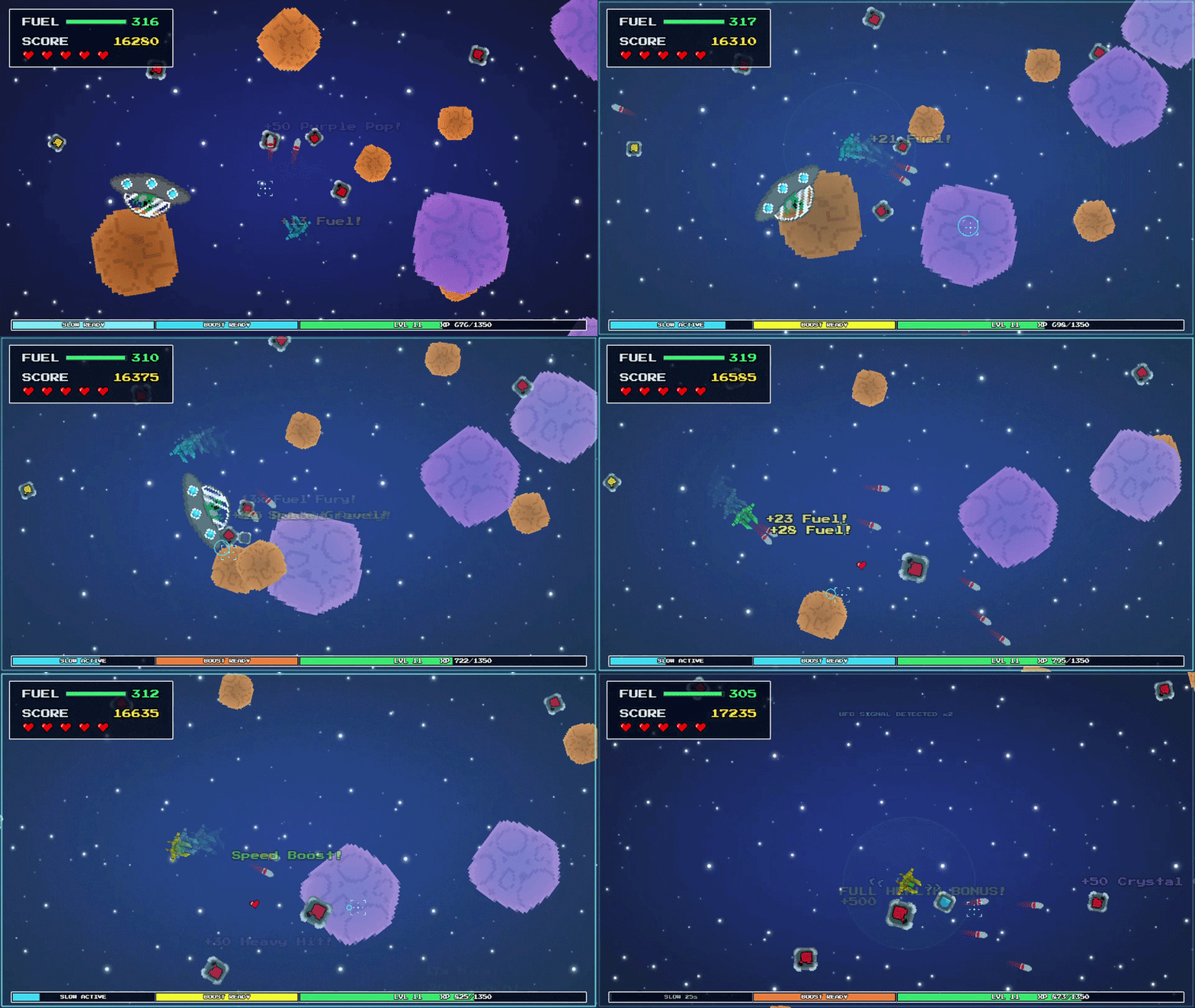
What started as a relatively simple university assignment evolved into a much larger project, which featured progression systems, bosses, achievements, multiple input methods, controller support, mobile controls, and releases across multiple platforms. All of which stayed within the same codebase.
Q: What other tools or libraries were essential during development?
Besides Phaser, Capacitor was the most important tool because it allowed me to target Android and iOS from the same codebase. I also relied heavily on Visual Studio Code, GitHub, Android Studio, and Xcode. As the project grew, the version control became just as important as writing the code because it gave me the confidence to experiment without worrying about losing work.
"I never felt like I had reached the limits of what Phaser could actually do. What started as a relatively simple university assignment evolved into a much larger project, which featured progression systems, bosses, achievements, multiple input methods, controller support, mobile controls, and releases across multiple platforms. Which all stayed within the same codebase."
"The rapid iteration and near-instant loading times made the development process very enjoyable, especially coming from engines where waiting for projects to compile can interrupt the workflow."
Fuel as a Resource and a Survival Timer
Q: Fuel, as both a resource and a survival timer, is an interesting mechanic. Where did that idea come from?
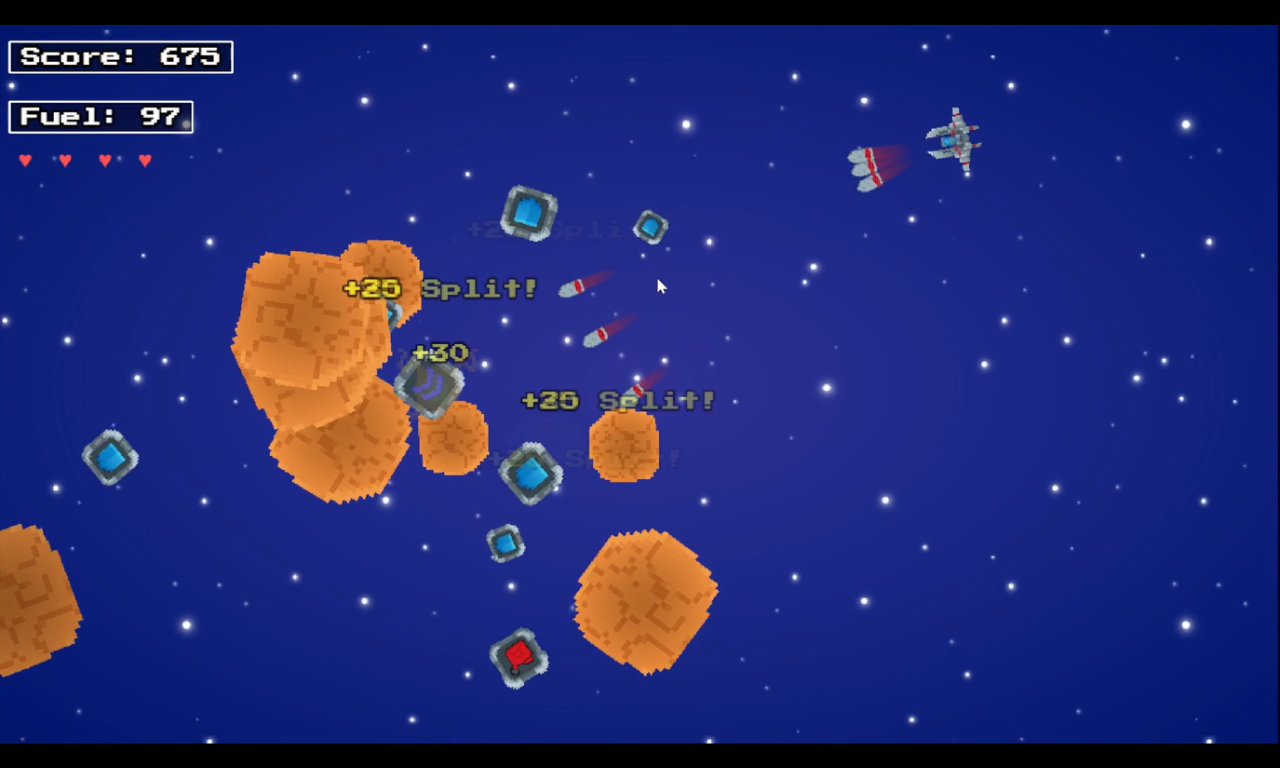
Early on, the ship felt hard to control, and you'd often get hit by asteroids. As I refined the movement and gave the player more control, it became too easy to avoid the danger. So, I tied fuel to both movement and survival. This meant that every boost or dodge used fuel, forcing players to think about every move.
"Phaser has a lot of convenience built into it that's very transferable to other types of game genres."
Building in Public on YouTube
Q: What made you want to document the process on YouTube, and what did you get out of building in public?
It started with a long-standing interest in uploading YouTube content. I've been making videos since I was a kid. Back then, it was just funny clips with friends I'd compile and upload. But when I started game development, I wanted to document that journey too. The difference now is that I have the technical understanding to explain the process, not just show the final product.
Sharing on YouTube lets me show the real ups and downs of development. I've also found it connects with others who appreciate seeing the process.
Q: What would you tell another student or solo dev thinking about taking a university project all the way to a public release?
If you're surrounded by peers, get them to play your game early and often; bug them if you have to. Fellow developers can offer deeper feedback, not just by identifying issues but by offering insight into how to fix them.
If you're solo, share your project widely! The more eyes on it, the more likely you'll find people who connect with it. Don't get discouraged by negative voices; your game will not be for everyone, and that's okay. Focus on those who do see the potential in what you're creating and build from that.
Q: What is next for you after Fuel Field?
Next, I'm continuing work on a group multiplayer extraction survival horror game I'm developing with friends, although that's still months from completion.
On a personal level, I'm heading into my final year at university, where I'll be planning and building a VR project, writing a dissertation, and aiming for a First Class degree. While I once considered a Steam release for Fuel Field, I realized it's best catered to a mobile audience. So instead of forcing it onto Steam, I'm taking all the lessons I learnt and applying them to future projects.
"Don't get discouraged by negative voices; your game will not be for everyone, that's okay. Focus on those who do see the potential in what you're creating and build from that."
Play Fuel Field on Android, iOS, and itch.io
Fuel Field is free to play on Google Play and iOS. If you prefer browser-based play, it's also on itch.io. And if you want to follow the journey from university project to published game, Finley documents it all on YouTube 🎞️