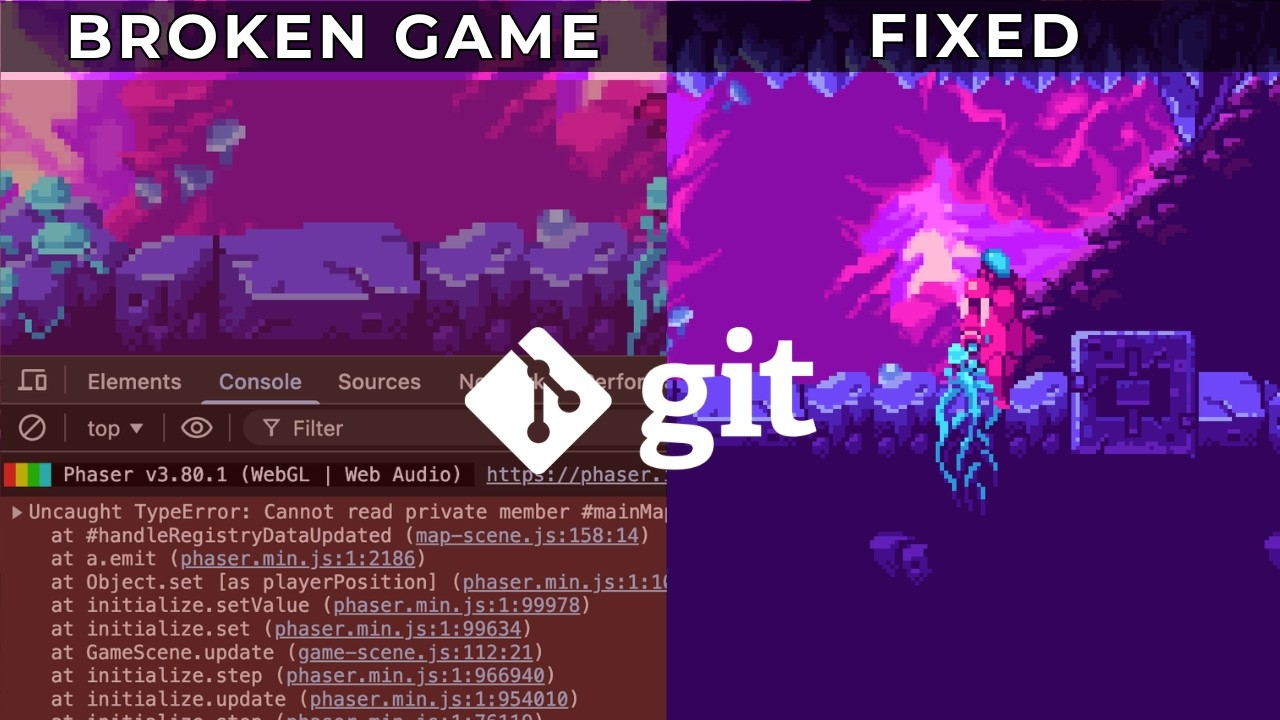

You paste in a code change, the game breaks, and you have no idea how to get back to the version that worked. This tutorial by Scott Westover shows you how to fix that in minutes.
It happens to almost every developer building their first game. Everything is working: player movement, collisions, maybe even a score system. Then you paste in a change from an AI assistant or try to refactor something, and suddenly nothing works. You start scrolling through files trying to remember what changed, making it worse. Sometimes you recover. Sometimes you don't.
Git version control solves this completely. It lets you create checkpoints in your project so you can restore a working version in seconds, without any manual debugging or lost work. And you don't need GitHub or any online service to get started. Running Git locally on your machine is already enough to protect hours or days of work.
What This Tutorial Covers
In this video, Scott Westover walks through the full workflow from scratch using a Phaser project: how to initialize Git, how to create commits as checkpoints, and how to restore a working version instantly when something breaks. He even intentionally breaks his own game on camera to demonstrate the recovery in real time. It's short, practical, and aimed directly at game developers who have never used version control before.
The video walks through:
- What version control is and why it matters for game development
- How to initialize Git in an existing Phaser project
- Creating simple checkpoints with commits
- Restoring a working version when something breaks
Good habit: create a commit every time something works. Small, frequent checkpoints make recovery much easier than one big commit at the end of a session.
Once you're comfortable with local Git, you can connect it to services like GitHub or GitLab for cloud backups and collaboration. But local Git alone is already a significant improvement to your workflow and the best place to start.
Stop Losing Progress. Start Using Git.
Scott Westover's tutorial walks you through the full workflow in a few minutes. If you're building games with Phaser, this is one of the most valuable habits you can develop early.