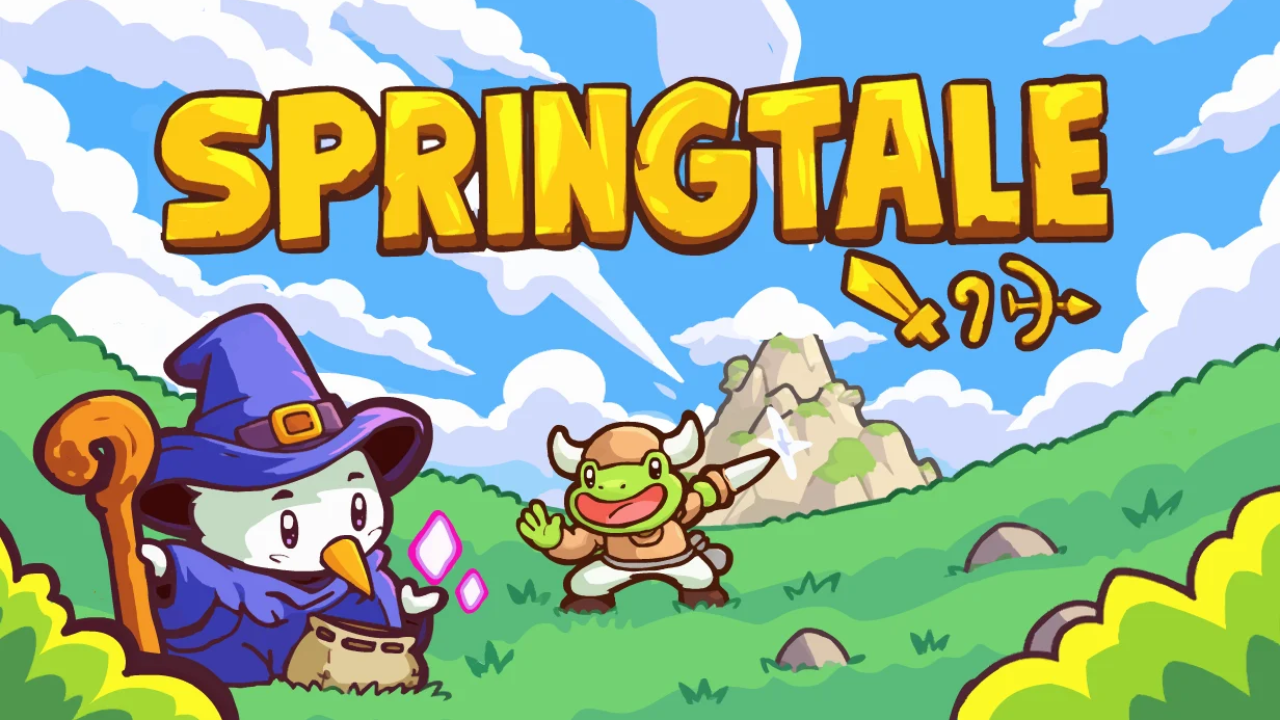
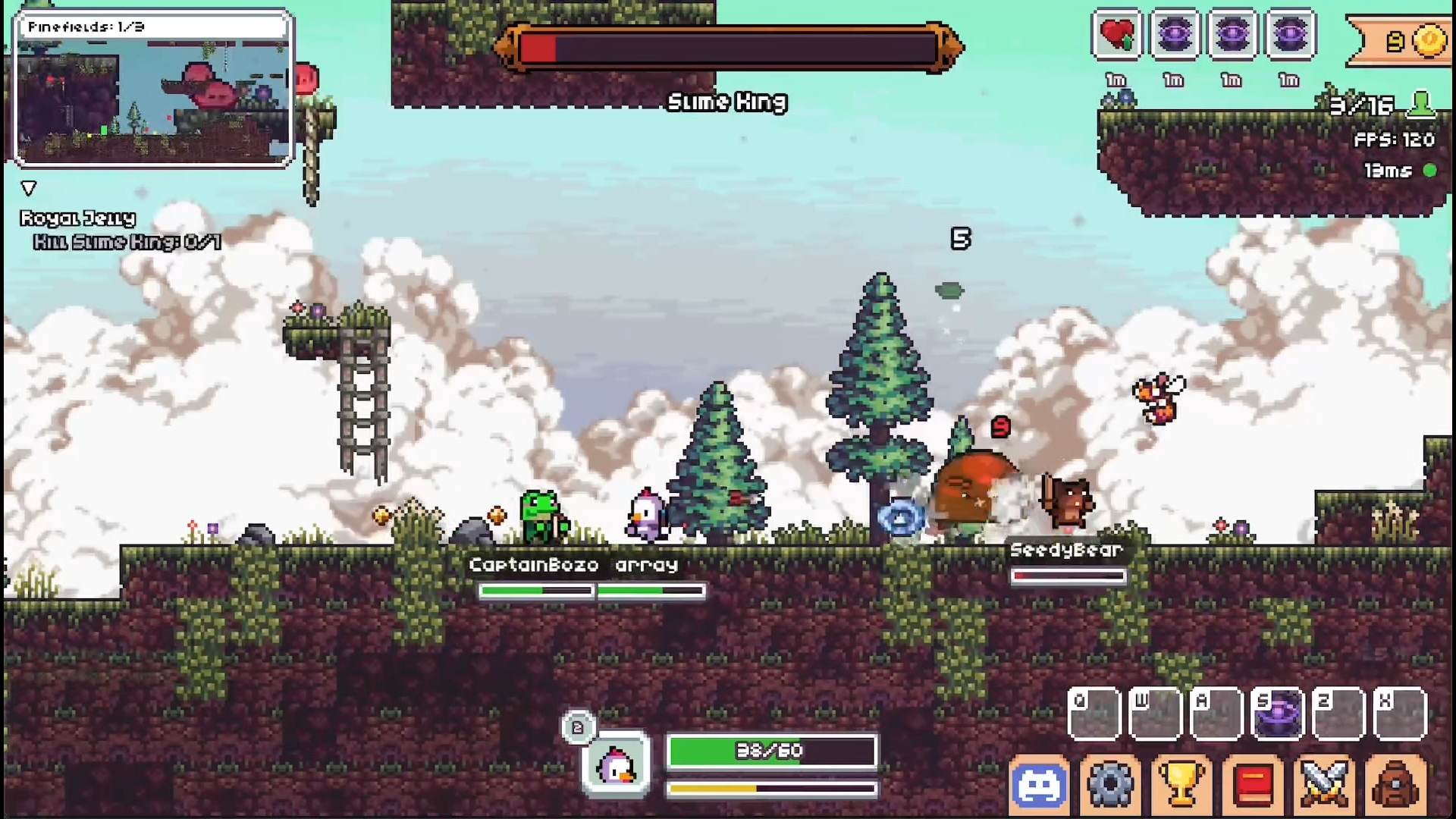
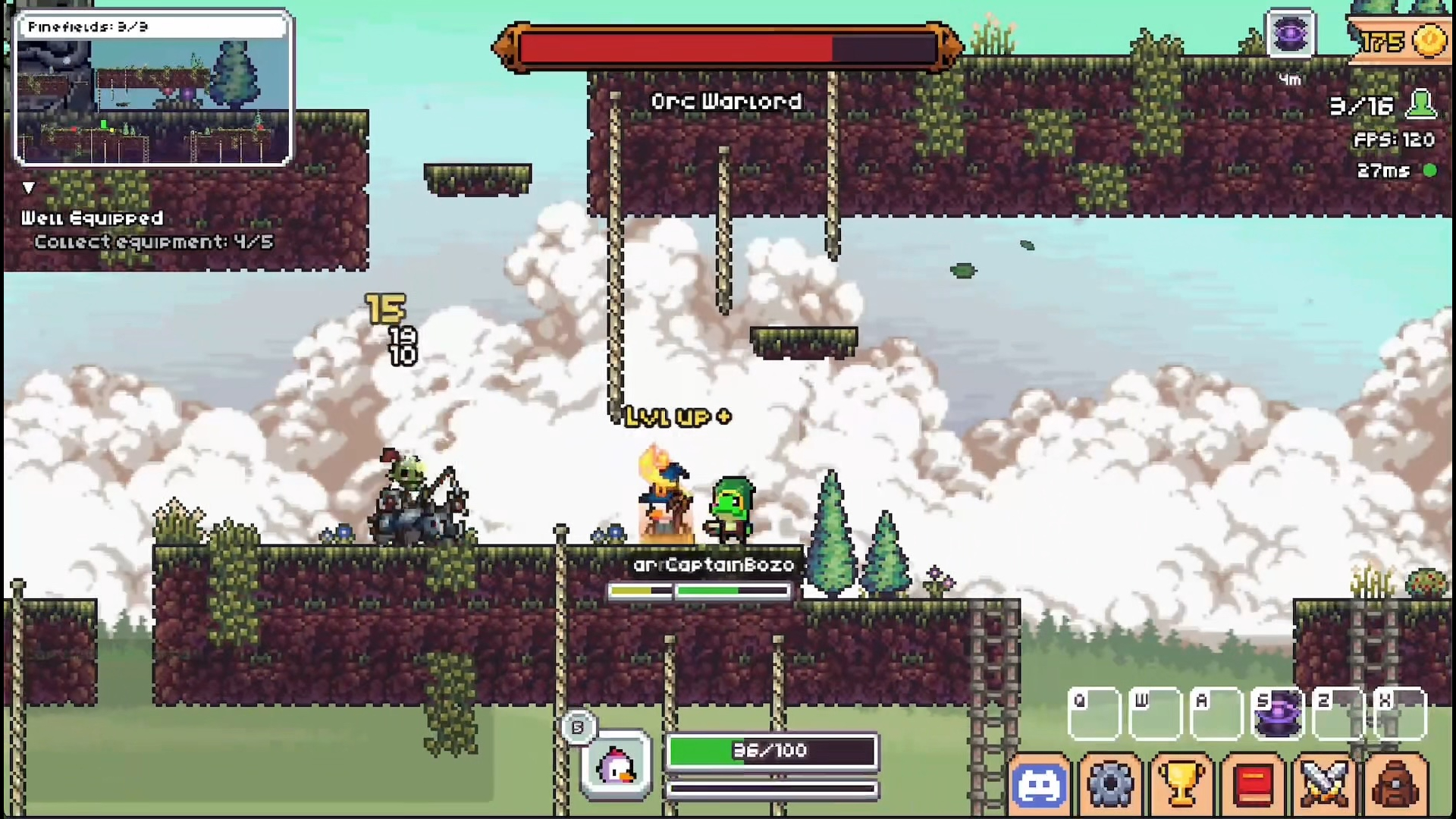
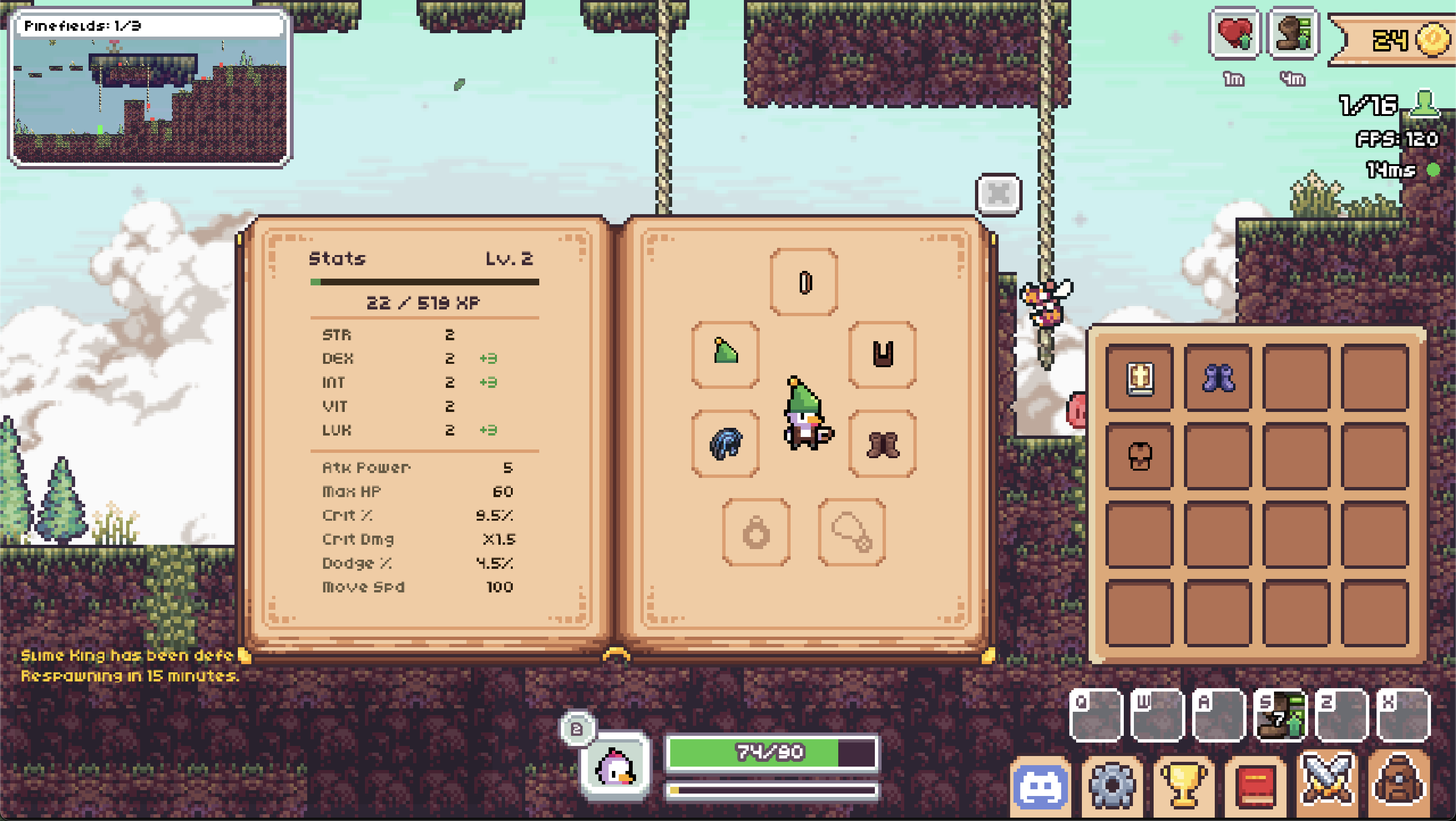
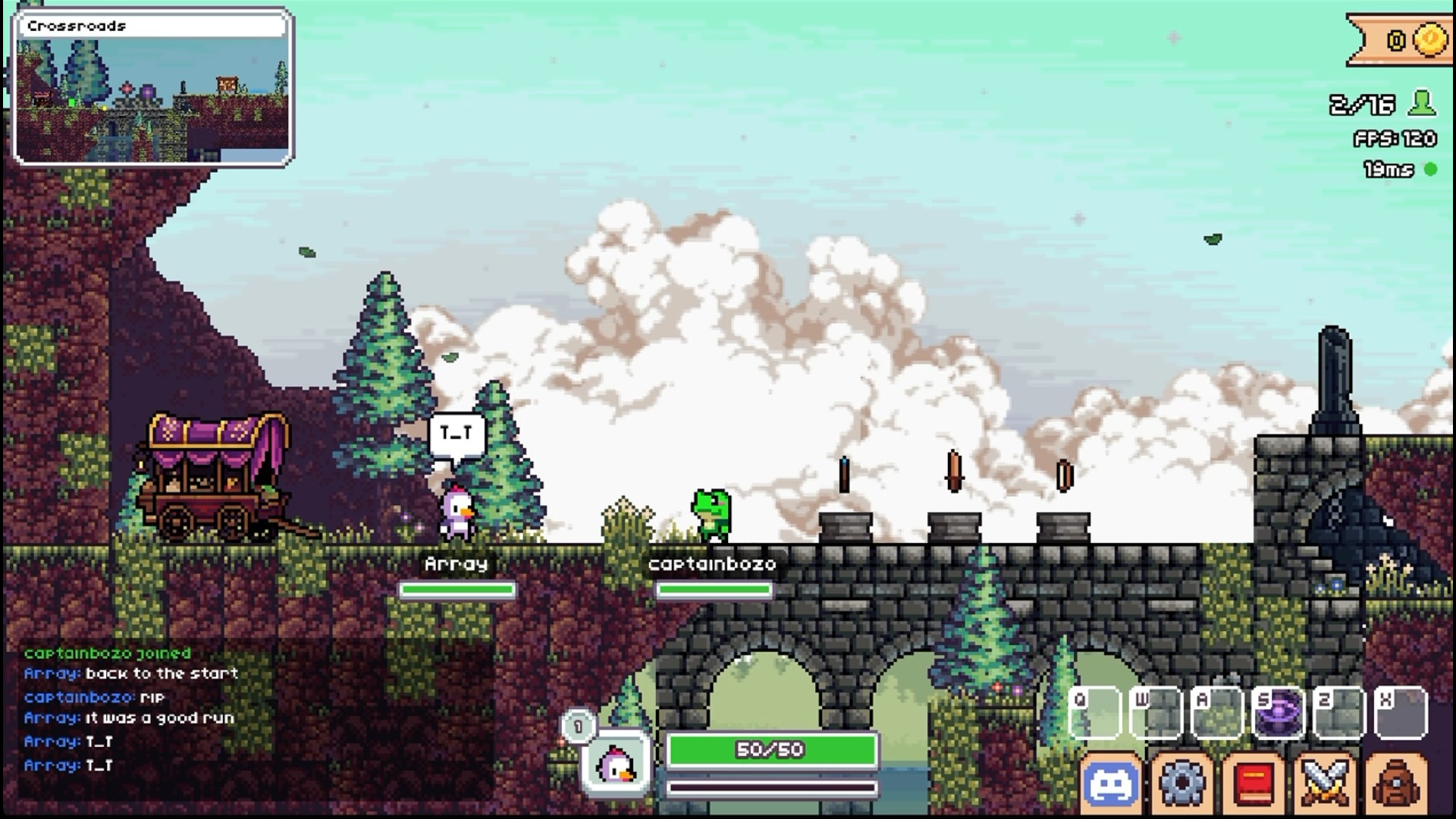
SpringTale is a 2D roguelike platformer MMO built with Phaser and Colyseus by Edward Vercoe, a mobile app and web developer from Sydney, Australia. Everyone plays in the same shared world: you run into other players while exploring, team up for challenging bosses and gather in town. There are no fixed classes, because weapons, armor and accessories determine your abilities and stats.
Procedurally generated maps refresh every 24 hours, bringing new layouts, events and encounters. Death ends a character's run and drops their equipped gear, but anything stored in the vault stays safe. SpringTale has a live playable demo, takes part in Steam Next Fest in October, and the full release is planned for December.
We spoke with Edward about where the idea came from, why Phaser and Colyseus share a language, and how permadeath can feel fair in a persistent world.
The Idea Behind SpringTale: A Roguelike Platformer MMO
Q: Where did the idea for SpringTale come from?
SpringTale undoubtedly borrows a lot of its core concepts, like permadeath and combat, from Vagante, one of my favourite games of all time. I also grew up playing MMOs like RuneScape, MapleStory and Ragnarok, all of which are set in shared online worlds. SpringTale takes gameplay elements from Vagante and combines them with the persistent world of those classic MMOs.
Q: What makes SpringTale different from other roguelikes or MMOs out there?
Most roguelikes are balanced and designed for single-player or small multiplayer groups of up to four or so people. Designing SpringTale to accommodate a dozen or so players in the same area was certainly a challenge. However, I've tried my best to encourage and even promote cooperative play between players as a way to progress and succeed.
The major difference between SpringTale and traditional MMOs is the idea that even though players may die and lose their immediate progress, not all is lost. Every run gives players a better understanding of enemy attack patterns, while any valuable gear stored in their vault persists through death, giving them opportunities to experiment with different weapons and playstyles.
Building an MMO Solo with Phaser, Colyseus and TypeScript
Q: You are a mobile app and web developer by trade. What made you decide to build an MMO solo, and how did it feel to take that leap?
A lot of the architectural decisions were influenced by my experience as an app and web developer. Working with servers and databases is part of my day-to-day job, so it felt natural to incorporate them into a game.
Q: How long have you been working on SpringTale, and how do you fit it around your work as a developer?
I started development on SpringTale in February this year. I'm lucky enough to work remotely, so I try to make the most of my time before and after work to develop the game.
Q: You chose Phaser for the client and Colyseus for the server. How does that combination work, and why those two specifically?
Both for the simple reason that they allow me to code in the same language: TypeScript. It's a language I'm extremely familiar with and use on a day-to-day basis at work.
Phaser handles everything on the client side, while Colyseus manages the multiplayer state and game simulation on the server.
Q: Everyone plays in the same shared world in real time. What were the biggest technical challenges of making that work with Phaser?
To be honest, I haven't had any real challenges with rendering lots of players or entities in Phaser. It's super performant!
"To be honest, I haven't had any real challenges with rendering lots of players or entities in Phaser. It's super performant!"
Procedural Maps, Permadeath and Classless Gear in SpringTale
Q: Maps are procedurally generated and refreshed every 24 hours. How did you approach that system?
Procedural maps are made up of hand-designed "chunks" that are randomly stitched together at their entrance and exit points each day. This method requires a lot of chunks to be designed in order to have a large enough pool for variety in every playthrough, but I think the trade-off is worth it.
Q: Permadeath in an MMO is a bold design choice. How did you design around it so losing a character feels fair rather than frustrating?
Every time a player dies, they learn something. How to avoid a specific enemy's attack, what skills work best with different builds, and so on. Players need to shift their mindset from "all my progress is lost" to "now I know what to do when I reach this stage of the game again". Also, any loot that was stored in a player's vault is secure for future runs.
Q: SpringTale has no fixed classes and your gear determines your abilities. How did you design and balance that system?
Honestly, as a solo developer, I've tried my best to balance things on my own while leaning heavily on a supportive community to playtest the game. I'm really lucky to have some dedicated players who are willing to spend hours meticulously testing and providing feedback.
Phaser, GemShell and the Road to the SpringTale Steam Release
Q: What has Phaser made possible in SpringTale that would have been hard to achieve otherwise?
Creating a game using my favourite language! TypeScript made Phaser accessible so I can focus on the game feel and not the technical implementation. Phaser allows me to approach game development using many of the same skills and workflows I already use professionally.
"TypeScript made Phaser accessible so I can focus on the game feel and not the technical implementation."Q: What other tools or libraries have been essential during development?
I have to give a big shoutout to GemShell. It's a tool that makes building the game for Windows and Mac, and shipping it to Steam, extremely easy. I'd recommend any developer creating games with Phaser check it out!
Q: SpringTale is heading into Steam Next Fest in October. What are you hoping to get out of it?
Lots and lots and lots of wishlists! In all seriousness, I'm hoping to get more eyes on the game and grow our little SpringTale community even more.
Q: What is next for SpringTale after Next Fest?
The full game release is planned for December this year. Not long now, wish me luck!
SpringTale is planned for Windows and macOS on Steam, and a live playable demo is available now. A Discord community is growing around the game.
Try the SpringTale Demo
Jump into the shared world with the live demo, and wishlist SpringTale on Steam to follow the road to the December release.