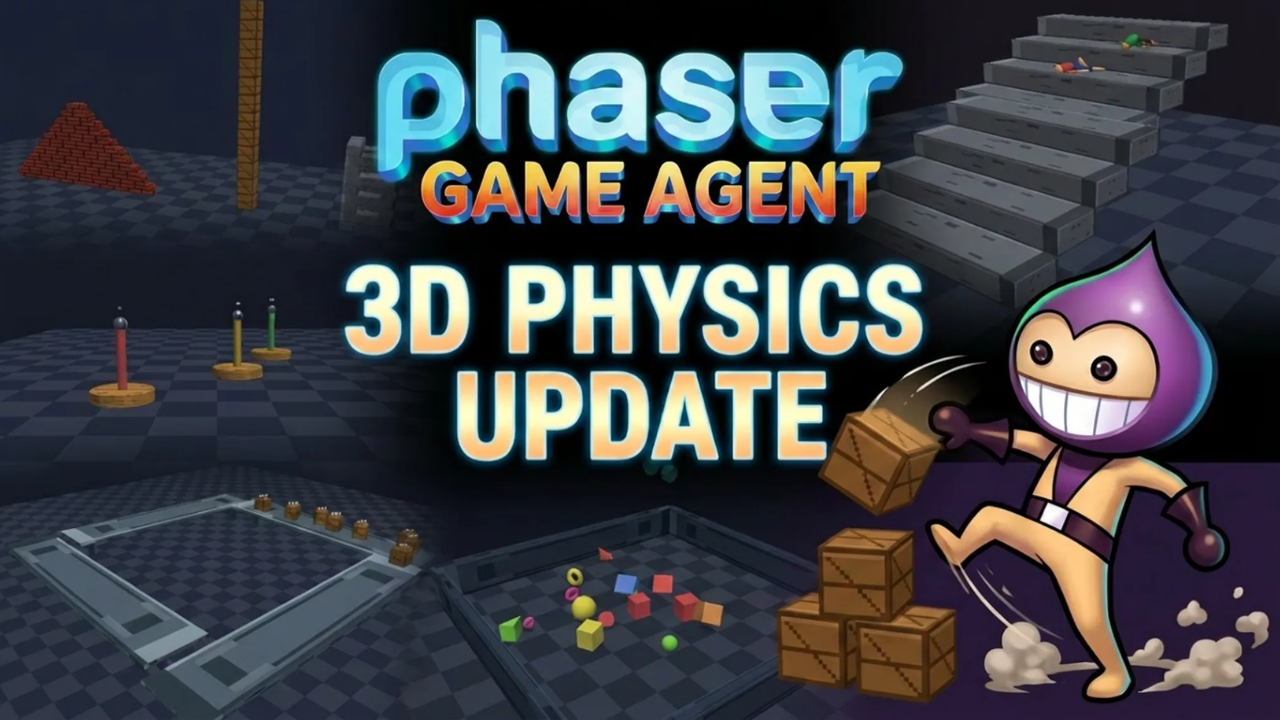


You don't build any of this by hand. You describe the scene and the rules, and everything in it starts obeying gravity and bumping into everything else. It's the difference between a world that's painted and a world that's alive.
A good rule of thumb: reach for physics when the tumbling, stacking, throwing or knocking-things-over is the game. For simpler movement, a ship sliding across the screen or a character walking a set route, the lighter built-in motion is still the better fit.
Stacking, Toppling and Knocking Things Down in Phaser 3D Physics
Build a tower, a wall, a pyramid, a wobbly chimney of crates and it stays up, balanced by the same forces that hold up a real stack. Until something hits it. Then it comes down properly: pieces slide, teeter and scatter, each one bumping the next. Nothing is faked or scripted; the stack is genuinely holding itself together, so knocking it over is always satisfying and never plays out the same way twice.
This is the heart of a whole genre of games: tumbling towers, demolition, clear-the-blocks, knock-em-down carnival stalls. Everything can be reset back to its starting shape instantly for another go.
"Build a tall tower of crates the player can knock over, and let me rebuild it to try again.""Make a pyramid of blocks that collapses realistically when something smashes into it."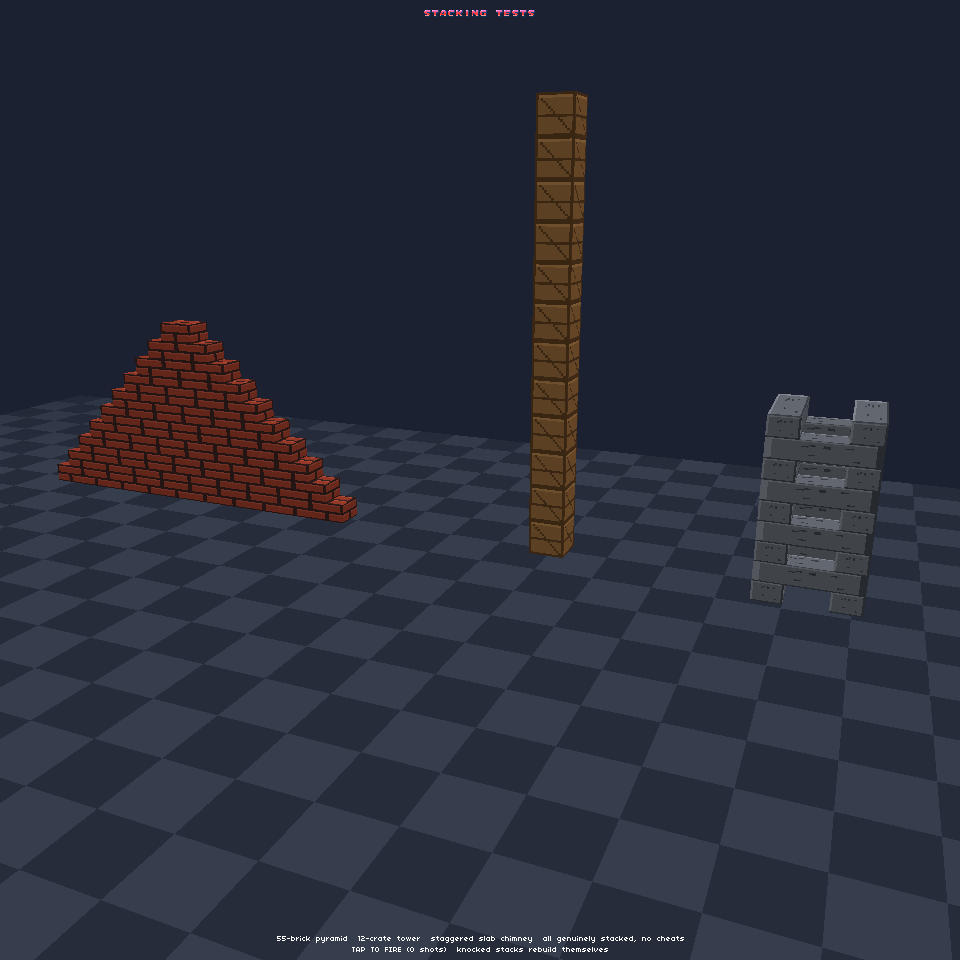
Throw, Launch, and Smash in Phaser 3D
Anything can be given a shove: fire a cannonball into a stack, launch a barrel, flick an object across the room, and it carries real momentum into whatever it hits. You can dial in exactly how things feel: a ball that barely bounces versus one that pings around like rubber, an icy ramp things slide down versus a grippy one they stop on, heavy objects that plant themselves versus light ones that skitter away.
And explosions do what explosions should: set one off and everything nearby gets thrown outward and upward, harder the closer it was. Pair that with a fireball effect and a barrel blast will scatter a whole stack of crates.
"Let the player fire cannonballs that knock down the stack of crates.""Make the red barrels explode when hit and send everything around them flying."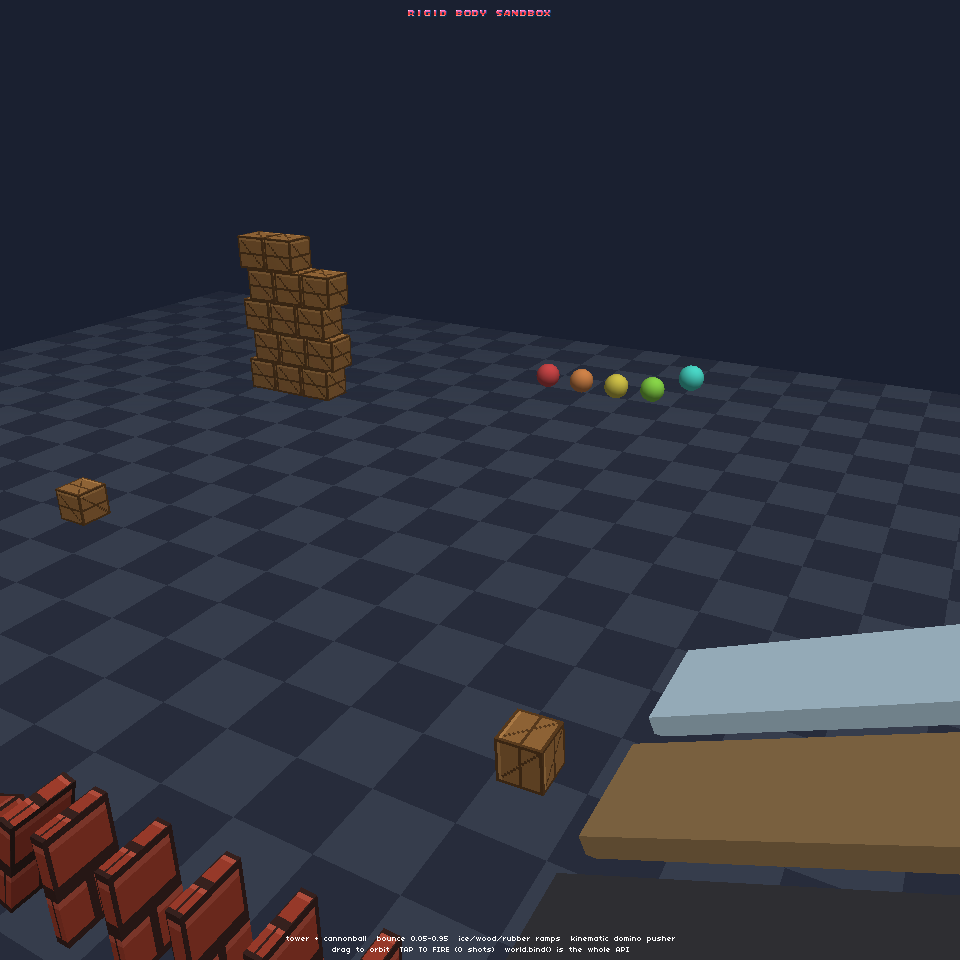
Every 3D Physics Object Behaves Like the Real Thing in Phaser
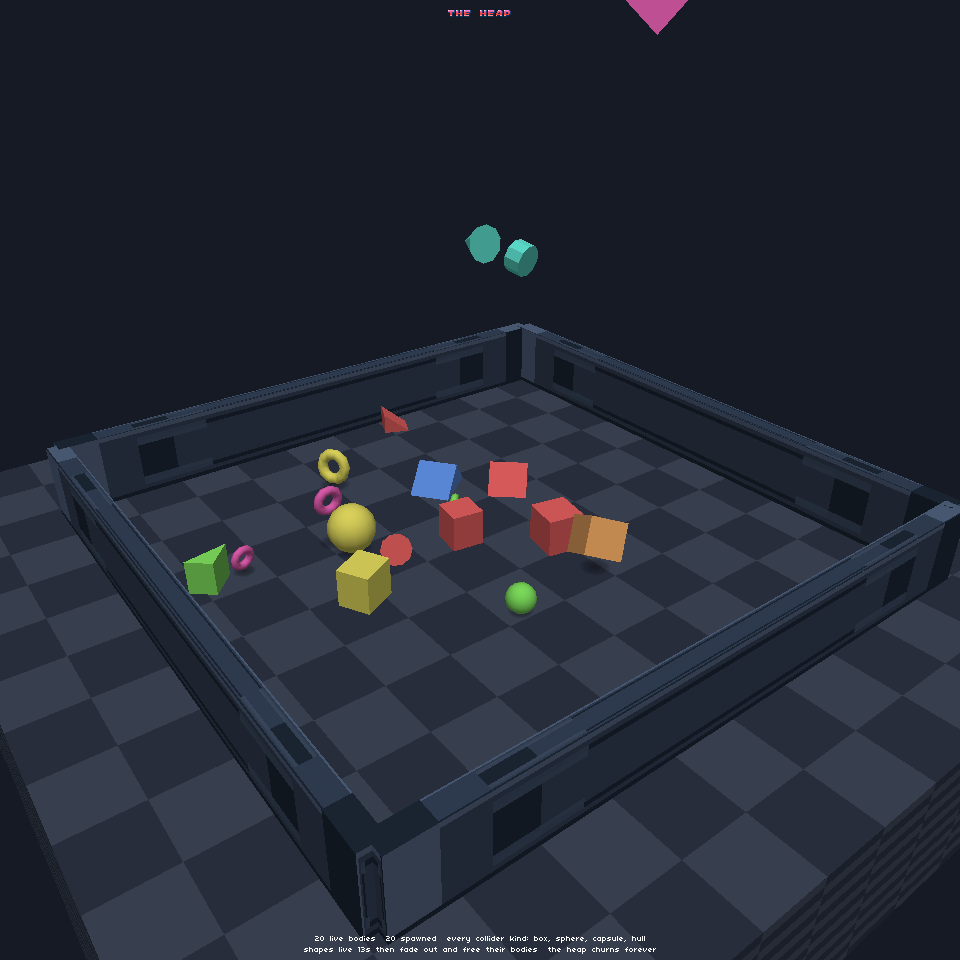
Every kind of shape is supported and each behaves correctly: boxes tumble on their corners, balls roll, capsules lie down, cones tip over, and rings have a real hole so things genuinely thread through them. Drop a mix of them into a pit and they pile up, jostle for room, and settle into a believable heap.
You can also bend the rules for fun: crank gravity up for a heavy, weighty feel, drop it to the moon for floaty slow-motion, or make certain objects light as a feather.
"Rain a mix of random shapes into a pit and let them pile up and settle.""Make this level low-gravity so everything floats and drifts when knocked."
3D Character Controller with Physics for Phaser Game Agent Games
There is a ready-made character that walks, runs, jumps, and falls under gravity, and because it is part of the physics world, it can shove crates around, ride on top of a moving platform, and get knocked about like everything else. The classic problem of building a character that moves through a physical world properly is just handled.
You can also drop invisible trigger zones into the world: step on a pressure plate to open a gate, walk into a pickup to collect it, touch the lava and take damage. Whole gameplay systems fall out of it.
"Give me a character I can run and jump around this arena, shoving crates as I go.""Add a pressure plate that opens a door while the player stands on it."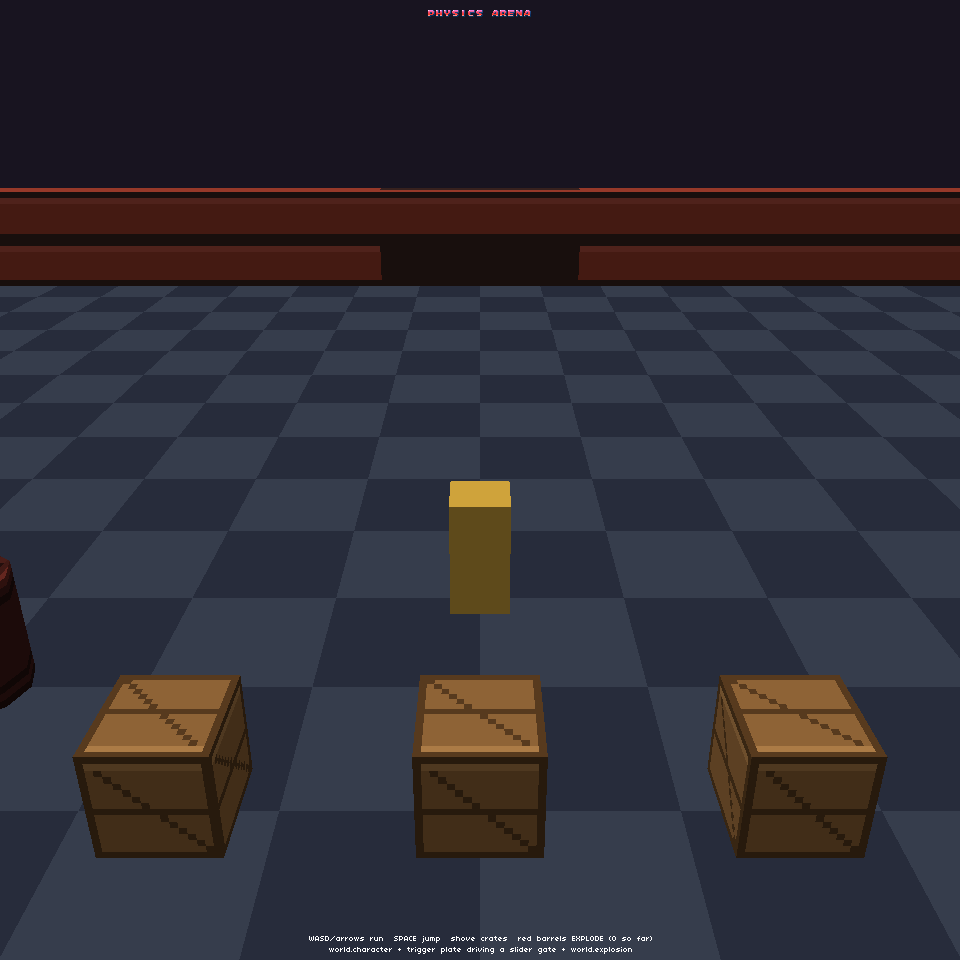
Physics Contraptions and Working Machines for Phaser 3D Games
Connect objects together and you get working machinery. Doors that swing on hinges, windmills and seesaws that pivot, elevators and pistons that slide up and down, cranes and wrecking balls that swing on a rope, pendulums that bob. Add a motor and a hinge becomes a powered wheel or a spinning turntable; a slider becomes a driven elevator that rides to the top and reverses.
This is everything you need for physics puzzles, Rube-Goldberg contraptions, working vehicles, and interactive machinery that players can set in motion and mess with.
"Build a windmill whose sails spin, and let me tap to make them spin faster.""Add an elevator platform that rides up and down between two floors on its own."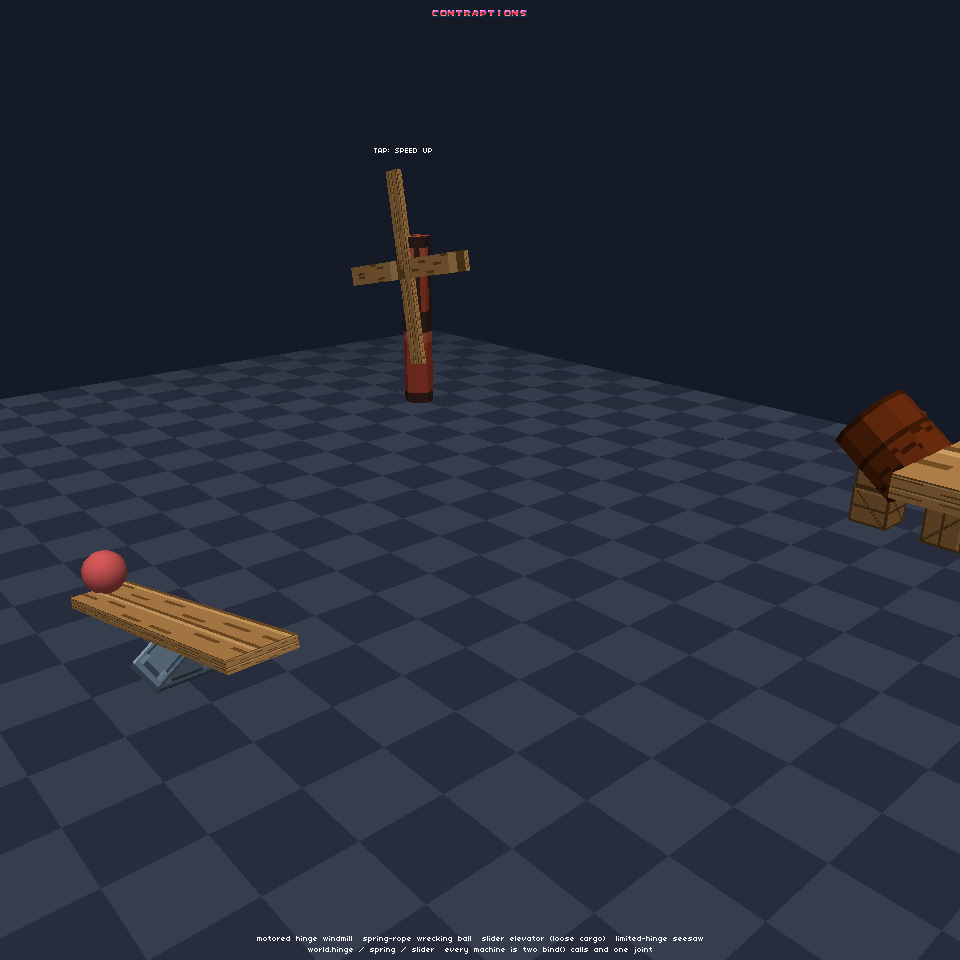
Conveyor Belts and Moving Platforms for Phaser 3D Physics Games
Surfaces can move and carry things along with them. Conveyor belts ferry cargo around a factory, moving walkways push the player along, and grip matters: a grippy crate rides the belt perfectly while a slippery one lags and slides. Loop several belts together and cargo circulates forever, which is the backbone of any factory, sorting, or assembly-line game.
"Make a conveyor belt that carries boxes across the room and drops them off the end.""Build a factory floor where crates ride around a loop of conveyor belts."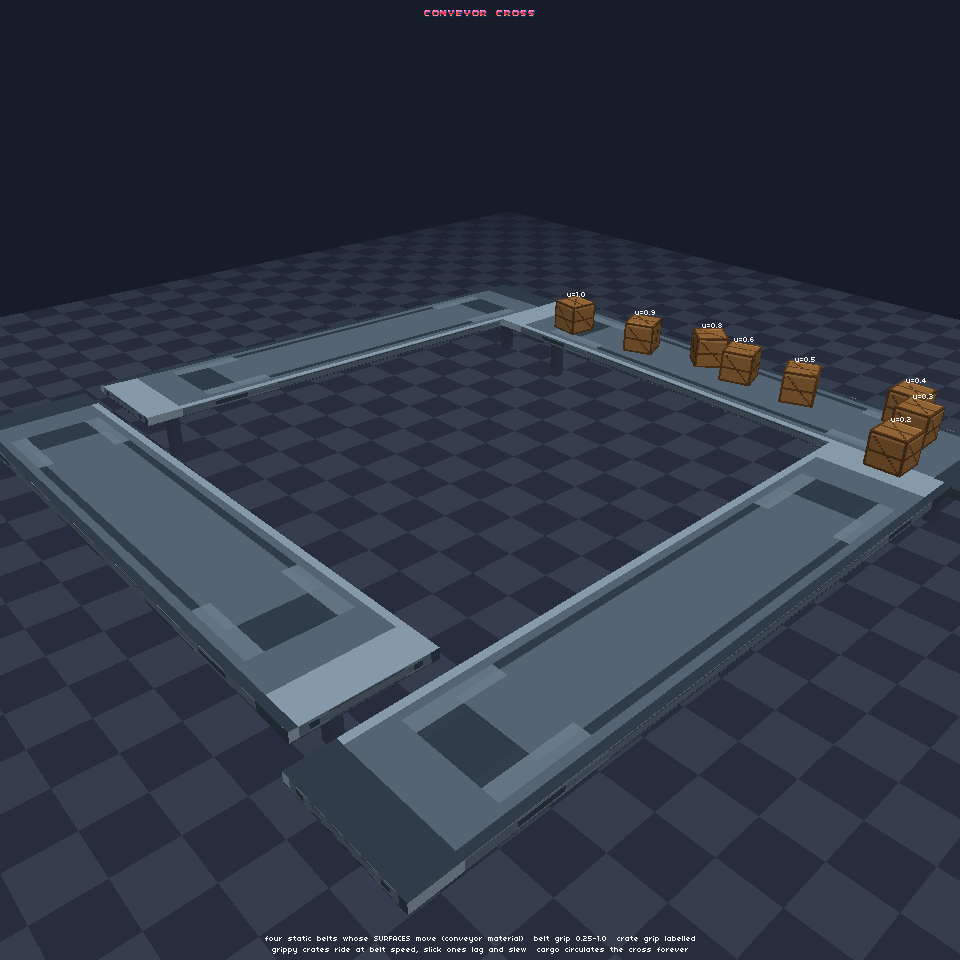
Ragdoll Physics for Phaser Game Agent 3D Games
Give a character floppy, jointed limbs and it flops, slumps, and tumbles like a real body: crumpling down a flight of stairs, flying from a blast, going limp when knocked out. Their joints bend the way a body's should (elbows and knees the right way, shoulders and hips swivelling within limits), so it always looks convincing rather than rubbery. It's the classic source of both comedy and impact in action games.
"Turn the enemies into ragdolls that flop down the stairs when they're defeated.""Make the player character go limp and tumble when they fall off a ledge."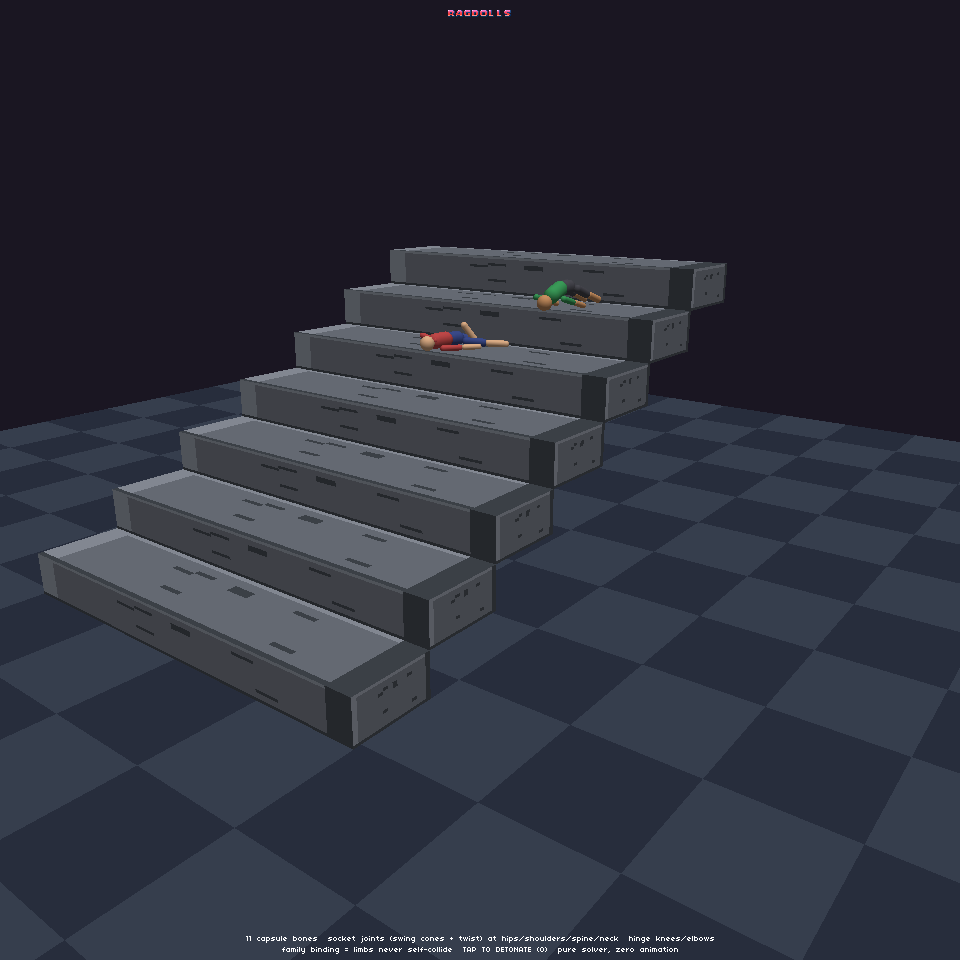
Build Real Phaser Physics Games: Ring Toss, Mini-Golf and More
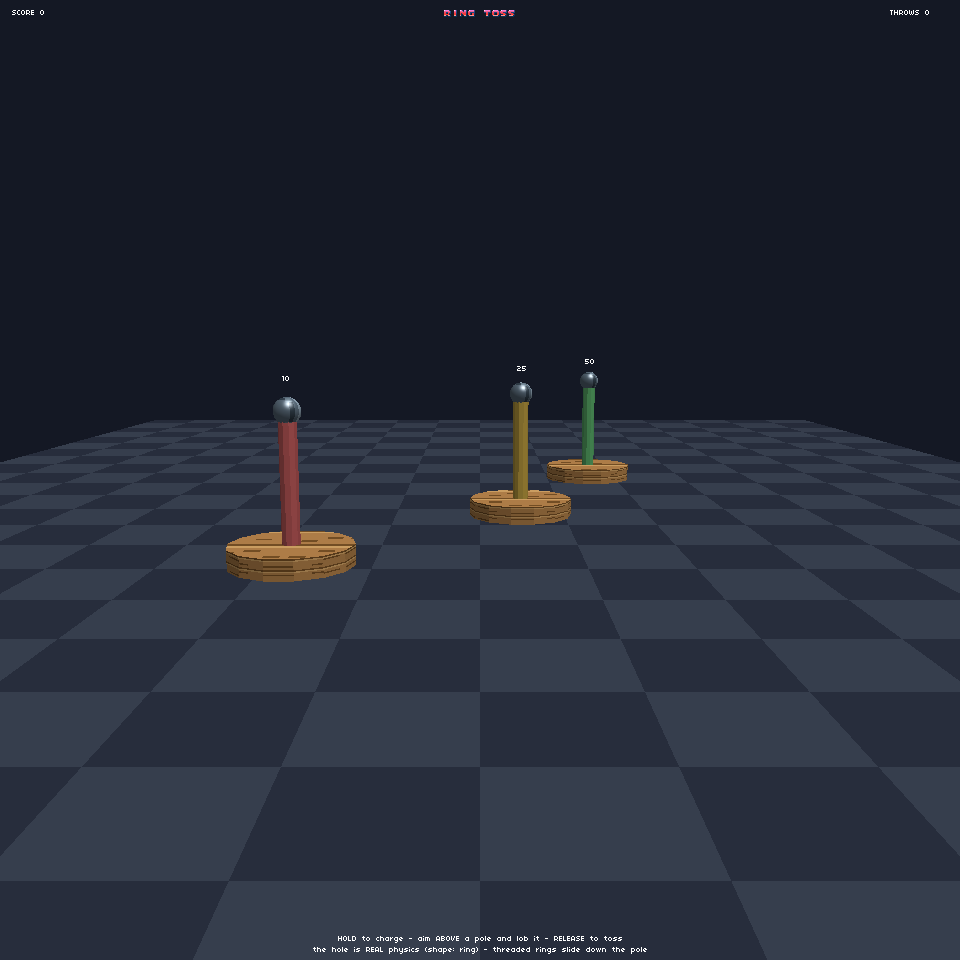
Because all of this is real physics rather than a canned animation, it slots straight into actual, playable games with real scoring. A ring toss is a perfect example: charge up a throw, lob a ring, and it only scores if its hole genuinely lands over a pole and slides down. That honesty is exactly what makes physics games feel fair and worth mastering.
Carnival games, mini-golf, tumbling-tower challenges, demolition puzzles, contraption sandboxes: they are all within reach now, and they all come from describing the setup and the rules rather than coding the simulation.
"Make a ring-toss carnival game where I charge and throw rings onto scoring poles.""Build a mini-game where I knock a stack of blocks off a ledge for points."Physical vehicles, boats that ride the swell, planes and helicopters, tanks and bikes, build on top of all of this too. That's a big enough topic to deserve its own article.
The best way to get a feel for it is to just ask for something and give it a push. Describe a tower, a machine, a pile of shapes or a carnival game, and watch it fall, swing and tumble on its own.
Try the Physics Engine Now
Describe a tower, a machine, or a carnival game. Watch it come to life ✨