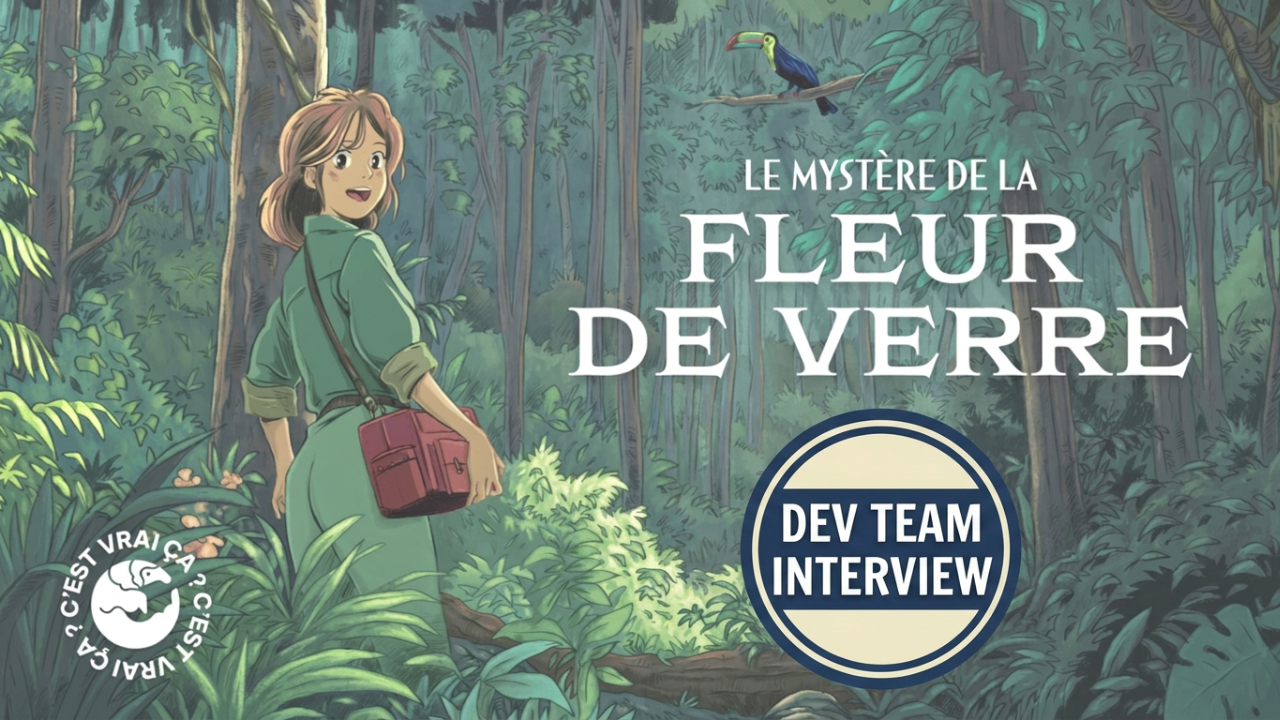
Le Mystère de la Fleur de Verre (The Mystery of the Glass Flower) is a free point-and-click investigation game that teaches fact-checking, built entirely in Phaser. It was made by Sydo, a pedagogical engineering agency based in Lyon, France, for C'est vrai ça?, a French non-profit that fights disinformation.
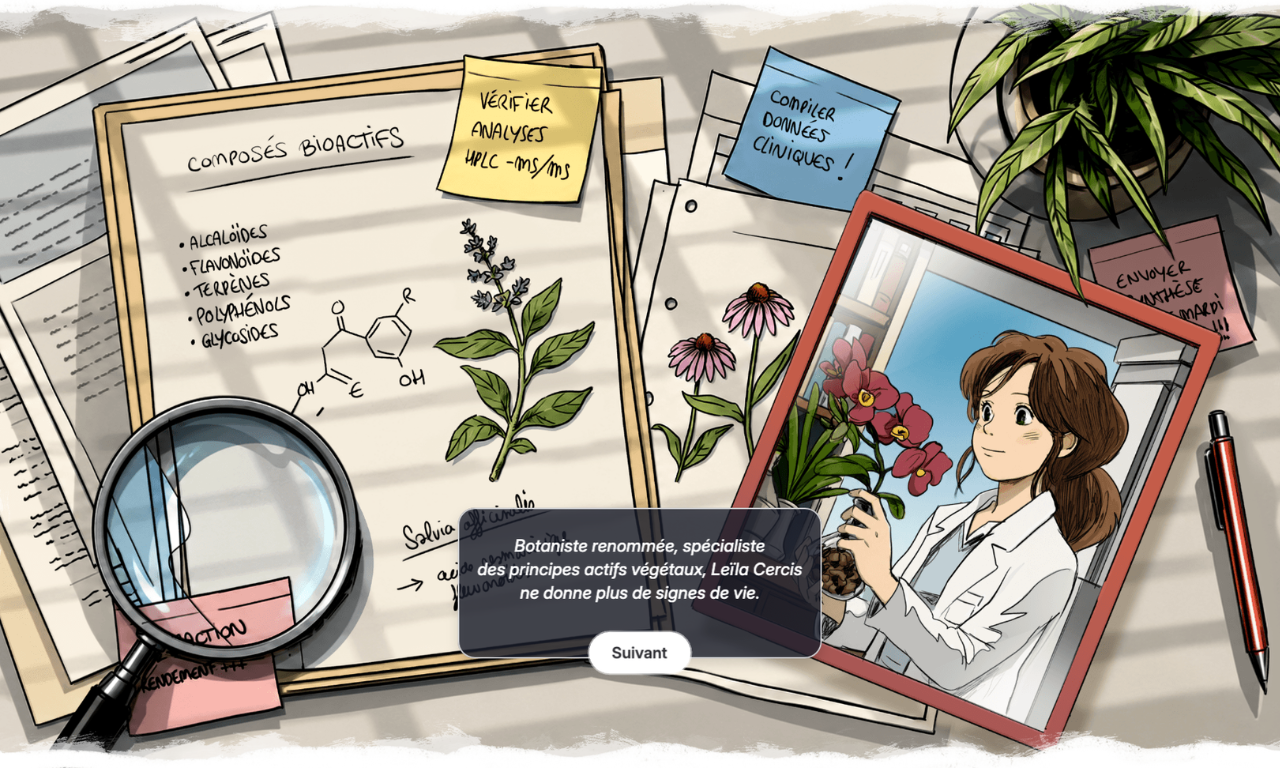
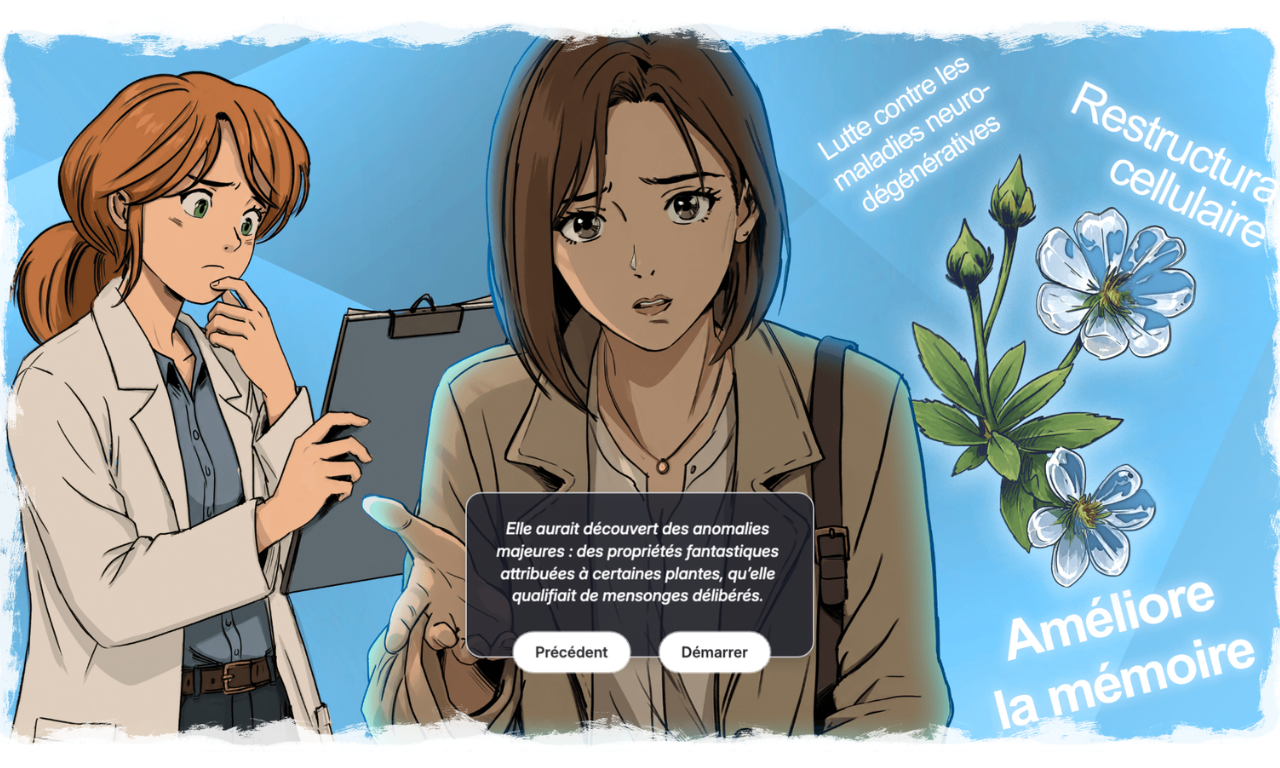
The setup: a botanist vanishes right after announcing the discovery of a flower with miraculous powers. Viral posts start spreading. The player's job is to sort truth from fiction using real tools: reverse image search, AI detection, source analysis, and more.
The game is free, runs in any browser on computer, tablet, or phone, and has no ads. It was built for middle and high school classrooms, and works just as well at home. Sydo uses Phaser as its main framework for e-learning games, but most of its work is private client projects, so a free public release was new territory. Below, the Sydo team breaks down how they built it, how they turned verification tools into gameplay, and what it felt like to ship a game for everyone instead of one client.
How the Game Works: Fact-Checking as Gameplay
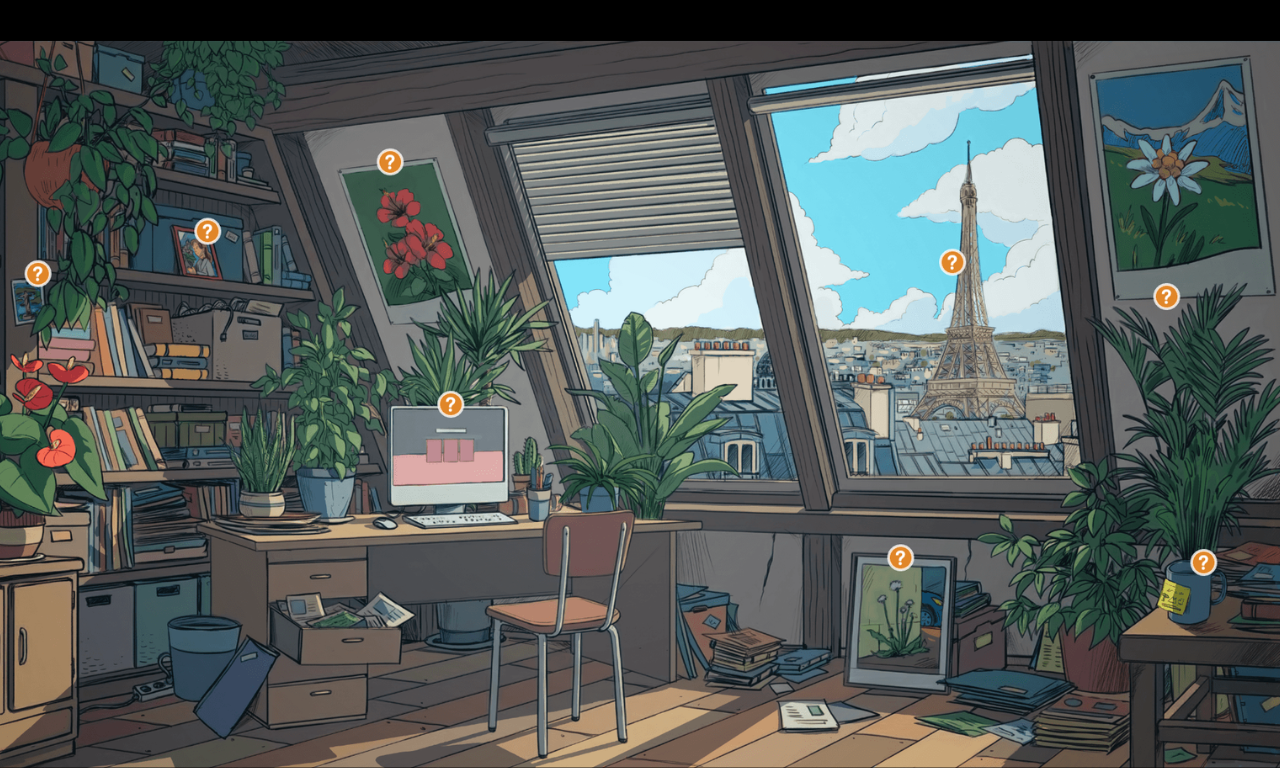
Le Mystère de la Fleur de Verre plays as a point-and-click adventure. You explore scenes, pick up clues, and dig for information both inside the story and out on the open web. The design idea is simple: the tools of fact-checking are the actual verbs of the game. You do not read a tutorial about reverse image search and then answer a quiz. You hit a suspicious photo, you have the tool, and you use it to move the story forward.
That matters because the problem is real. The World Economic Forum's Global Risks Report 2024 ranked disinformation as the top short-term global risk. Spotting one fake image is a skill that expires fast. The habit of pausing to check a source does not. So the goal was never to hand players a rulebook, it was to build that reflex through play. A physical card version is also planned for institutions without digital access.
To build it, C'est vrai ça? partnered with Sydo, whose team walks through the design, the tech, and the release in the interview below.
The Interview
Teaching Fact-Checking Without a Fixed Method
Q: Le Mystère de la Fleur de Verre is quite an unusual game. What were the main challenges of designing a fact-checking experience for students?
For Le Mystère de la Fleur de Verre, the real challenge was teaching fact-checking without offering a fixed step-by-step guide. Designing the game would have been so much easier if a single methodology existed! But since it doesn't, we aimed to instill a critical mindset rather than a method to follow blindly: learning to embrace doubt, cross-reference clues, and navigate between various tools.
The main design challenge was translating this essential trial-and-error process and freedom of investigation into a smooth, accessible storyline, without overwhelming players with overly complex mechanics.
Q: The game teaches fact-checking using real-world tools like reverse image search and AI detection. How did you make that feel like a game rather than a lesson, and how did you balance storytelling with those educational goals?
Our secret was turning the act of fact-checking itself into a core gameplay mechanic. Instead of providing an explanatory guide before introducing each tool, we placed the player directly in front of a concrete problem within the story.
The narrative acts as the motivational engine: it builds suspense and drives the desire to solve the mystery. The fact-checking tools then become the player's primary levers of action. By experimenting, making mistakes, and successfully cross-referencing results, players experience the satisfaction of being a detective. Learning happens through hands-on practice and the joy of discovery, never through passive theory.
"Learning happens through hands-on practice and the joy of discovery, never through passive theory."
Can You Measure What an Educational Game Teaches?
Q: How do you measure whether a game like this actually achieves its educational goal?
It's the hardest question, so let me separate two things: reach and impact. Reach we count rigorously. For year one we set public targets: 10,000 players on the free online version, 100 schools or youth organisations, and 200 teachers equipped through our facilitation guides, and we committed to reporting those figures in a year whether we hit them or not.
Impact is harder, and I won't pretend we have a clean before-and-after score for the game itself. Instead, we built the measurement into the experience. The game isn't the whole thing; the debrief is: we tell facilitators the game alone doesn't suffice, and it's the 20-to-30-minute discussion afterwards that turns a fun experience into a transferable skill. That's where teachers can actually hear whether it's landing, because students name the verification reflexes themselves rather than being told the "right method." The real goal isn't "can you spot an AI image today?", that skill expires fast; it's installing a durable posture of methodical doubt: asking about source, context, and corroboration.
Releasing a Free Public Game After Years of Client Work
Q: Most of your work is private client projects. What was it like releasing a free public game?
The biggest difference is the silence, or rather the end of it. In client work, you design something, you hand it over, and it disappears behind a closed platform. The client may be happy, but the actual learners are invisible to you. You almost never hear from the person on the other side of the screen. So releasing something free and public was, first, a bit exposing: anyone could play it, and anyone could tell us exactly what they thought.
And they did, which is the part that genuinely moved us. We rarely get unsolicited feedback in our usual work, and here it started arriving from complete strangers: someone who discovered what EXIF data was and found it funny, a father whose ten-year-old got hooked, people telling us they lost track of time trying to crack the puzzles. That last point matters most to us, because it's the exact goal we'd set. We didn't want a lesson dressed up as a game.
We wanted people to get absorbed in the story, spend real time on it, rack their brains on the investigation, and learn almost as a side effect. Hearing that it landed that way, from people with no reason to flatter us, was a very different reward from a satisfied client.
"We didn't want a lesson dressed up as a game."
How Phaser Made the Game Possible
Q: Sydo uses Phaser as its main framework for e-learning games. How did it become your go-to tool, and what does it bring to educational projects specifically?
At Sydo, our mission is to create e-learning experiences that are impactful, informative, and fun. We always aim to hook learners by immersing them in rich environments where learning happens naturally through play.
Phaser became our go-to framework because it completely removes technical barriers when designing custom game mechanics. While traditional e-learning tools can feel restrictive, Phaser gives us total creative freedom. Whether we need an interactive point-and-click adventure, intuitive drag-and-drop challenges, or high-stakes timed quizzes, Phaser allows us to use gameplay to support learning, never the other way around.
"Phaser gives us total creative freedom."
"Phaser allows us to use gameplay to support learning, never the other way around."
Q: What has Phaser made possible in this project in particular?
We were able to easily create fun and custom mechanics like unlocking smartphones or computers. Phaser's masking features allowed us to build a night level where the player explores using a dynamic flashlight, which added a really cool touch to the gameplay.
Handling lots of content smoothly and navigating between scenes was the most important aspect. Since it's a visual point-and-click packed with images and text, performance was a concern. The scene management and asset pipeline handled all those files smoothly, keeping load times short and the game running seamlessly.
"Phaser's masking features allowed us to build a night level where the player explores using a dynamic flashlight."
Q: What other tools or libraries were essential during development?
Since this project relied heavily on visuals and interface design, graphic tools like Figma or Adobe Suite were at the heart of our workflow alongside Phaser.
Reaching 10,000 Players and 200 Teachers
Q: The game aims to reach 10,000 players, 200 teachers, and 100 schools in its first year. How are you planning to get there?
The honest starting point is that we're not beginning from zero. Over the past few years we've built communities, and that's our main distribution engine. On the fact-checking side, the C'est vrai ça? LinkedIn page has around 114,000 followers, my own account roughly 74,000, and the C'est vrai ça? Substack about 5,000 subscribers. These are people who already care about verifying information, so they're the natural first players, and, just as importantly, the first sharers.
We also have a second community that maps almost perfectly onto the harder target. Through Sydo, we reach about 35,000 teachers and trainers on Substack. Teachers are the real lever. That's why we wrote a facilitation guide for them: ready-to-use formats, debrief scripts, and complementary activities so a teacher can run it in class without extra prep.
What's Next for Sydo
Q: What is next for Sydo after this project?
Back to our day job, and we mean that fondly. We'll pick our client work back up: e-learning we're excited about, games that actually help people learn, videos that make complex subjects click…
That said, this public game was a real highlight for us: the exposure, the direct feedback, the feeling of building for everyone rather than a closed audience. We'd love to do it again. If an organisation wants to build another ambitious public project like this one, we very much hope they'll come knocking.
Play Le Mystère de la Fleur de Verre
Le Mystère de la Fleur de Verre is free to play in your browser, no account, no ads. It works on computer, tablet, and phone. Built by Sydo for C'est vrai ça?, and if you are a teacher, the facilitation guide and classroom kit come with it 🔎