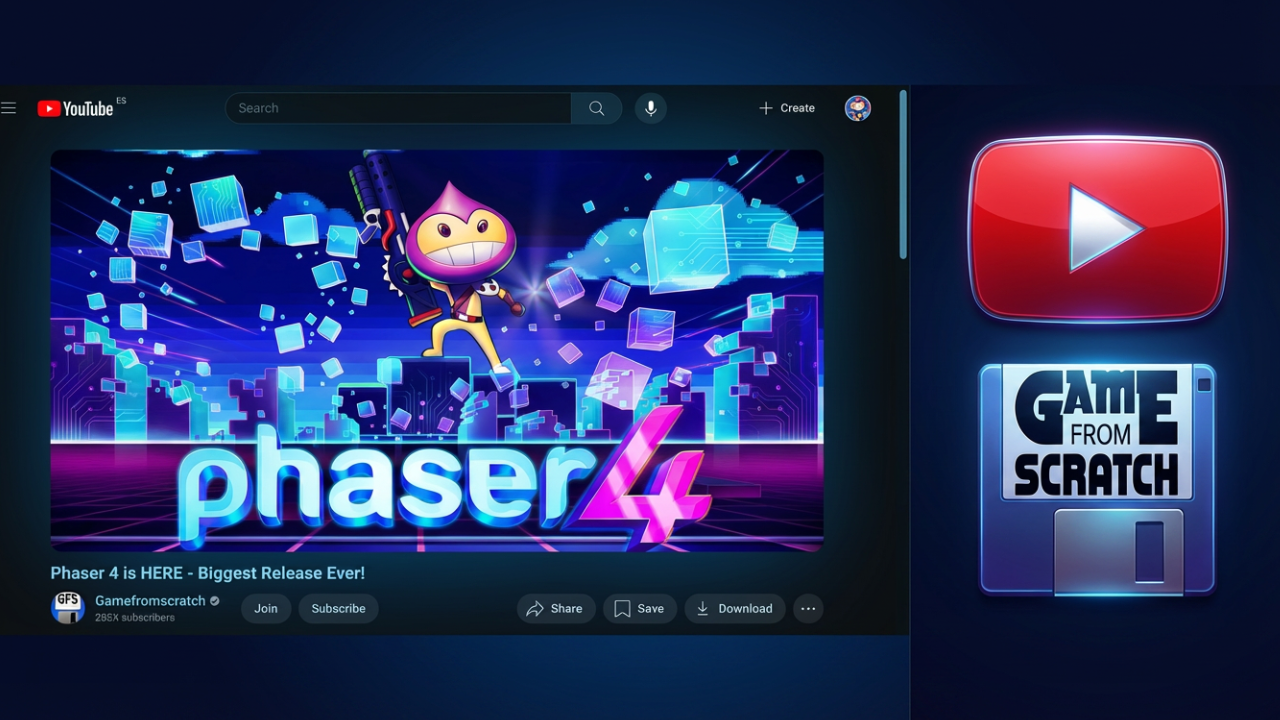




Mike at GameFromScratch has been covering Phaser since 2015, making the channel one of the longest-running community voices around. So when Phaser 4 dropped, we were excited to see him dive in. His latest video, "Phaser 4 is HERE - Biggest Release Ever!", is a great watch whether you are new to Phaser or a longtime user catching up on what changed. Here are the highlights.
What got Mike's attention first: the new renderer
The headline feature, and the one Mike spends the most time on, is the completely rebuilt WebGL rendering pipeline. The old v3 renderer is gone, replaced by a modern node-based architecture that manages WebGL state properly, handles context loss gracefully, and is significantly faster across the board.
The numbers he highlights are hard to ignore:
- Sprite GPU Layer: render over a million sprites on screen, up to 100x faster than before
- Tile Map GPU Layer: entire maps rendered as a single quad; shader cost is per pixel, not per tile
- Smarter batching: index buffers cut vertex upload costs by a third, and nothing hits the GPU until it absolutely has to
The filter system overhaul
Mike also covers the new unified filter system, which replaces the separate FX and mask systems from v3. Everything is now part of one cohesive pipeline with a large built-in library: blur, glow, bloom, shadow, vignette, pixelate, color matrix, gradient, quantize, normal map blending, and more. Masks are now filters too.
New game objects and other additions
The video also touches on the new game objects shipping with Phaser 4, including gradient, noise, noise simplex, noise cell, stamp, and capture frame, along with improvements to the lighting system, tinting pipeline, tile sprite rendering, and shader support.