
What it does
integrateMotion advances a bare body, a position and a velocity, by one frame. It applies the acceleration and any
constant gravity, then drag, then a speed cap, and moves the body with its new velocity. The order matters: capping
after drag means a ship at terminal velocity behaves the same whether it is coasting or under thrust.
gravityAccel sums the inverse-square pull of any number of point sources, each a position and a mass, with a
softening floor, so a body passing exactly through a source does not divide by zero and fire off to infinity. Apply it
to bullets as well as ships and the shots curve too. predictPath runs the same integrator forward a number of steps
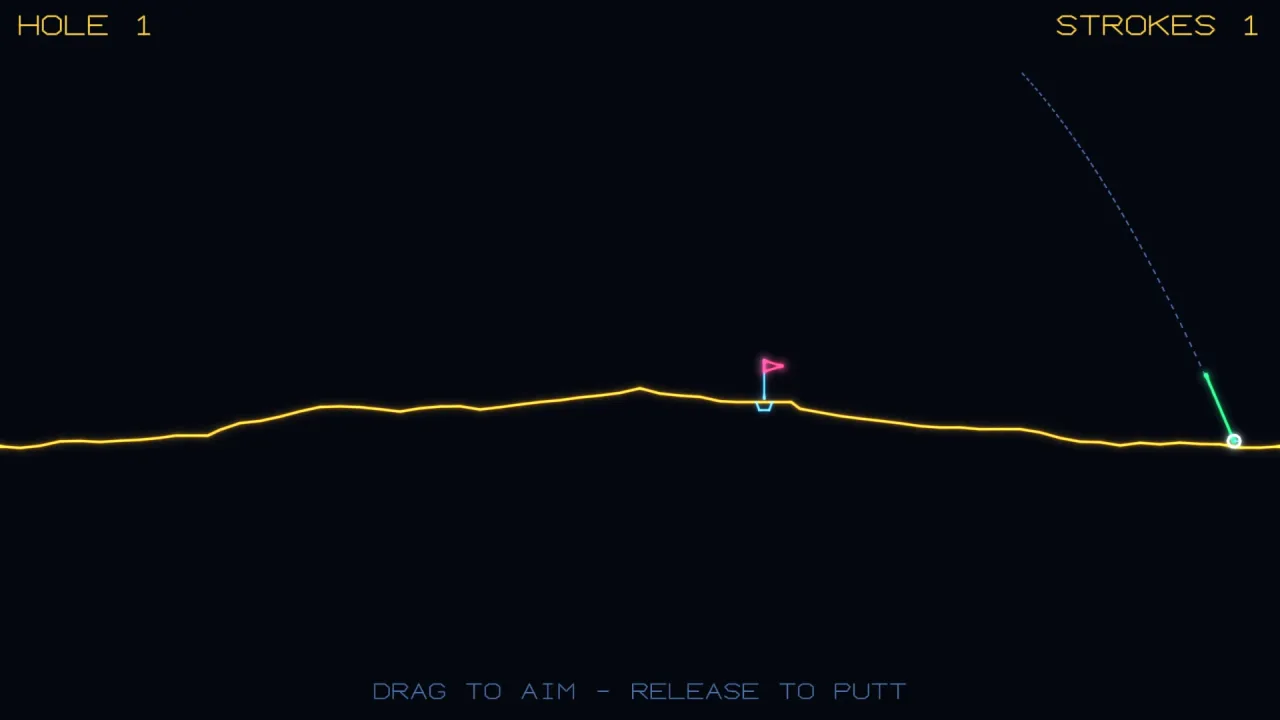
on a copy of the body and returns the points, which is how a game draws the dotted arc of a shot before it is fired;
because it is the same function, the preview cannot drift from the flight.
Screen wrap is two jobs, and games forget the second. wrapPosition folds a position back into the field.
wrapPositions returns every place a body must be drawn near an edge, up to four at a corner, because a ship
straddling the seam has to appear on both sides or it visibly vanishes as it crosses. The same list is what a
collision test needs, or a rock on the seam collides on one side of it only.
Features
- Integration — acceleration, constant gravity, per-second drag and a terminal-speed cap, velocity before position, so it stays stable under gravity.
- Point gravity —
gravityAccelfrom any number of sources, with a gravitational constantGand a softening floorminR2. - Path prediction —
predictPathreturns the arc a body will fly under any acceleration function, with the same drag and cap. - Wrap that folds —
wrapPositionbrings a body back into the field after it moves. - Wrap that draws —
wrapPositionslists the images a body near an edge or a corner needs, for drawing and for collision. - Pure — the trajectory a game shows is computed by the same code that will fly it.
Good for
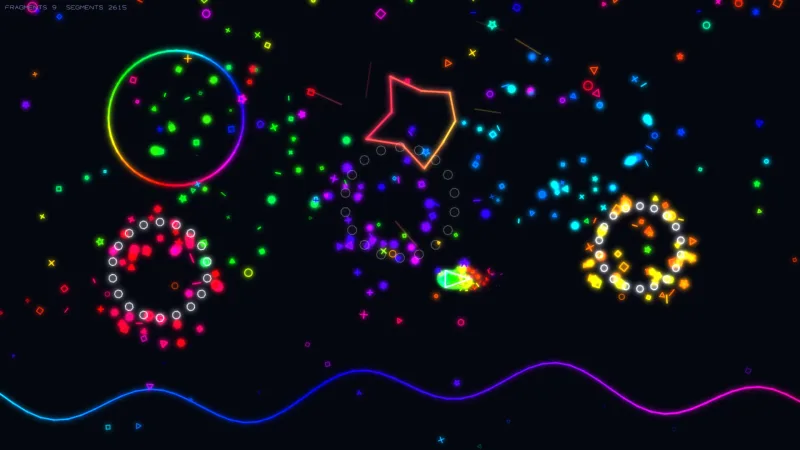
- Wrap-around shooters — drifting rocks and a thrusting ship crossing the edges, in the style of Asteroids.
- Gravity games — ships and shots pulled toward planets, in the style of Gravitar or Thrust.
- Artillery and golf — the arc of a shot shown before it is taken.
- Space duels — two ships circling a central star, their shots curving round it.
Make it yours
Each call takes its own numbers: delta, accel, gravity, drag and maxSpeed to integrate; the sources, G and
minR2 for gravity; steps, a time step, drag and a cap to predict. A floaty spaceship is a little thrust, no drag and
a high cap; a heavy lander is constant downward gravity, some drag and a low cap.
Two different games from the same calls: an asteroid field where every body integrates with no gravity and wraps at
the edges, drawn at each image wrapPositions returns; and a planet-hopping game where ships and bullets alike take
gravityAccel from three planets, and the aiming line is predictPath fed the same pull.
Works with
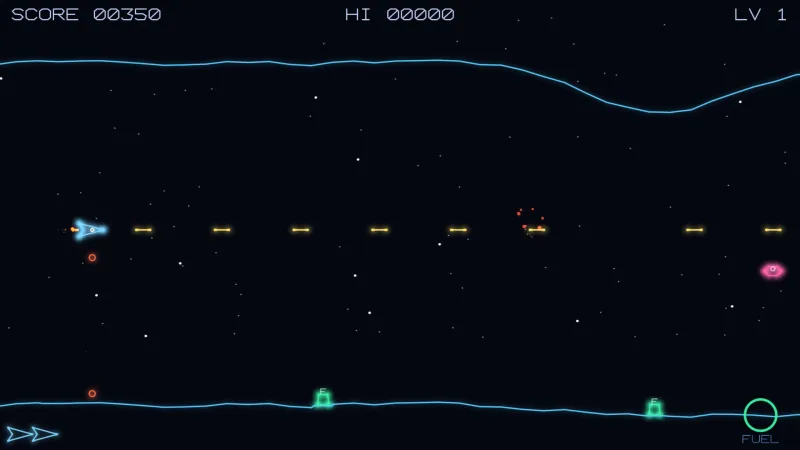
vector-math— arithmetic over the same plain{ x, y }data.vector-hit— swept tests and surface response when a moving body meets a wall.vector-terrain— the line landscapes a lander or a buggy moves over.thrust-craft— the full flight rules of landers and cave flyers, with fuel, landing gear and tractor beams.core-vector— includes this pack with the rest of the vector kit.
Good to know
integrateMotionandwrapPositionchange the objects they are given, deliberately: they run per body per frame, where allocating is the wrong trade. Everything else returns new data.- Gravity is summed over every source: right for the handful a game has, wrong for a thousand-body simulation.
- A body is a point with a velocity: there is no mass, rotation or collision here.