
What it does
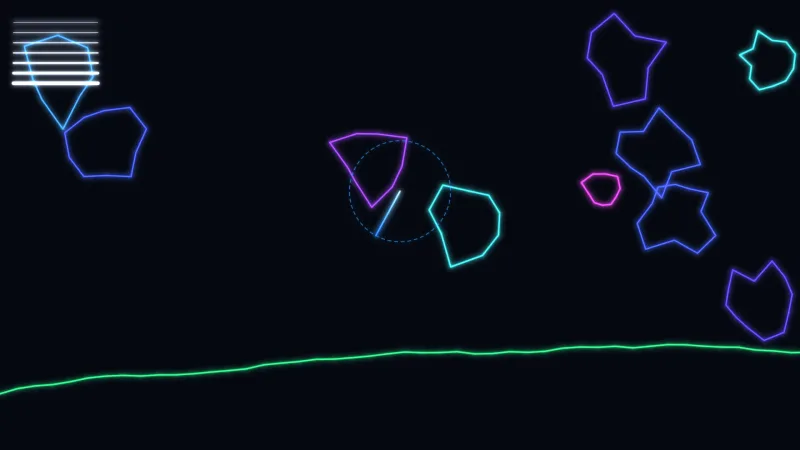
The first question is containment. pointInPath and pointInPolygon say whether a point is inside a closed outline,
by even-odd ray casting, which stays correct for the lumpy concave outline of a rock and for outlines that cross
themselves. The second is distance. An open polyline has no inside, so a shot can never be "in" a laser fence or a cave
wall: distToPath gives the distance to the nearest point on the stroke, to compare against the line's half-width,
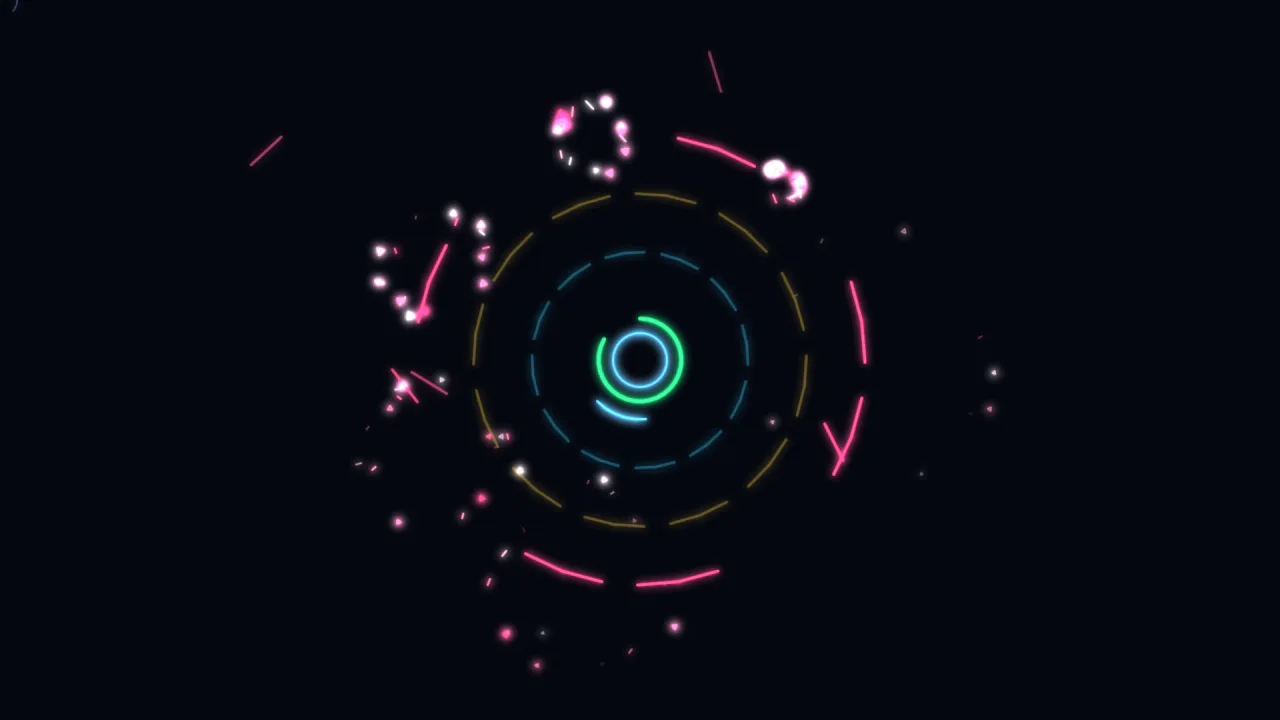
and arcHit tests a point against one arc of a segmented ring, so a shot destroys only the shield section it crossed.
The third is time. Test only a bullet's new position and one moving faster than a wall is thick passes straight
through it: in front last frame, behind this one, never overlapping. sweepVsSegments takes where the point was and
where it is now, and returns the earliest wall crossed in between, with the contact point, the segment's index and
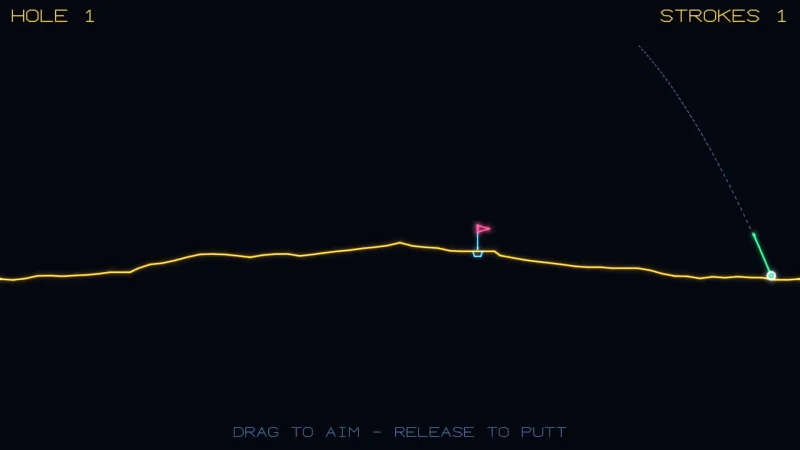
how far along the path it happened. polylineSegments turns a terrain or any path into the wall list it takes.
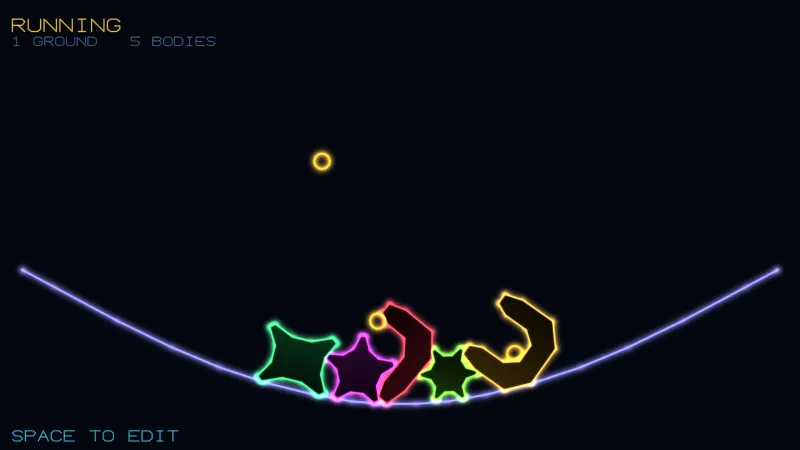
Then the contact becomes motion. resolveSurface splits a velocity against the surface normal, bounces the normal
part by a restitution and scrubs the tangential part by a friction, and below a bounceThreshold the body settles
instead of jittering. surfaceFriction damps a grounded body along a slope each frame, fully on the flat and not at
all on a wall. Between them a ship can skid along a wall, bounce off it or come to rest against it.
Features
- Point in outline —
pointInPathandpointInPolygon, correct for concave and self-intersecting outlines. - Distance to a stroke —
distToPathfor open or closed polylines, the right test for a line with no inside. - Segmented rings —
arcHittests one arc's radius and angular span, within a tolerance. - Swept tests —
sweepVsSegmentsreturns the earliest wall crossed between two positions, so fast shots cannot tunnel. - Surface response —
resolveSurfacewith restitution, friction and a bounce threshold, andsurfaceFrictionfor grounded bodies on slopes, with gravity in any direction. - The basics —
circleHitfor two circles andsegmentIntersectionfor where two segments cross. - Pure — no backend and no state, so collision rules can be tested headless.
Good for
- Vector shooters — shots landing on rocks and ships, in the style of Asteroids.
- Cave and gravity flyers — a ship scraping, bouncing off or landing against cave walls, in the style of Thrust or Gravitar.
- Terrain games — landers and buggies meeting a line landscape, swept against its segments.
- Shield rings — destructible sections of a rotating ring, hit one arc at a time.
- Editors and menus — clicking to select a line-art shape.
Make it yours
The response is a few numbers. A restitution of 0 and a high friction make a ship that sticks where it touches;
a restitution near 1 and no friction make one that ricochets round a cave; a bounceThreshold lets it bounce off
walls at speed but settle on a landing pad. surfaceFriction takes a coefficient and the direction of gravity, so the
same call works when gravity points at a planet rather than down the screen.
Two different uses: a rock shooter that tests each shot against each rock with circleHit on bounding radii and
then pointInPath for the close ones; and a cave flyer that sweeps its ship and every bullet against the cave's wall
segments each frame and turns each contact into a bounce with resolveSurface.
Works with
vector-2d— draws the shapes these tests are run against.core-vector— includes this pack with the rest of the vector kit.vector-terrain— line landscapes, turned into wall segments withpolylineSegments.vector-motion— integration, gravity and wrap: the movement half beside this collision half.vector-hullandphysics-box2d— convex colliders and a physics engine, when shapes must collide with shapes.
Good to know
- Every test is a point against geometry: there is no shape-against-shape test. Use circles on bounding radii, or convex hulls and a physics engine.
- The swept test is a point, not a capsule, so a wide body moving fast can still clip a corner.
arcHitworks in the ring's own space: subtract the centre and undo the ring's rotation first.