
What it does
A grid runs A* between two world points and then string-pulls the result, so a route reads as a straight line
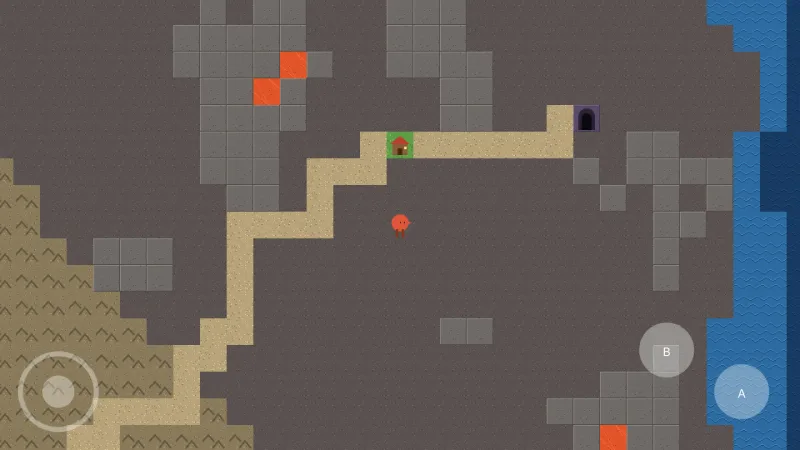
wherever it can instead of a staircase of cells. NavGrid2d takes a tile map, as an array of walkable cells or a
blocked(x, y) test, over world x and y, and returns plain { x, y } points for a top-down game. NavGrid samples a
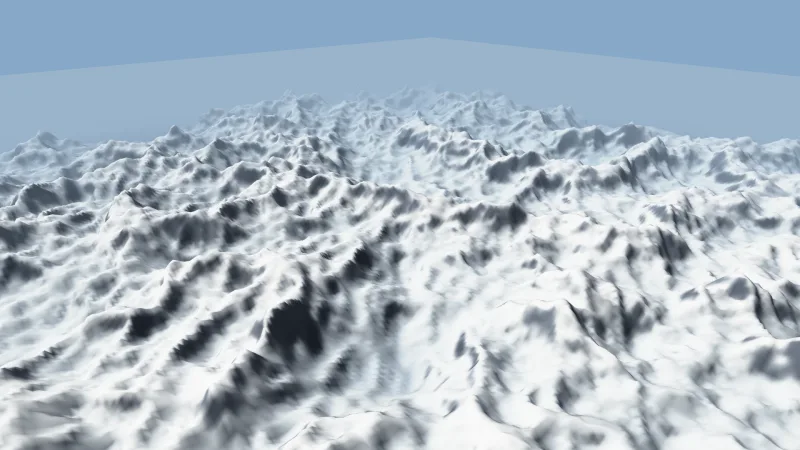
height function over world x and z for a 3D game on terrain, marks cliffs, water and blocked footprints unwalkable and
prefers flat routes. Open or close a cell with setWalkable when a door shuts or a crate drops, and the next route goes
round.
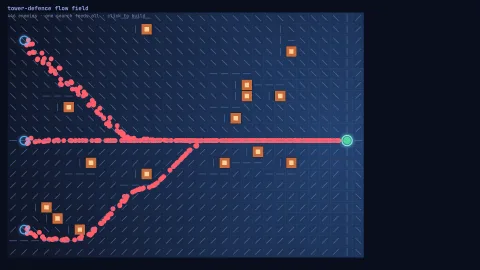
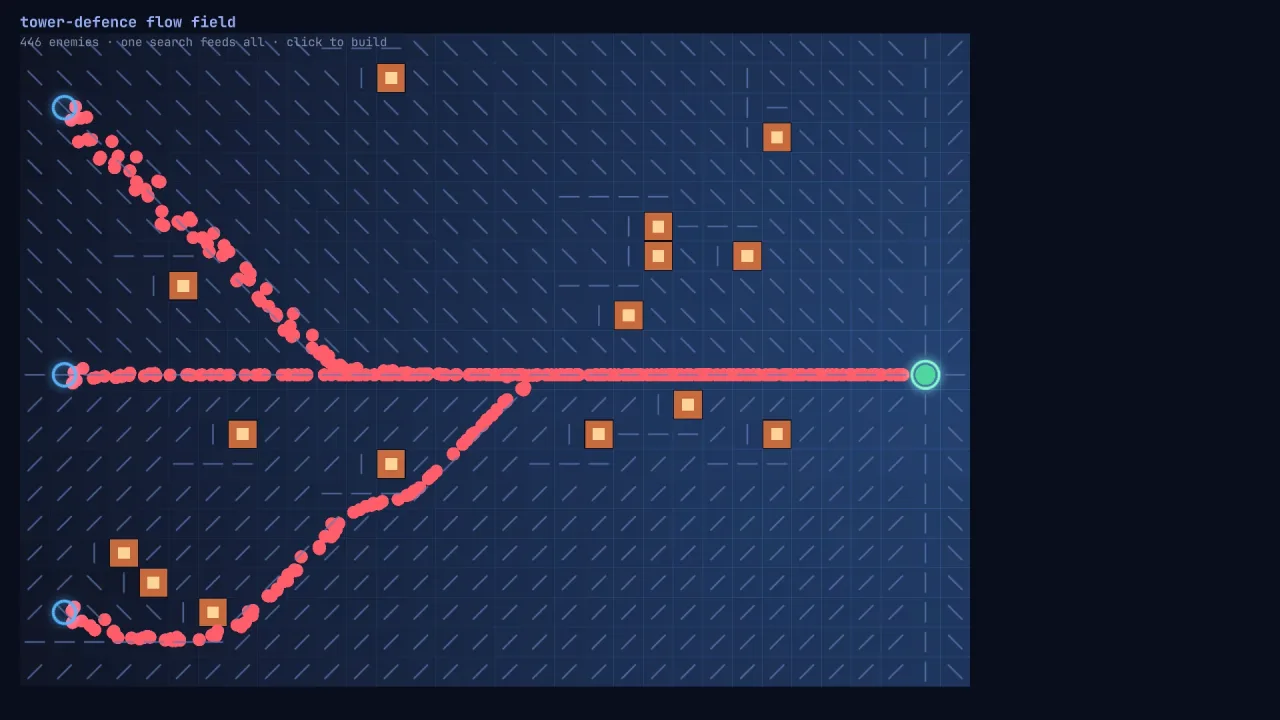
A flow field floods the whole grid outward from one goal and leaves a direction in every cell. Each follower then
reads dirAt where it stands, a single lookup rather than a search, which is how a horde chases the player or a crowd
pours towards an exit.
The part that is easy to get wrong is size. Give a grid, or a single call, a radius, and A* refuses gaps narrower than the body, string pulling keeps a straight leg only where the whole body fits, and a flow field floods only cells the body can stand in. A 20-unit guard is never sent through a 16-unit gap or routed so close to a door jamb that it catches, yet it still fits through any gap that is wide enough, exactly. One grid serves guards, a thief and an ogre, each planned at its own size.
Features
- A with string pulling* — direct routes as world points, or
[]when there is none, or the nearest reachable point withpartial. - 2D and 3D grids —
grid2dover a tile map in x and y,gridover a height function in x and z. - Walkers with a size — a radius per grid or per call, exact against the grid's walls.
- Flow fields — one flood per goal, a direction in every cell, sized for the body.
- Straight-line checks —
clearsays whether a body can slide straight between two points. - Terrain rules — cliffs by step height, a slope penalty, water below a level and blocked footprints.
- Weighted flow grids —
flowGridwith costly cells, several goals, smooth steering andcanBuild. - Live edits — open and close cells as doors move, with cached clearance rebuilt only when a cell changes.
- Off-thread routes —
pathAsyncplans on a worker and can be cancelled. - Headless — no objects, no drawing, the same in a worker or a test as in a frame.
Good for
- Top-down stealth and dungeon games, where guards of different sizes chase through doors and corridors.
- Horde and survival games, where hundreds of enemies flow towards the player through one field.
- Tower defence, with weighted cells, several goals and a check that a new tower leaves every spawn a route.
- 3D games on terrain, where walkers avoid cliffs and water and prefer flat ground.
- Colony and management sims, where workers walk between stores and sites.
- Strategy and tactics, where units are told where to go and must find their own way.
Make it yours
A 2D grid takes its columns and rows, the cell size, an origin and a walkable array or a blocked test, or both. A map
whose walls are not whole tiles, a round pillar or a diagonal wall, can be sampled at a finer cell through blocked. A
3D grid takes the height function, its size, centre and resolution, a water level, a blocked test, the highest step a
walker can climb and how much slope costs. Every grid takes a default radius, and every query can override it.
Two different uses: a top-down heist where 12-unit guards plan on a 16-unit tile map with path, and a smaller thief
plans on the same grid with a 4-unit radius; and a 3D zombie game where one flow field towards the player steers a whole
crowd of 1.2-unit walkers across hilly terrain, round cliffs and out of the water.
A quick look
A tile map for guards 12 units across, a route, and a door that shuts:
const map = ['##########', '#....#...#', '#....#...#', '#........#', '##########'];
const grid = game.nav.grid2d({
    cols: map[0].length, rows: map.length, cell: 16,
    walkable: [...map.join('')].map(c => c !== '#'),
    radius: 6,                                     // every guard is a 12-unit disc
});
const route = grid.path(guard, thief);             // [{x, y}, …] clear of every wall by 6
grid.setWalkable(grid.idx(5, 3), false);           // a door shuts; the next path goes round
const field = game.nav.flow(grid, player);         // a horde reads field.dirAt(x, y)
Works with
steering— moves bodies along these routes and fields, with avoidance, flocking and arrival.nav-mesh— for 3D levels a height grid cannot hold: bridges, arches and a floor above a floor.track— for authored routes such as rails and circuits rather than searched ones.grid-moveandgrid-walker— for movement locked to a grid's lanes.jobs— work yards whose workers walk routes planned here.levelgen— mazes, dungeons and caves whose tile grids can become the walkable map.
Good to know
- The 3D grid holds one height per cell, so bridges and overhangs need
nav-mesh. - A flow field serves one goal; a second goal is a second field. The weighted flow grid takes several goals but plans for points, not bodies.
- Neither knows about moving obstacles: change a cell and plan again, or let
steering's avoidance handle what moves. - A route is clear for the body, but a follower that cuts corners early or swings wide on momentum can still clip a
wall; turn early only when
clearsays so. - Walls are whole cells, so curved and diagonal walls need a cell small enough to follow them.