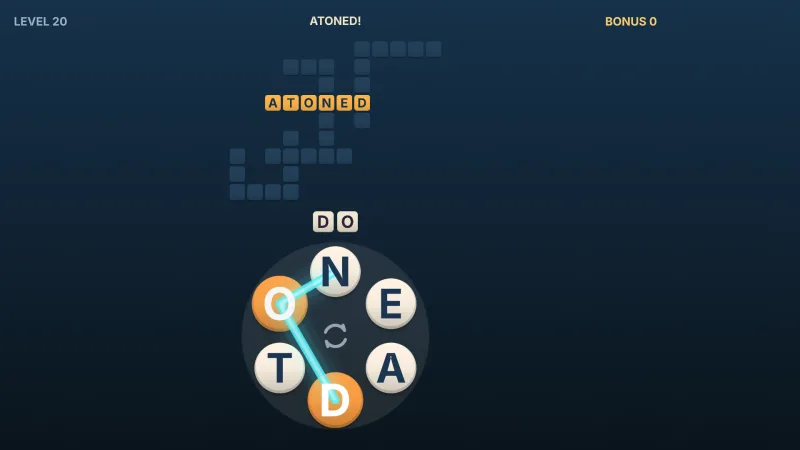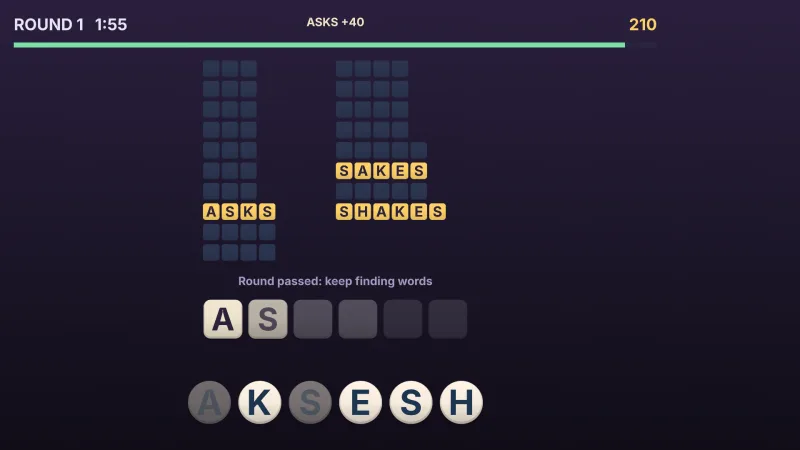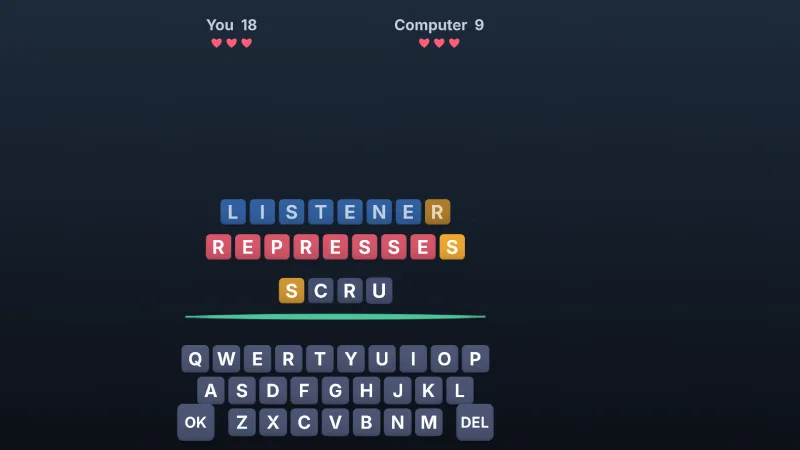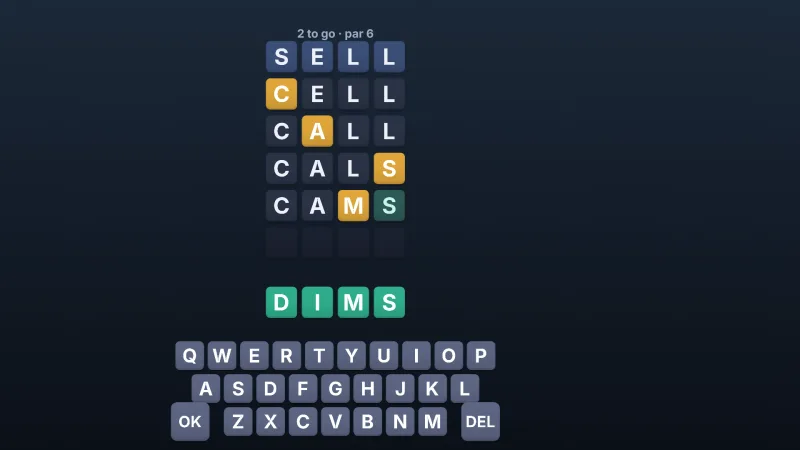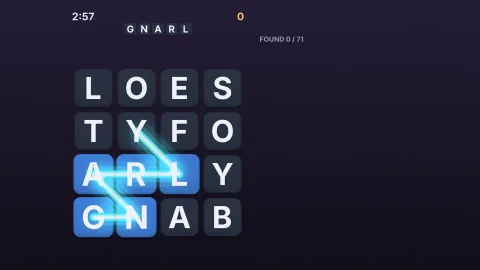

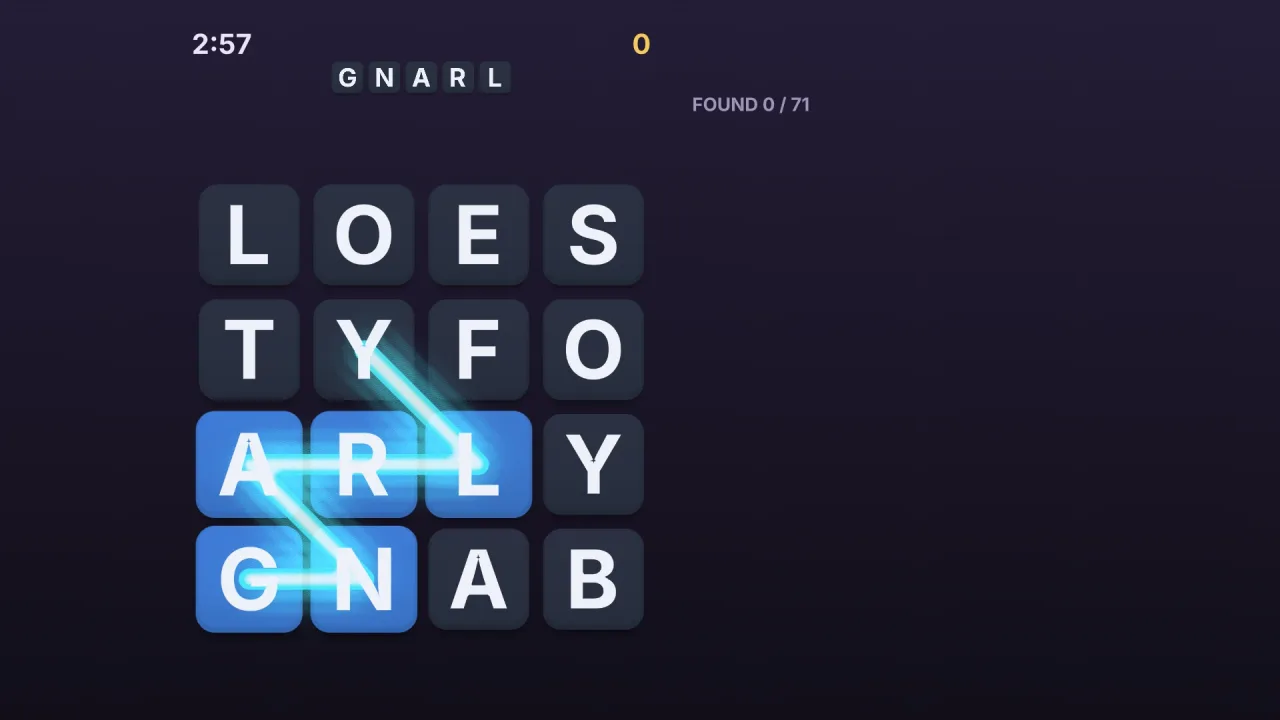
What it does
A board lays tiles out as a grid (with holes for a shaped puzzle), a ring, a row or any points you give, and letters them from a typography font, baked once per letter so a letter that changes never lays text out again. Each tile has a state, and each state a colour, size and opacity in the style; changes ease rather than jump, and tiles pop, bounce, shake, turn over and glide on cue.
Selection comes in four gestures: touching tiles one after another, any tiles in any order with an elastic tail to the
finger, a straight line snapped to eight directions, or taps. A tile joins only when the pointer comes near its middle,
so a fast diagonal swipe does not catch the tile it passes, and going back onto the previous tile takes the last off.
When the pointer lets go, the board asks your judge and animates the verdict: an accept bounces the tiles, flashes
and throws sparks, and can stay on the board as a coloured highlight; a reject shakes and flashes red.
The selection is painted as one stroke through the tile centres, so its width, caps and joins always agree, and a sprite shader over it gives it an effect sized in tiles, not pixels: a soft glow, a neon tube, flames licking up off it, electric arcs crawling along it, a flowing rainbow, glitter or a highlighter pen, or a shader of your own.
Features
- Four layouts —
grid(with amaskfor holes),ring,rowandpoints, all centred where you say. - Five ready styles —
cream,slate,candy,glassandink, or your own shape, bevel, colours and states. - States you name —
selected,foundand the rest, plus your own (correct,present,absent), each eased in. - Four gestures —
path,free,lineandtap, with backtracking, a forgiving hit test and a length limit. - Your rules, its animation —
canAdddecides each tile andjudgeeach word; the board shows the answer. - One matched stroke — round joins and caps that always meet, with an elastic tail to the finger.
- Eight stroke effects — clean, glow, neon, fire, electric, rainbow, sparkle and highlighter, or any sprite shader.
- Kept highlights — found words stay, each in the next colour of a palette, as in a word search.
- Tile animation — pop, bounce, shake, flip to a new letter or state, glide to a new layout or a shuffled order.
- Reusable boards —
relayoutglides tiles to a new layout and size, adding and taking off tiles, so one board serves every word of a game. - Traced selections —
traceplays a path tile by tile through the same judge: solvers, hints and typed words. - Particle bursts — sparks, confetti or stars from a found word's tiles when
particles-2dis composed.
Good for
- Letter grids, a trace through touching tiles with the rules'
canExtendascanAdd. - Letter wheels, a ring of letters traced in any order, shuffled with
arrange. - Word searches, straight-line selection and a coloured highlight for every word found.
- Guessing games, rows that turn over to their marks and a keyboard of tap tiles that takes each letter's colour.
- Racks and word builders, a row of tiles that pops each new letter in.
- Crosswords, cells as points that turn over as words are found.
Make it yours
A board takes its layout, letters, style (a name or your own TileStyle with any states), layer and depth, selection
mode and rules, stroke (effect, colour, width, opacity, elastic, dots) and entrance; board.stroke changes live.
Effects are sprite shader definitions sized in tiles, so a game can copy one from STROKE_EFFECTS and change it.
Two materially different boards: a seven-by-seven grid of slate tiles in path mode with a fire stroke and wrapping
edges allowed by canAdd; and a ring of six candy letters in free mode with a neon stroke and a soft elastic tail.
A third is a row of tiles in tap mode, the keys of an on-screen keyboard.
A quick look
A letter grid's board, with the rules deciding:
const board = game.letterTiles.board({
    layout: { kind: 'grid', cols: 4, rows: 4, x: 400, y: 320, cell: 90 },
    letters: round.observation().tiles, style: 'cream',
    select: {
        mode: 'path',
        canAdd: (path, tile) => round.canExtend(path, tile),
        judge: path => round.trace(path).ok ? 'accept' : 'reject',
    },
    stroke: { effect: 'fire' },
});
Works with
typography— required: the letters are baked from its fonts.sprite-shaders— required: the stroke effects are its shaders.particles-2d— optional: bursts when a word is found.word-guess,word-search,letter-gridandletter-wheel— the rules it draws in their demos.english-words— the words behind any game it draws.
Good to know
- It knows no rules; a board without a
judgelets every selection fade. - Tiles are square in their layout; a wider key is a board of its own.
- Letters appear when their font has arrived, and not at all in a headless run.
- The stroke's shader runs over the board's area while a selection shows; on a slow device prefer
cleanorglow.
Changes
3.0.0-1 (2026-10-21)
- Fixed: a
relayoutto fewer tiles no longer throws at the next draw when a highlight, a trace or a selection names a tile it takes off. Such a highlight goes, a trace through one stops unjudged, and a selection keeps its tiles before the first one taken off. - Fixed: setting a tile's
letterorstate,setLetterswithoutflipandrelayout'slettersnow win over a flip still to land that change, so a reused board never shows a letter from the last game. Addedtile.flippingandtile.cancelFlip(). - Fixed: tiles a
relayoutadds arrive one after another,staggerseconds apart (a new option, 0.03 by default), and every popping tile springs as it arrives, the first one included. Each new tile keeps its own entrance, so a fade fades in on a board that pops. - Improved:
relayoutandarrangeease each tile's size with its place instead of snapping it, and adurationof 0 moves the tiles at once. - Fixed: a
relayoutthat changes a board's size no longer adds two stroke canvases every time. Boards reuse the pack's canvases, and a destroyed board's go to the next board that fits them. - Added:
board.burstchanges an accepted word's particles while playing, andburstin the board's options, a verdict oraccepttakes a particles-2d recipe of your own; a verdict oracceptcan name a preset for that word. - Improved:
select,trace,accept,rejectandhighlightthrow at once for an index that is not a tile of the board, andrelayoutandarrangefor a negative or non-numericduration.