
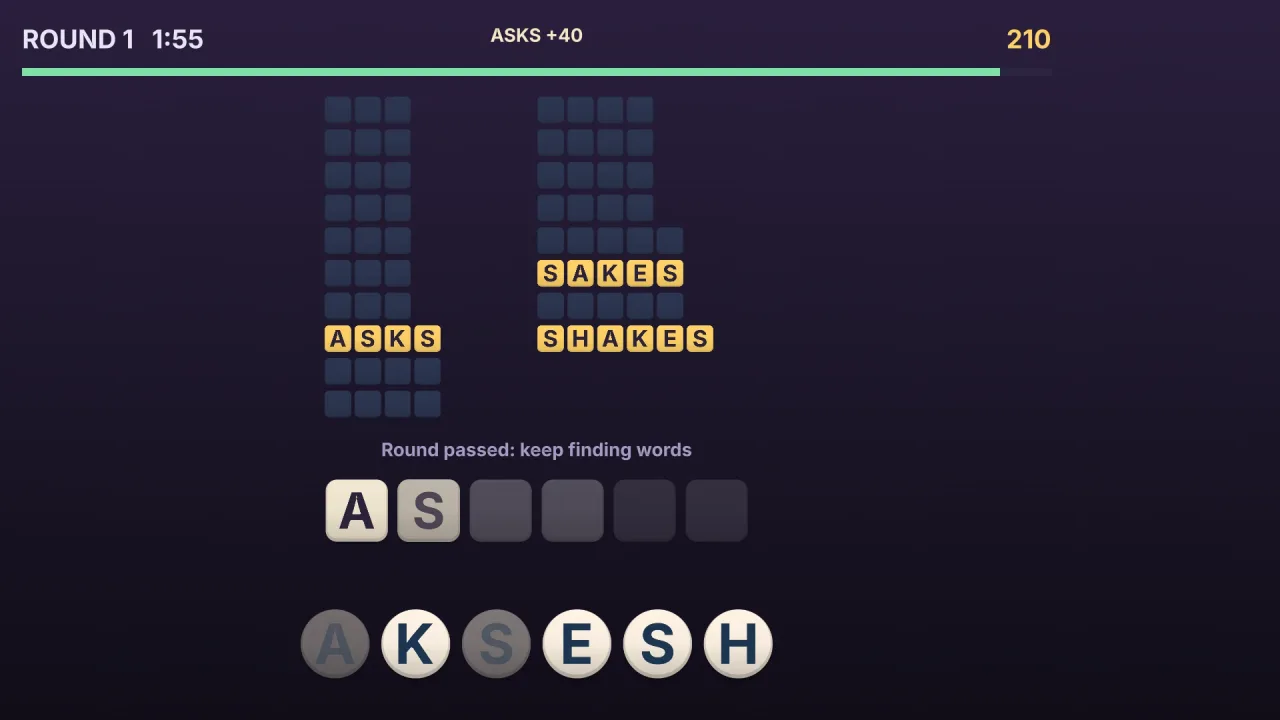
What it does
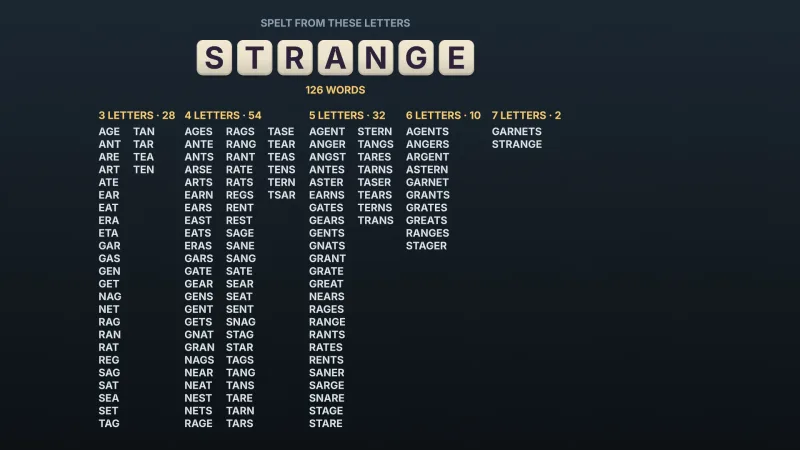
A twist round puts a word's letters on a rack in an order that spells nothing, and every word of three letters or more the letters make, from the english-words lexicon or a list of your own, becomes a target. A game shows the targets as blanks by length and fills them in as they are found. When the clock runs out the round is passed if the player found a word using every letter (or a number of words, or always, as you choose); passing waits for the next round, failing ends the game. Finding every word ends the round early with a bonus, and rounds can add a letter as they go.
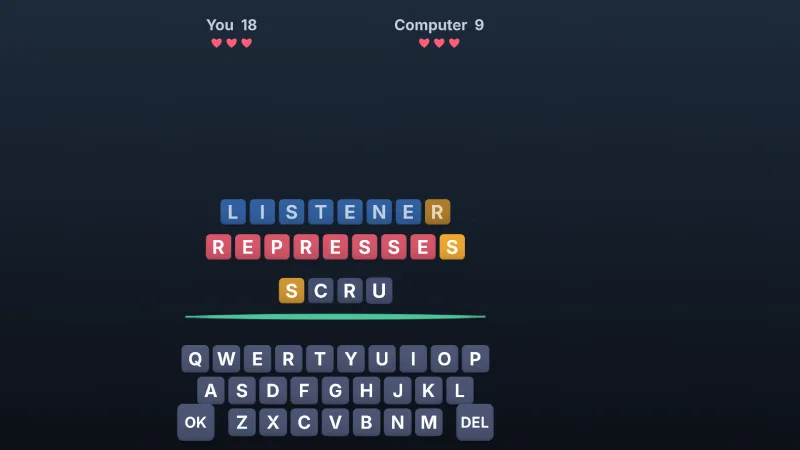
An unscramble run shows one scrambled word after another. Any word in the list made of exactly those letters is right, the clock's remaining seconds add to the score, and a skip reveals the word for a cost in points or lives. The clock is one for the whole run or one for each word, where running out counts as a skip.
The clock is a move like any other, so a save holds the seconds played and replays exactly, and undo takes back a word without giving back the time it took.
Features
- Two modes —
twistrounds of every word in a rack, andunscrambleruns of one word after another. - Every word, worked out — the targets are every word the rack spells, sorted by length.
- Pass rules — a word using every letter, a number of words, or nothing; every word clears a round with a bonus.
- Growing rounds — one more letter every few rounds, up to a limit you set.
- A clock that saves — round, run or per-word clocks, saved and replayed with the moves.
- Skips that cost — points or lives, with the skipped word revealed.
- Scoring — ten a letter by default, doubled for every letter used, or your own table or function.
- Fair scrambles — a rack never shows its own word, or any other word of its length, when another order exists.
- Hints, shuffles, undo and saves — the first letter and length of a word to find, a new order for the rack.
Good for
- Classic six-letter rounds against a two-minute clock, passed with a full-length word.
- Relaxed racks with no clock, where the goal is every word.
- Climbing challenges, five letters growing to eight as the rounds go on.
- Quick unscramble runs, ten words against ninety seconds.
- Lives-based arcade runs, twenty seconds a word and three skips to lose.
- Spelling practice with a themed word list of your own.
Make it yours
A game takes its mode, word list and exclude, minLength, letters, growEvery and maxLetters, minWords,
the time (or Infinity), the qualify rule and qualifyCount, the clear bonus, and for unscramble lengths,
count, perWord, skip, skipPenalty, lives and timeBonus, with scoring for either. The pack draws nothing.
Two materially different games: six-letter twist rounds, two minutes each, passed with a full-length word; and five letters growing to eight, passed with six words of any length, on a clock of your choosing. A third is an unscramble run of twenty-second words with three lives.
A quick look
A twist round, from a game's step:
const game = createAnagramRounds({ seed });              // six letters, two minutes
const view = game.observation();                         // rack, targets by length, found, score, time left
game.submit('stare');                                    // { ok: true, result: { word, points, full } } or a refusal
game.advance(dt);                                        // the round ends with the clock
if (game.observation().phase === 'round-over') game.next();
Works with
english-words— required: the words, and the search that finds what a rack spells.letter-tiles— draws the rack, the answer row and the target blanks, and animates every verdict.letter-wheel— when the same letters should fill a crossword, untimed, instead.
Good to know
- It is the rules only: the game draws the rack, the answer and the clock.
- An unscramble answer is any word of the rack's letters, so
silentsolves a scramble oflisten. - Rounds draw from the whole word list, rarer words included;
excludeor a filtered list keeps them out. - There are no high scores or multiplayer; keep those from
observation().