
What if your game lived at the bottom of your screen, quietly running while you answered emails and sat through meetings?
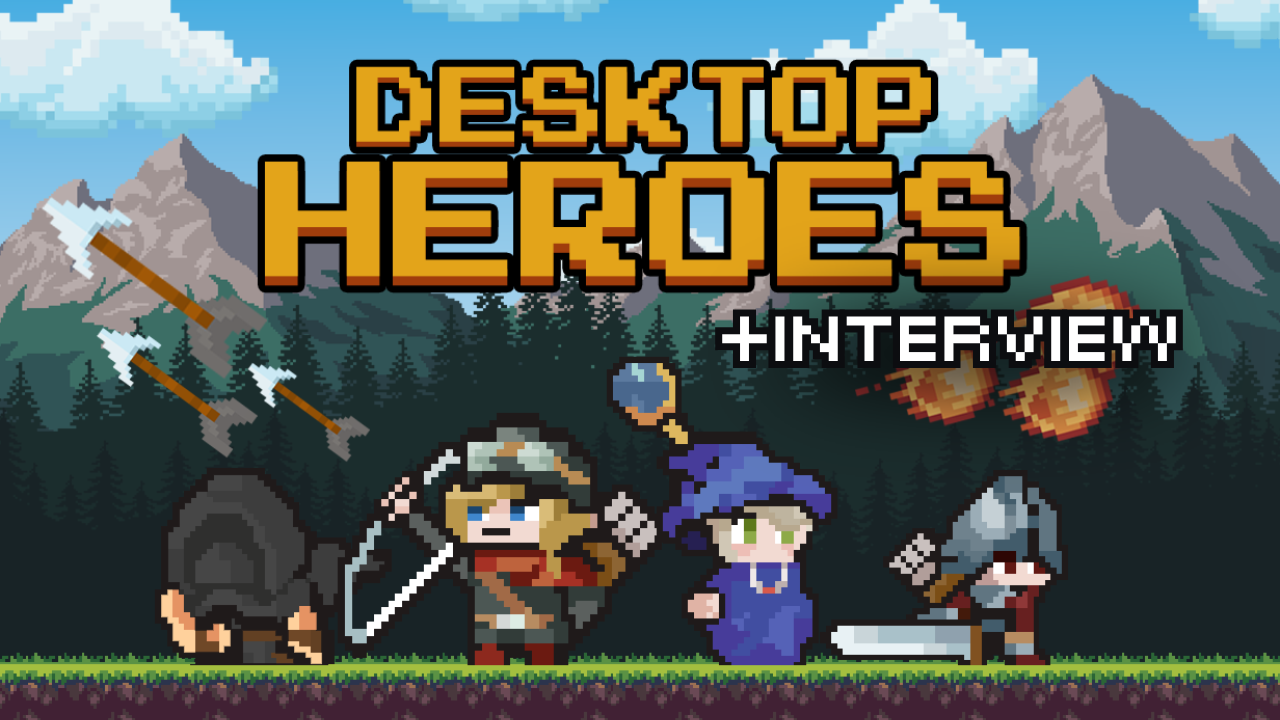
That's the premise behind Desktop Heroes, an idle RPG published on Steam in October 2025 by Telazer Games. Built entirely with Phaser and Electron, it's one of the most unusual games to come out of the Phaser ecosystem: a desktop companion that runs persistently above your taskbar, lets your party of heroes fight monsters and collect loot in real time, and never gets in the way of whatever you're actually supposed to be doing.
We caught up with the team at Telazer Games to find out how they built it, what it took to ship on Steam, and what they learned along the way.
Meet the Team Behind Desktop Heroes
Founded in 2024, Telazer Games is a three-person studio that already has over 1 million players across their web games — including Rough Ball, War of Mine, and Crazy Color. Desktop Heroes is their first major step onto the Steam platform. All three founders contributed across the board, but each brought a distinct focus to the project.
Baris - Main developer behind the game's core architecture and implementation
Yigit - Lead on performance and libraries, including Electron APIs and Steam SDK integration
Kayra - Originator of the BoYS concept, responsible for game decisions, marketing strategy, and publishing. Joined the project in 2025
What Is a BoYS Game? The Concept Behind Desktop Heroes
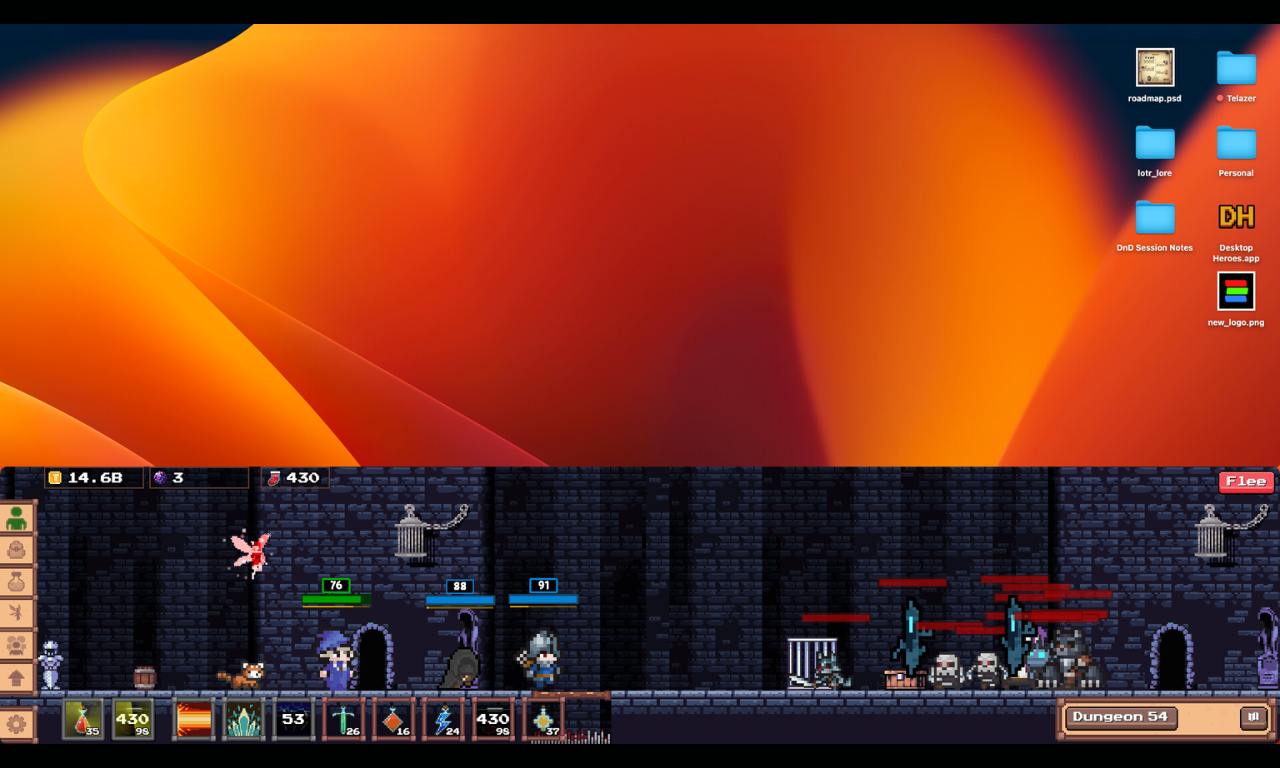
Desktop Heroes belongs to a genre the team calls BoYS, short for Bottom of Your Screen. The idea is simple: people genuinely want to play idle games while working, in meetings, or while focused on something else entirely. The game sits just above the taskbar on PC and Mac, always visible but never intrusive.
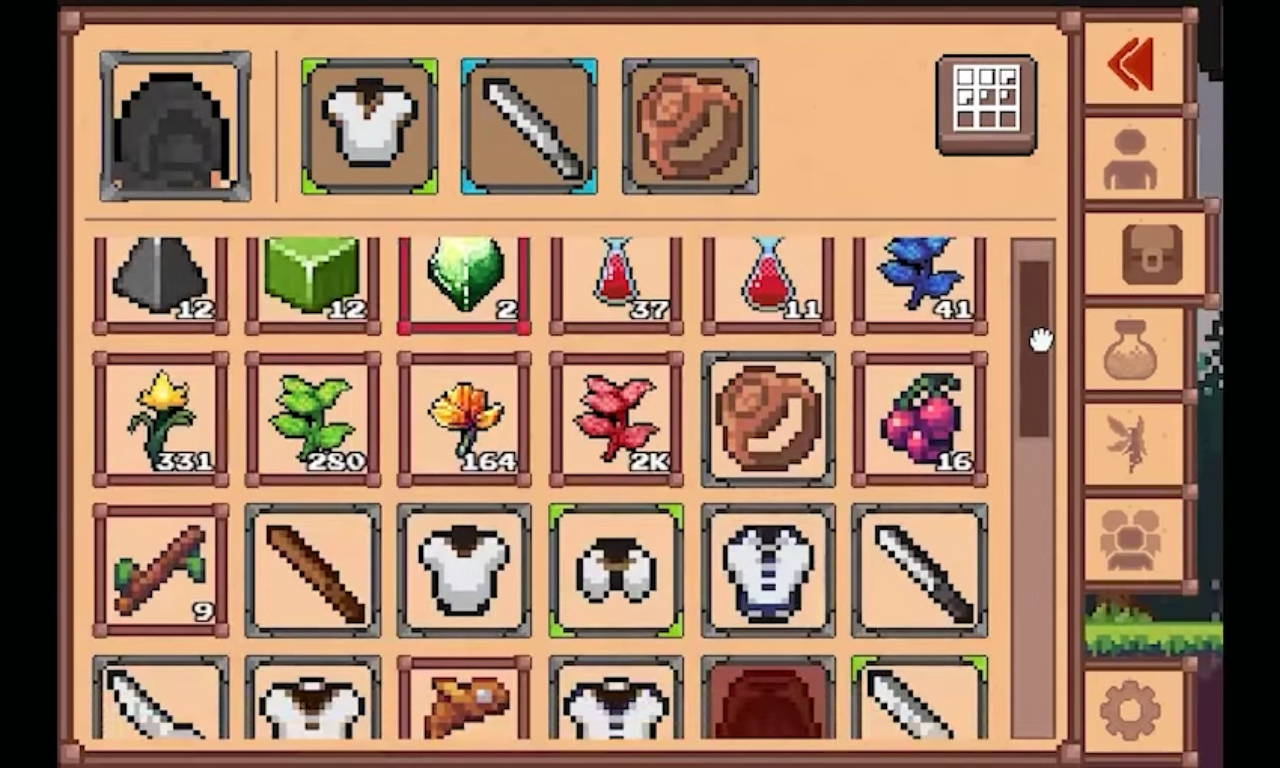
You start as a `Fighter`, with more classes unlocking as you progress: `Rogue`, `Wizard`, and `Archer`. Your heroes automatically battle incoming enemies and collect gold and upgrade materials as they move across the bottom of your screen. Those resources go toward upgrading weapons and armor, crafting HP potions, and strengthening your party. As you advance, a helper joins the action to keep your character alive even when you're not paying attention. You can play passively and let them handle things, or dip in during a coffee break to make strategic decisions and claim rewards. The pixel art style is deliberately light and workspace-friendly.
"We noticed that people have a genuine desire to play idle games while working, in meetings, or while busy with something else entirely. Desktop Heroes was born from that search."
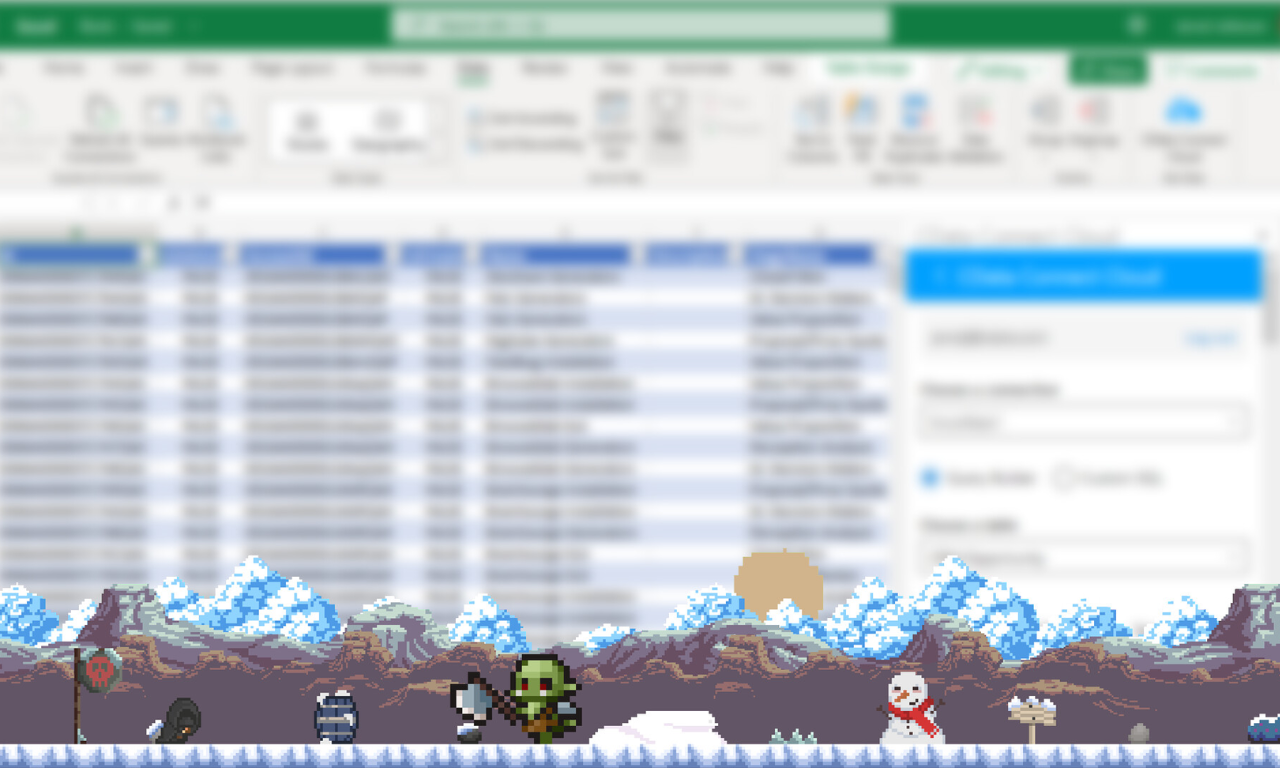
Two features make Desktop Heroes particularly clever. "Virtual Mode is one of our favourite features," the team says. It lets you click through the game window to whatever is behind it, so you never have to close the game just to use your desktop. "We knew from the start that parts of our game, like the sky, would be areas players wouldn't want to click on but would still want to use as a pass-through to whatever's behind the window. And Protect Mode? "Protect Mode is honestly one of the more entertaining features we shipped." It hides the game window from screen capture tools, including OBS, screenshot utilities, and screen sharing in Zoom or Google Meet. As the team puts it: "We're not necessarily recommending it… but it's a lot of fun."
Building a Desktop Game with Phaser and Electron
Telazer Games came to this project as Node.js professionals with experience shipping both Electron apps and web games with Phaser separately. Combining the two felt achievable from the start, but the reality involved more custom work than expected.
"Electron is a powerful framework, but it wasn't built with game development in mind," the team explains. "We had to implement a lot of custom solutions, balancing both system-level and game-specific requirements." The good news is that Phaser's ability to run in virtually any JavaScript environment made things significantly easier on the game side. "To us, it's a JavaScript powerhouse." "Running in a desktop environment didn't introduce any extra friction on Phaser's side; it gave us everything we needed and then some."
One unexpected challenge was the lack of documentation for this specific combination. "Documentation for this specific combination is sparse," the team admits. "We found ourselves diving into source code more than once to carve our own path." It's a reminder that pioneering a new use case always comes with a cost, but also that it's entirely possible.
"Phaser is far more than a browser game engine. JavaScript runs everywhere these days, and Phaser is a professional-grade framework capable of handling everything from complex graphics to dynamic gameplay."
Transparent window rendering, essential for a game that overlays the desktop, worked cleanly through the combination of Phaser's transparent background support and Electron's infrastructure for keeping clicks and visuals accessible through the game window. "This is where Phaser and Electron's strengths really come together," the team says. Virtual Mode is handled natively by Electron across all major operating systems. And Protect Mode, the feature that hides the game from screen capture tools, comes straight from the Electron API too. "With enough research, it all comes together quite cleanly," the team says.

The Biggest Technical Hurdles: Steam SDK and Resource Management
Two areas gave the team the most trouble. The first was the Steam SDK. "There's no official JavaScript SDK for Steam," they explain, "so we had to rely on third-party libraries. Many of those are outdated and poorly maintained, which meant writing a fair amount of custom code to fill the gaps." "We're genuinely hoping the open-source community steps up here," the team says. It's a real gap in the ecosystem for any JavaScript developer targeting Steam.
The second challenge was resource management. Electron isn't optimised for games out of the box, and a game that runs persistently in the background needs to be extremely lean. That's where their prior experience paid off: "We were deliberate about avoiding anything that would put unnecessary load on the system." Game states are stored in simple encoded JSON files, and only meaningful progress milestones are saved. "The result is a system with a very small memory and disk footprint."
Beyond those two areas, Electron's general-purpose nature meant friction points throughout the build. But the team is proud of what they proved: "We like to think we've proven it's entirely possible in the right hands."
What They Would Change About Phaser
The team has a clear wishlist for where they'd love to see Phaser grow. First, better support for the desktop gaming space: given everything they had to build from scratch, dedicated packages for Electron and Steam API integration would make a real difference. "There's an underserved audience there." Second, the physics ecosystem: "Matter.js is the most practical option right now, but there's room for more optimised alternatives" in the third-party libraries available for Phaser projects. And third, the native Game UI layer: while they found that HTML solves everything they needed — "there's no UI problem in HTML that can't be solved" — a stronger built-in UI system would benefit developers who want to stay closer to Phaser's native tools.
From Phaser to Steam: The Full Journey
For Telazer Games, the path from Phaser project to Steam release felt like a natural progression given their background. They'd already shipped Electron apps and built web games with Phaser separately, so combining the two felt achievable from day one. The technical side they were confident about. What kept them up at night was marketing. "No matter how strong your product is technically, you need a go-to-market strategy." That's where working with a publisher made a real difference. "Having that partnership took a lot of the weight off," the team explains.
The Bottom Line
Desktop Heroes is a genuinely original game built by a team that knows their tools deeply. It's proof that Phaser and Electron can power a complete, shipped, commercial desktop game, not just a browser demo. If you've ever wondered how far Phaser can go outside the browser, this is your answer.
The base game is available on Steam for $3.99 USD, with post-launch updates and DLC packs planned covering new character classes, environments, and enemy types. Telazer Games also has three more games in active development.