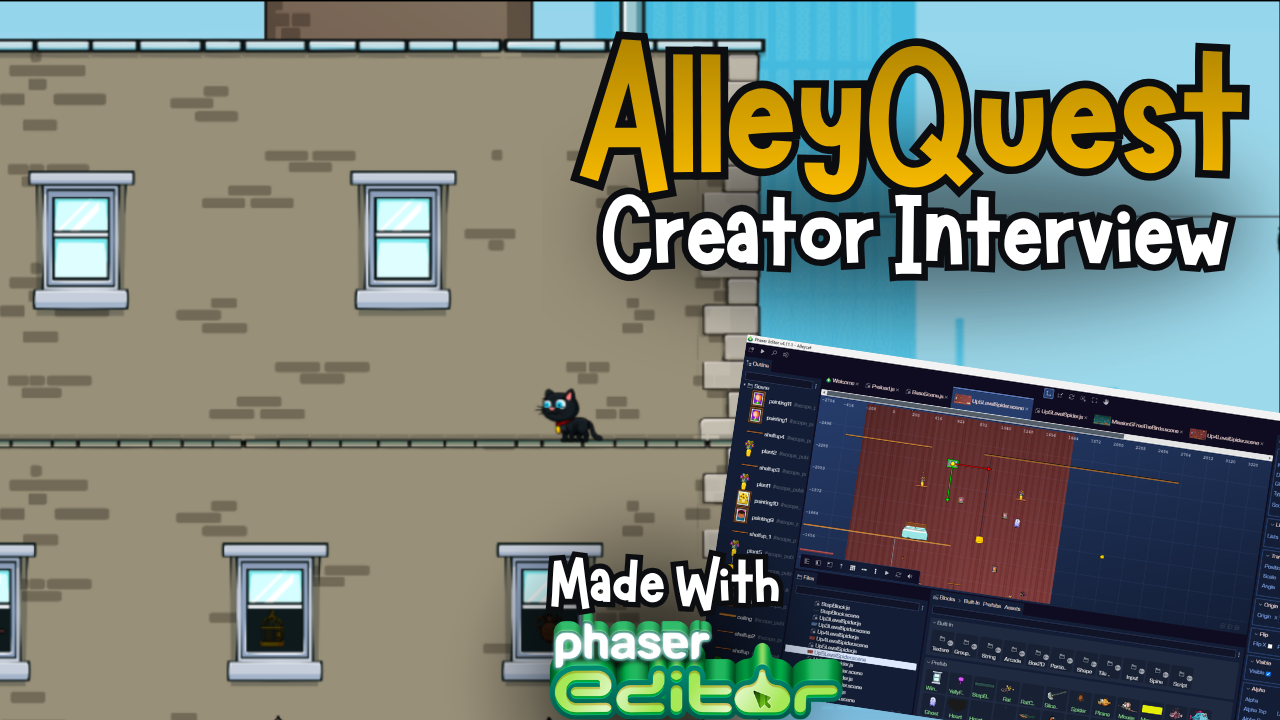
"AlleyCat kept sticking into my mind for some reason." That's how it started: a childhood memory, a black cat, and a wall full of windows.
If you grew up with a PC in the 80s, you probably remember AlleyCat, the 1983 classic by Bill Williams. Simple, charming, and oddly cozy. Now, indie developer Dries van Gijsel is channeling that same energy into AlleyQuest, a modern reimagining built with Phaser and Phaser Editor. We caught up with him to find out how it's going.
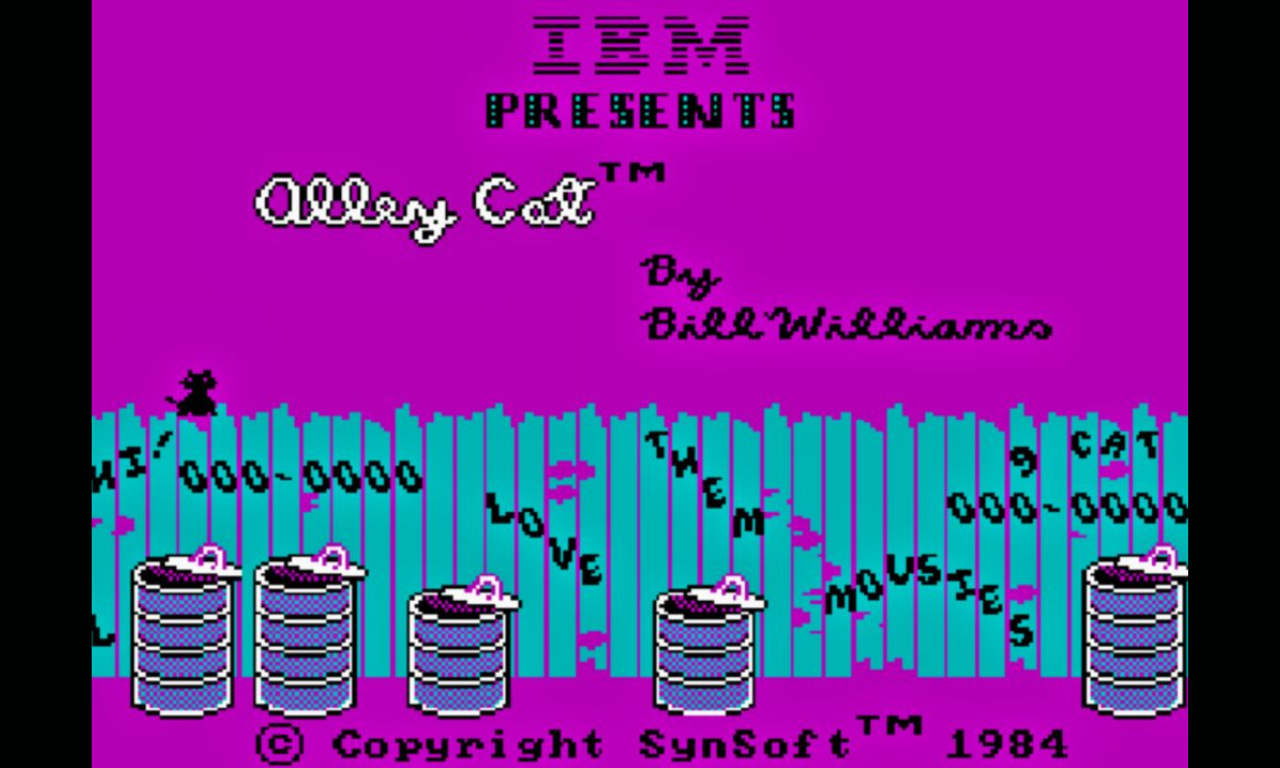
From AlleyCat to AlleyQuest: A Remake with Its Own Identity
After stepping away from a previous project (Operation ThunderStrike) that collapsed under its own ambition, Dries was looking for something with a clearer scope and a genuine creative pull. AlleyCat kept coming back to him. "At first I was like, why don't we just make AlleyCat for fun?" he says. "I initially did, but it didn't take long for me to realize that there were lots of things that could be improved and expanded."
What sealed the deal was finding the perfect assets on Robert Brooks' website (gamedeveloperstudio.com): cats, dogs, houses, fish, windows, all with the right wacky-yet-simple style. "Robert's assets had the right style too. It had this simple yet wacky look I was looking for. I was really hyped up and convinced I had to take on this project."
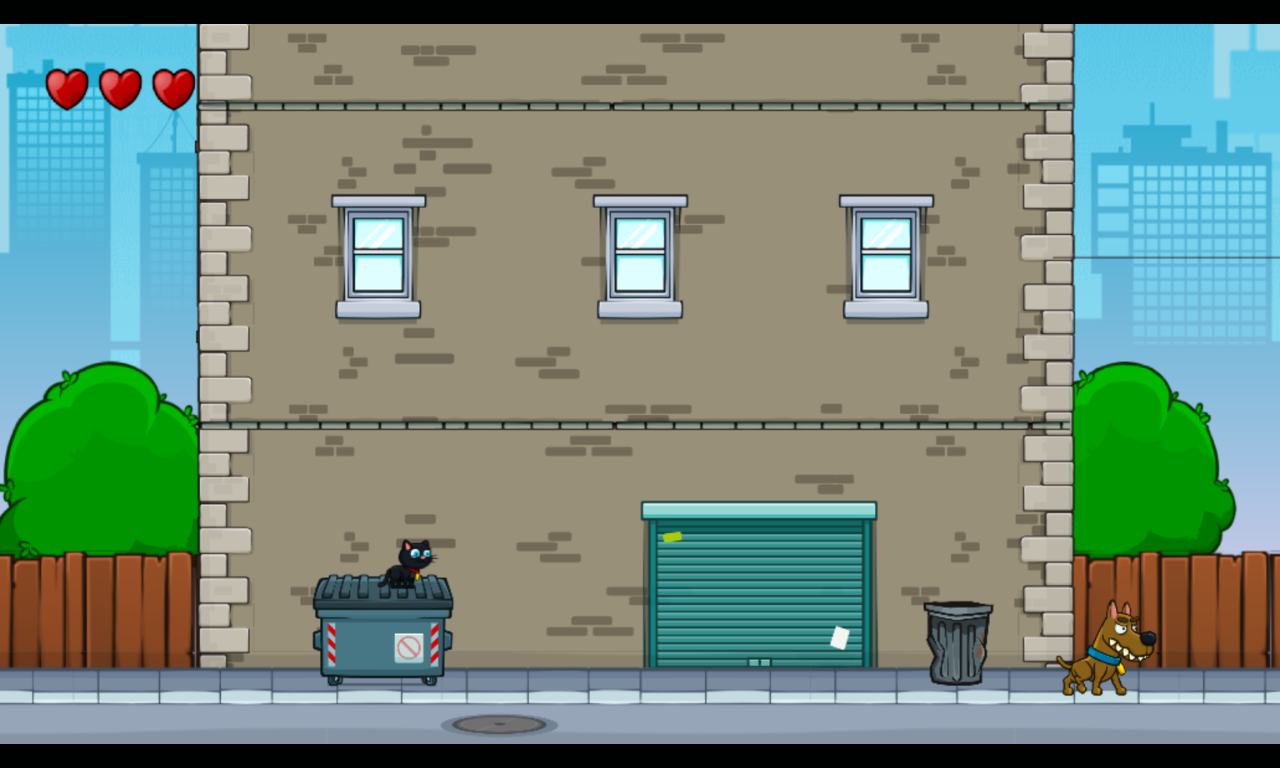
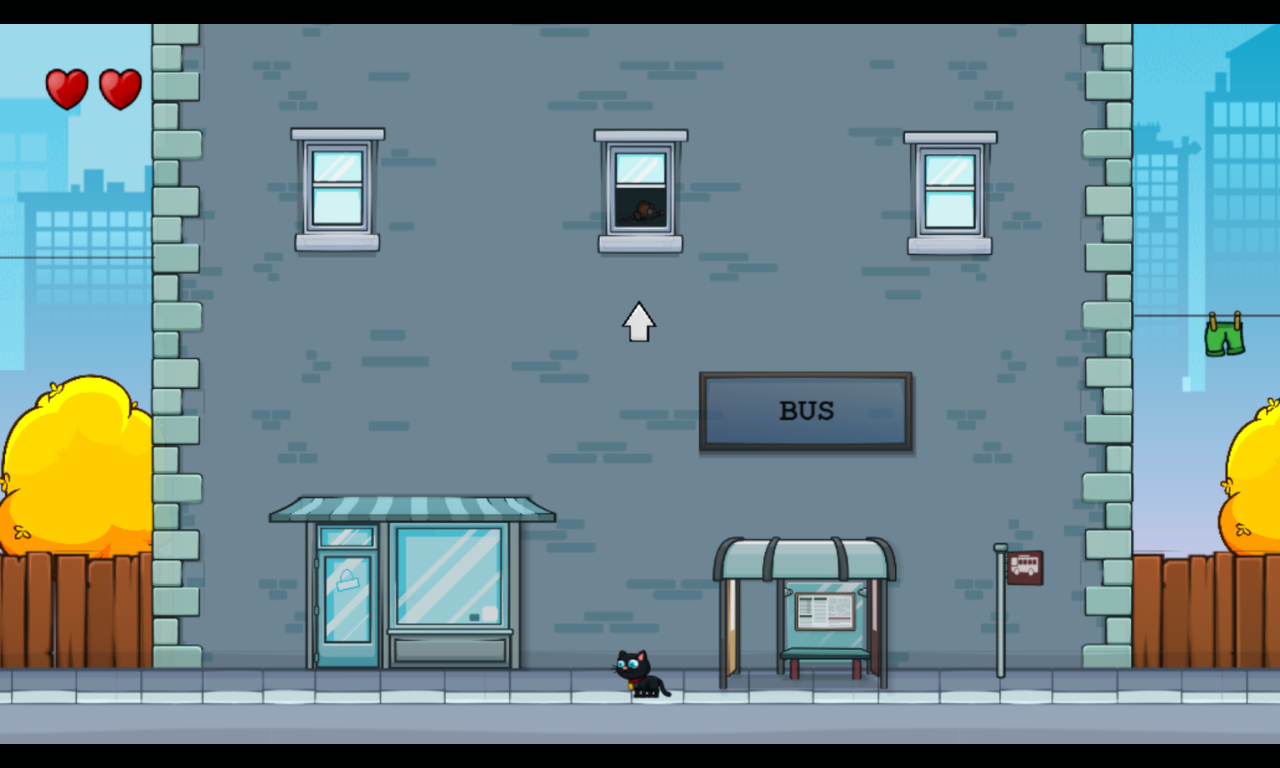
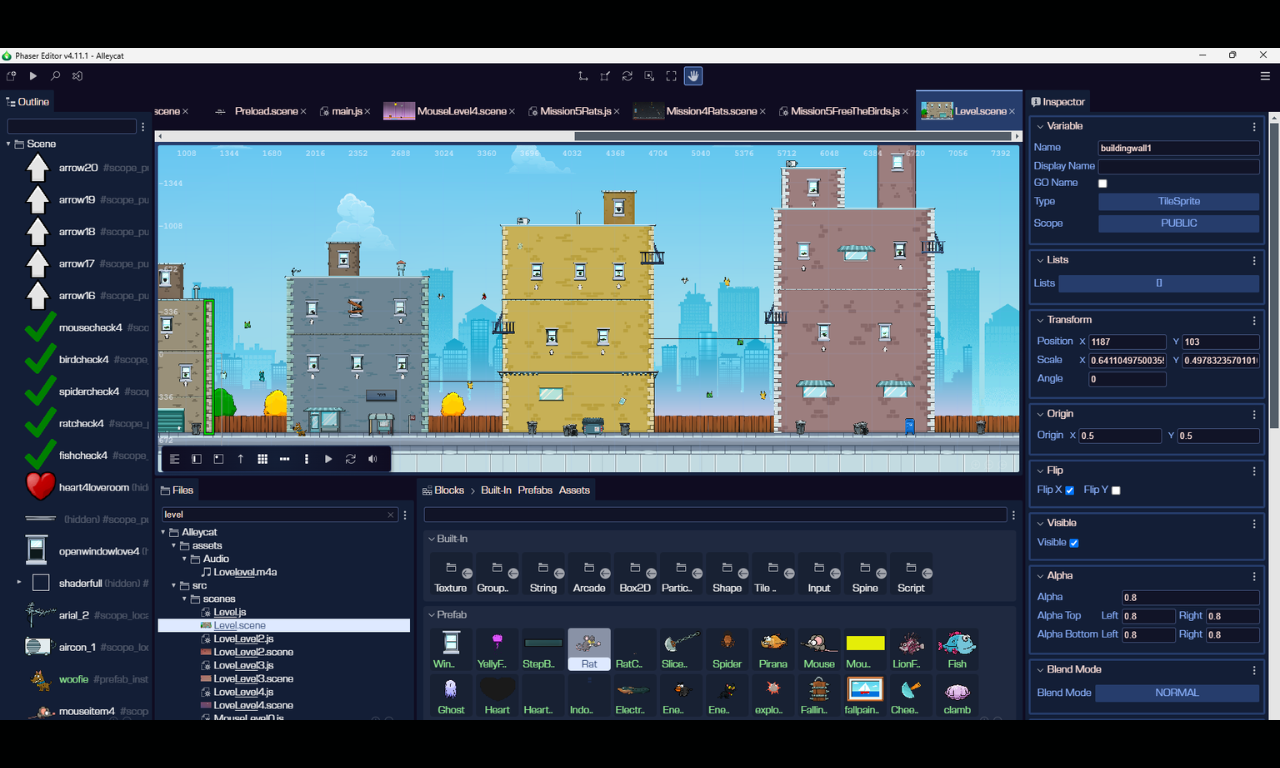
Where the original had a single wall of windows, AlleyQuest gives players an entire street to explore: five different buildings, each with unique rooms, missions, and enemies. The goal, as Dries puts it, is "adding more little touches, variety and systematics to make it as fun as possible." And when the vision clicked, he didn't hesitate: "I couldn't wait to start this project…so I jumped in." But Dries is careful about the balance between homage and originality.
"I want AlleyQuest to be its own thing rather than a cheap copycat. It's a hard balance to find between nostalgia and current design."
"AlleyCat (1983) stood out because it had a great sense of humor and art style. I kind of want that stuff too in the game. But remember that everything you make always evolves into an identity of its own. If something from the past works, use that. But if it doesn't, leave it in the past."
The cozy feeling of the original is very much the north star. "There was something very cozy about playing AlleyCat when I was a young boy. The simplicity of it all, the window, the cat wandering around. Even with the new different graphics, I am doing my best to give people that same cozy feeling when they wander through the street looking for open windows."
As for where the project stands right now, Dries is cautiously optimistic. He's currently finishing up the last basic levels. "Saying I am almost done would be a false statement. But at the other hand, I am now fixing the last 'basic' levels of the game. This means that this journey seems to go just right after all. Bit by bit, but we're getting there." He's also excited to do justice to the game's creator: "I really hope I can give honor to the classic and to its creator Bill Williams."
He's also quick to point out what the original got wrong: "There are things that work, but lots of things like the controls could use a serious update." AlleyQuest will fix that.
Five Buildings, Five Worlds Inside
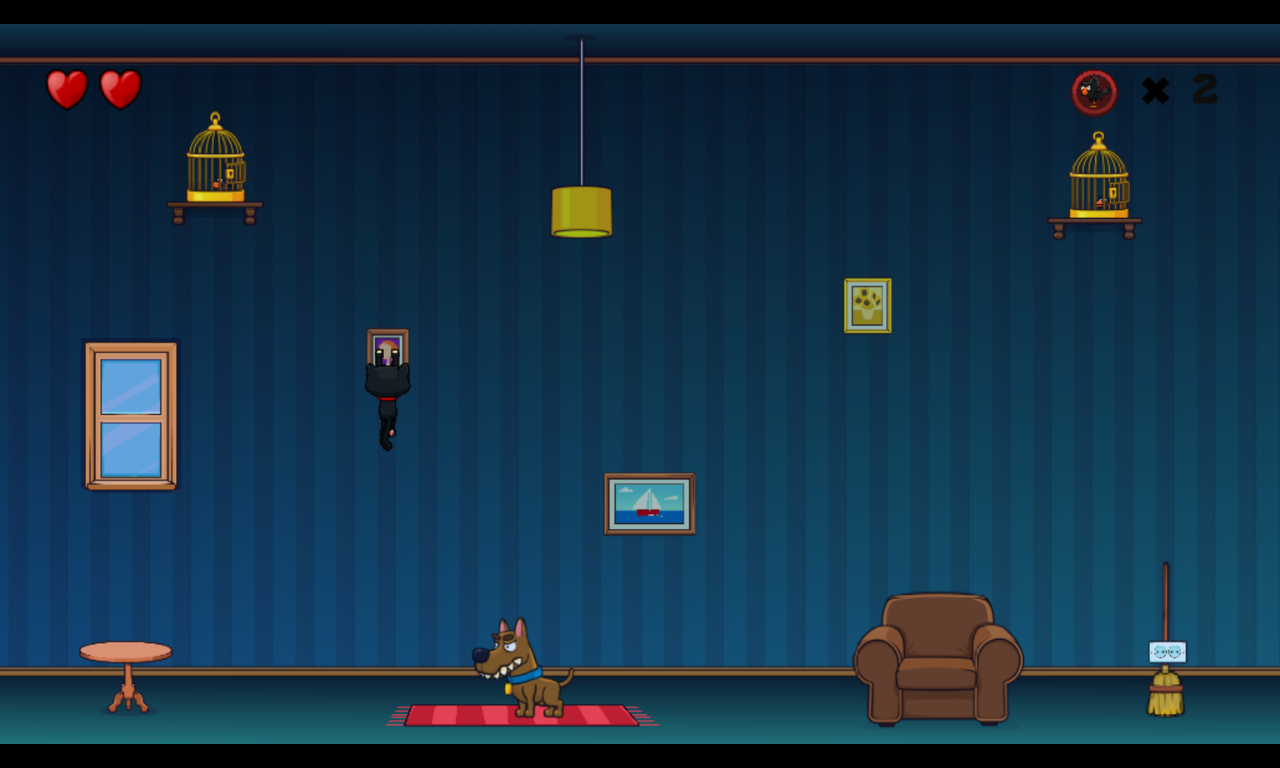
The indoor levels are where AlleyQuest really shows what it can do. Each building has its own visual personality and set of hazards. Purple wallpaper and spiders in one room. Grandfather clocks and birds in another. A gloomy stone dungeon with a swinging axe somewhere else entirely.
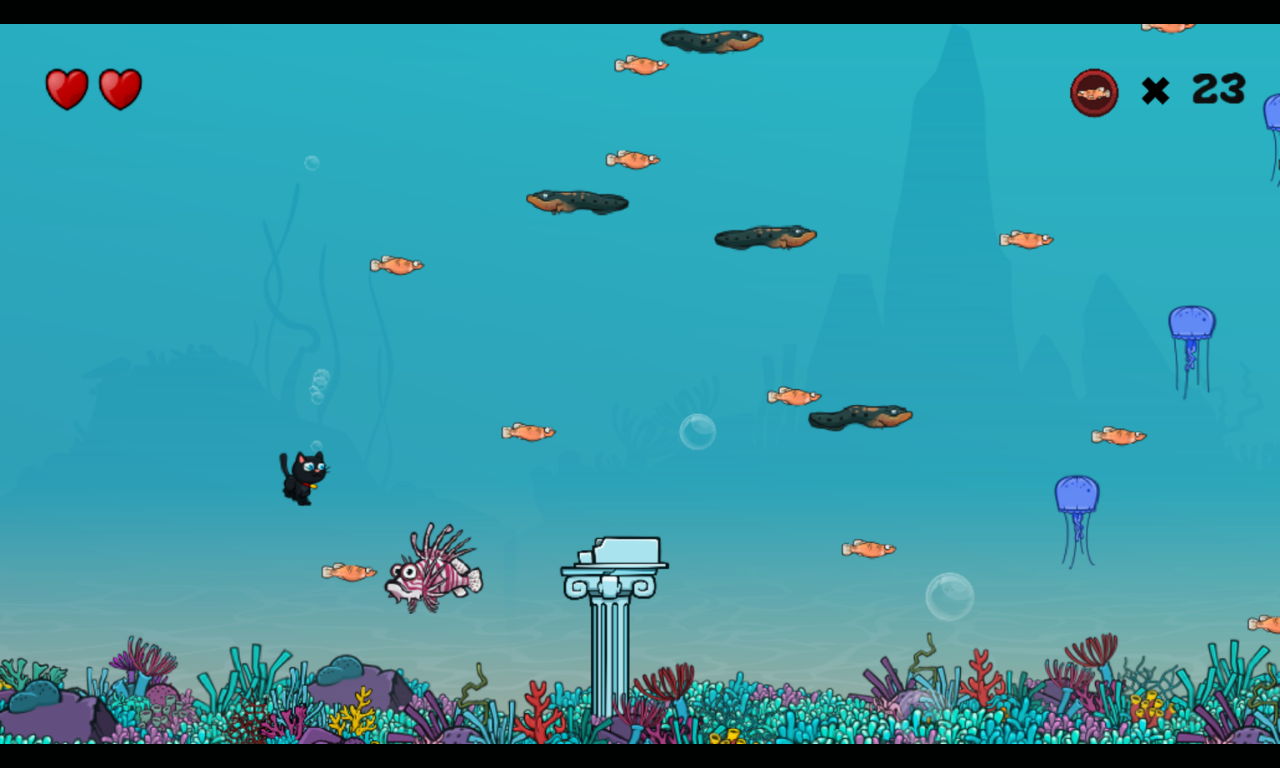
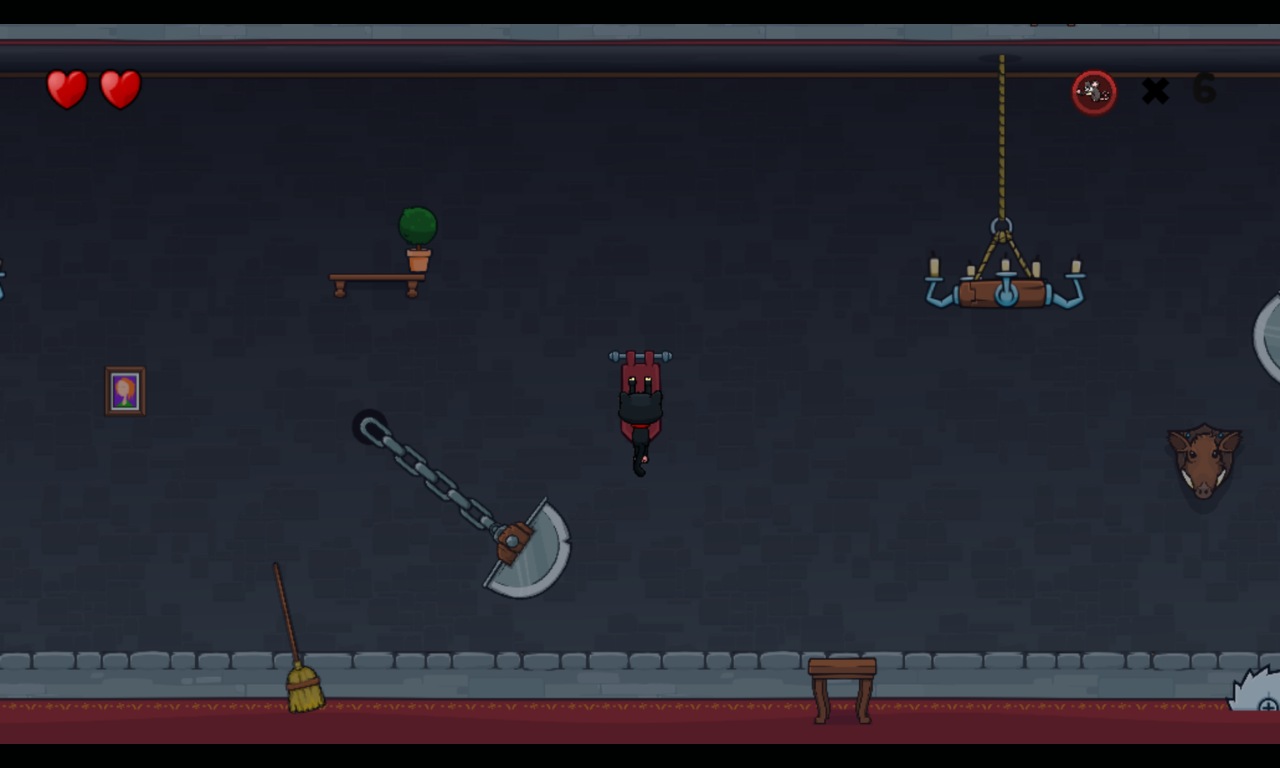
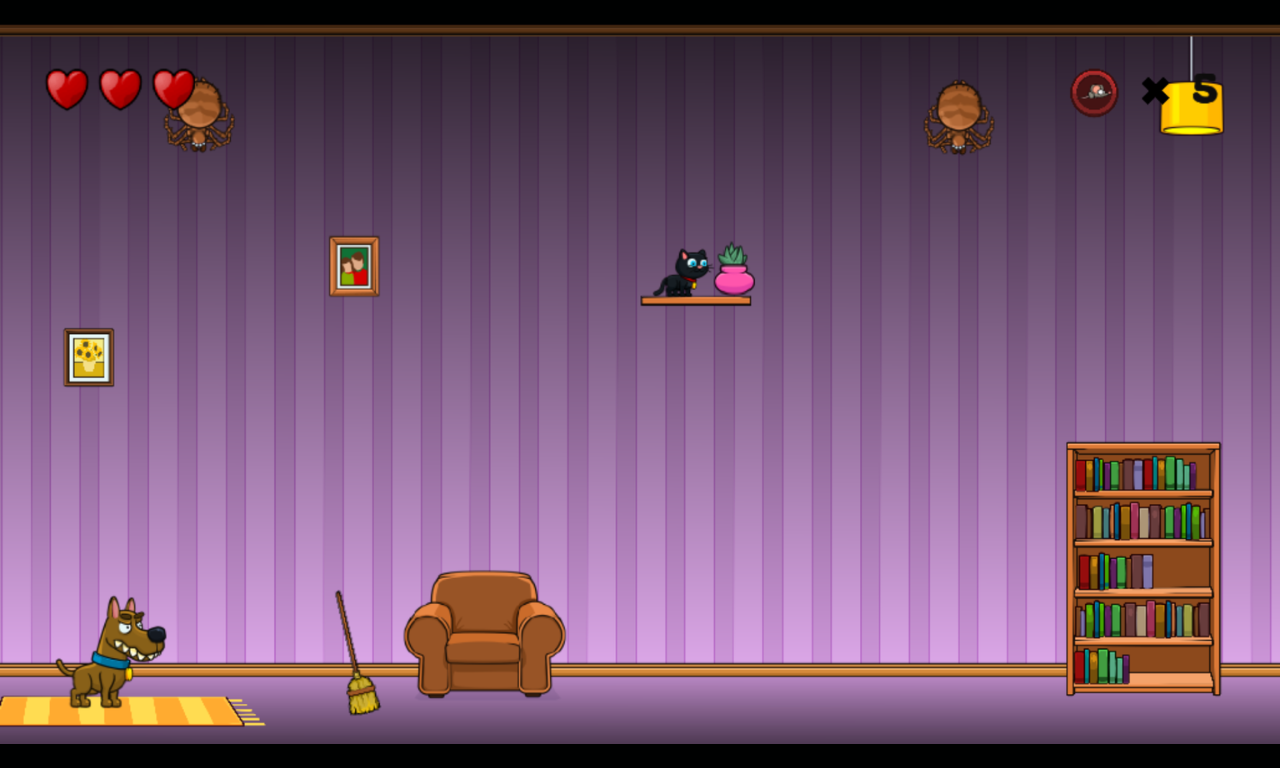
"I am the most excited for people to discover all the new stuff. The street, the five(!) different houses you can roam, all the little touches and of course the missions themselves."
The Biggest Challenge: Level Design
For all his experience with Phaser, the toughest part of AlleyQuest has nothing to do with code. "The level design for sure," he says without hesitation. "It must look good, not be confusing and have the right color palette. Also, the rooms and streets need to look kind of natural too. It's a balance that needs care, so for this project it's definitely the biggest challenge."
Why Phaser Editor? (He Almost Switched to Godot)
Dries has been building games with Phaser for years. His first three or four were made without any editor at all, just raw Phaser. He did use Phaser Editor for a previous project, but that one failed due to scoping problems, not because of the tool. Jumping to the editor in the first place was a real milestone: "Just the visual layout alone was the thing I needed when making more visually complex games."
He seriously considered moving to Godot, but several things kept him in the Phaser ecosystem. AlleyQuest isn't performance-intensive so Phaser handles it comfortably. He's also probably launching for mobile first anyway. He bought the editor on a one-time fee and gets all updates included. And honestly? "I was so eager to begin this new project, I didn't have the patience to learn another engine before starting haha. So yep, Phaser it was!"
A big part of that confidence comes from watching the tool grow. "Every version (also Phaser itself) had so much great new stuff that I decided to stay. The way Phaser and the editor is growing each time they do an update is just amazing."
"The way Phaser and the editor is growing each time they do an update is just amazing."
The Feature That Changed Everything: Prefabs
Ask Dries which Phaser Editor feature has had the biggest impact and he doesn't hesitate. "What DID NOT have an impact on my workflow?" he jokes, before settling on the prefab system as the standout.
"I think Prefabs are just the coolest things in the editor. It helps me a lot to create all the characters with all their specific style and abilities. What is not to love about that?"
"It's kind of the same as making new classes for your object, but in a way, you can just drag and drop it onto your screen whenever you like. (...) I think Prefabs are just the coolest things in the editor. It helps me a lot to create all the characters with all their specific style and abilities. It is also easier this way to combine different images to create something fresh. And when you are ready just drag it onto your screen. What is not to love about that?"
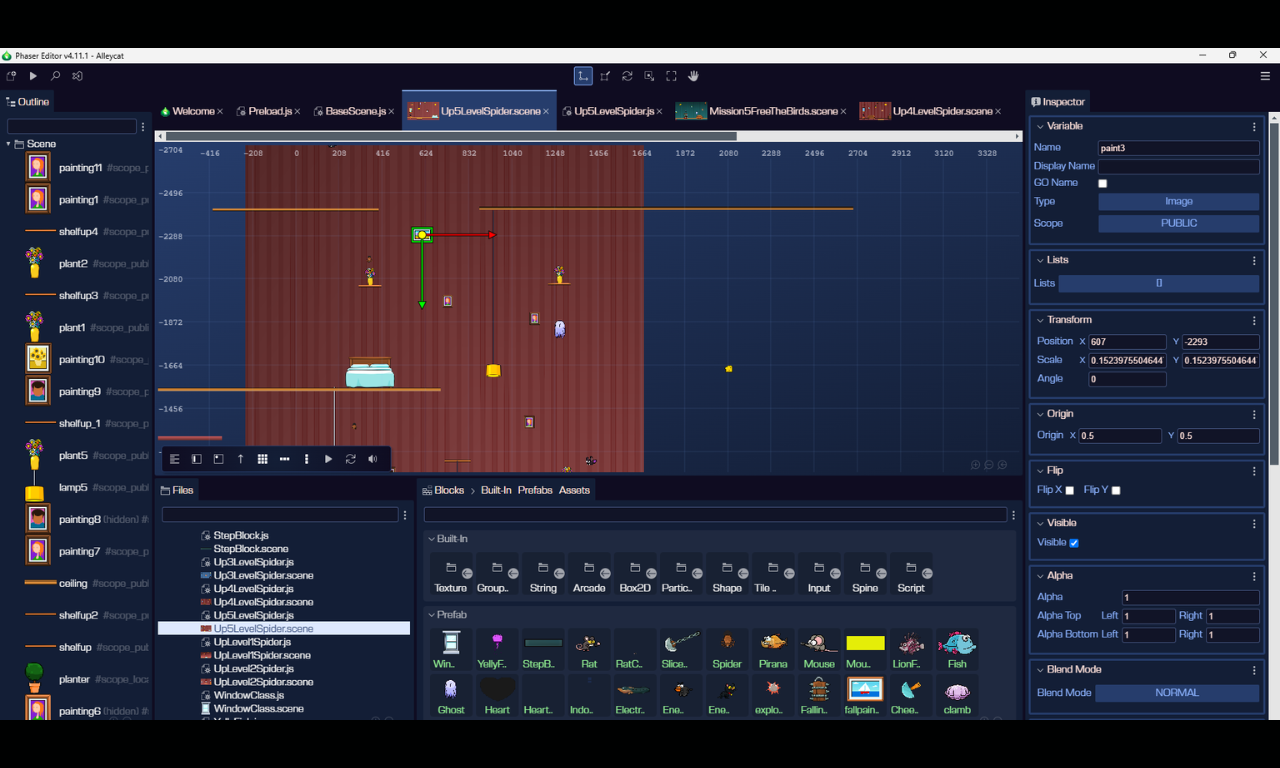
He also highlights the project templates as a genuine surprise. "There are so many options you can start your projects (like JS or TypeScript). If you are not familiar with the editor, there are some good beginner templates. You can also download templates for games made with Phaser. I also like the fact that there is a loading scene already implemented in your new template. You have no idea how much I struggled with creating a fitting loading screen in the past." And the overall look of the tool earns a mention too: "I genuinely like the look of the Phaser Editor in general. It looks nice and organized, just the way I want."
Worth noting: Dries hasn't felt the need for the node system yet. "I'm not really into this whole new node system, but that's because I don't have the feeling that I need it (yet)." For him, prefabs cover everything he needs right now.
The Rest of the Toolkit
Outside of Phaser and the editor, Dries keeps things lean. He uses free online tools to compress and convert image files, and Robert Brooks' own online image editor for retouching assets. For trailers, he relies on an old version of Sony Vegas Pro. And when it comes to shipping, he plans to wrap the finished game using Electron or Cordova to produce the mobile and desktop apps. "That's for later!" he adds.
Honest About the Friction Points, Too
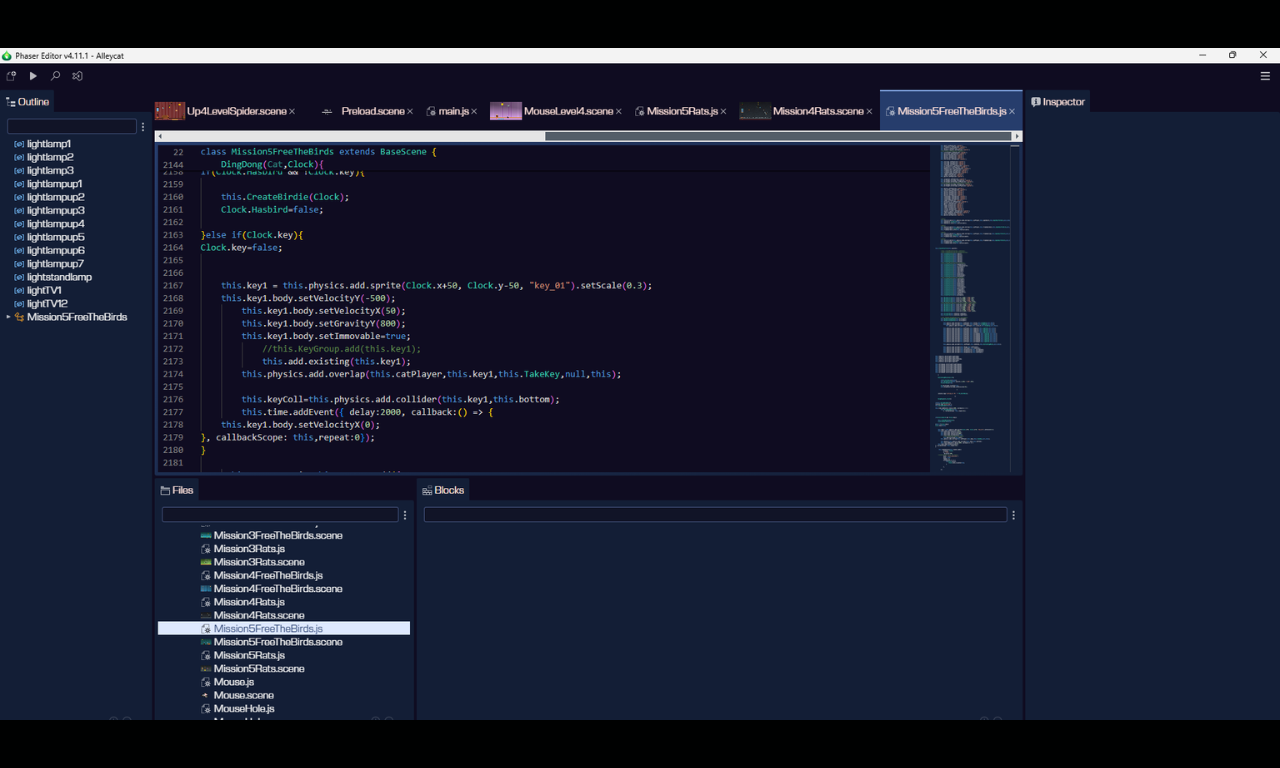
Dries is candid about where things get tricky. "I don't have a lot of friction points now. Of course, there is a learning curve when working with the editor. Honestly, I still like coding more." The always-online requirement is the biggest day-to-day frustration: "Sometimes the editor is not working because of updates on the websites. You have the feeling you must always be attached online." The FX options look tempting, but drain CPU, which is a problem for mobile targets, so he avoids them entirely. And while he tried the built-in collision tools, he ended up writing his own: "Not that it was bad, but I just feel more comfortable writing it myself."
His dream feature is one that would resonate with any Phaser developer who has wrestled with Electron or Cordova:
"Imagine the Phaser Editor has a built-in system where you can make a mobile app or desktop app with just one click? I think a lot of people would love that option. If you can pull that off, I swear you all deserve a crown."
Who Is Phaser Editor For?
Dries is clear and specific with his recommendation. Phaser is well-suited to beginners who want to make small games, but don't expect 3D: "You can make decent 2D games with this." His advice is to learn Phaser first, before touching the editor. "After a while, when you get the hang of it and want to make bigger games, try the editor. Certainly, if you are creating more visually complex games, you always have a benefit with the visual layout."
"I do think Phaser is more for people who are coders in general. But even then, the editor will help you a lot by creating a more organised and clear working environment." "It's all about what kind of games you want to create. If you want to make 2D games that are more suitable for web or mobile, Phaser is certainly a good choice. But even then, you can create desktop games by using third-party wrappers." And for anyone worried about community support: "There is an active Phaser community to help you with all your problems building your games."
The Bottom Line
AlleyQuest is shaping up to be a genuinely charming reimagining of a beloved classic, and we can't wait to see the finished thing. Keep an eye on Dries van Gijsel's work. This is a project made with real care and craft.