
What it does
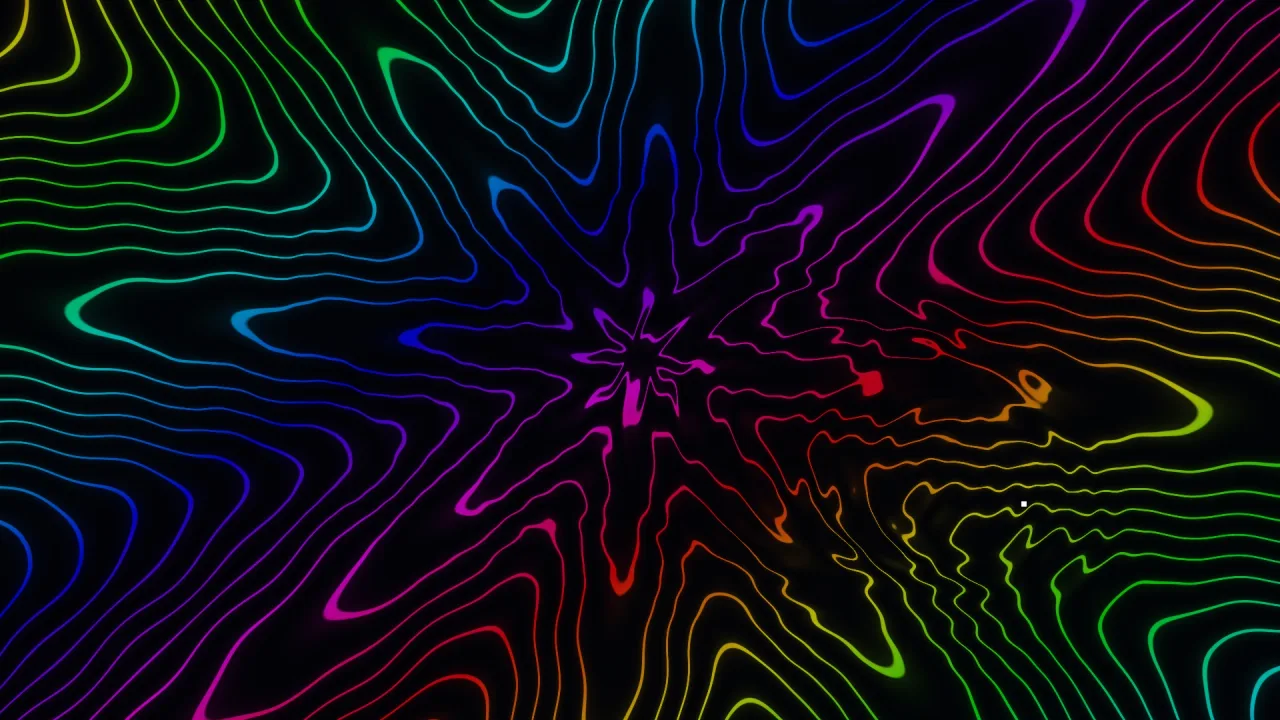
You show a background with a style and its settings, and it fills the screen behind the sprites. The patterns are worked out per pixel: where the pixel sits on a lattice, a ring, a spiral or a noise field. So there are no textures to load, and the cost is one full-screen pass whatever the pattern. The colour is always a rainbow over the surface, set by a base hue, a hue cycle per second and a brightness.
What makes it more than wallpaper is that it shares state with the trippatron pack. Every burst and every
trip.impact call pushes the surface outward from where it happened, with up to eight shared impulses in flight at
once. With audio composed and trip.listen() called, the level of the mix drives the wobble, brightness and hue, and
the waveform can be drawn as an oscilloscope trace. handle.wake sends a wave packet along a segment of the world, so
sampling a drag every tenth of a second leaves a trail of ripples; up to 24 wake segments are held at once.
It runs its own pass rather than joining the backdrop stack, because one surface needs far more data (the settings, the impulses, a 32-sample waveform and the wake segments) than a stacked backdrop's sixteen params. Settings are checked before anything changes, so a bad value throws and the old background stays.
Features
- Twenty styles —
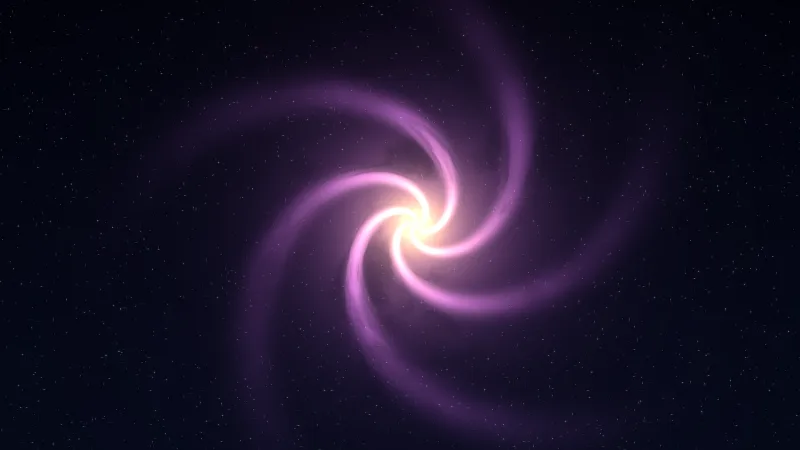
grid,rings,plasma,tunnel,raster,hex,triangles,diamonds,dots,checker,circuit,contours,interference,starfield,aurora,nebula,scanlines,waves,spiralandkaleidoscope;tripBackdropStyleslists them for a picker. - Impact ripples — explosions and impacts from
trippatrondisplace the surface;reactionscales them or turns them off. - Audio response —
audioGainsets how much the mix moves the wobble, brightness and hue. - A live waveform —
waveform: truedraws the signal as a trace across the middle. - Drag wakes —
handle.wakespreads a water-like wave along a drag or from a point, with its own strength, width, speed and duration. - Live settings — spacing, line width, warp, rounding, speed (backwards too), hue, cycle and brightness, changed
with
set. - Checked input — out-of-range numbers are clamped, and non-finite ones throw before anything is replaced.
- WebGPU and WebGL2 — one full-screen pass on either.
Good for
- Twin-stick arena shooters — a neon grid that warps with every explosion, in the style of Geometry Wars.
- Light shows and psychedelic shooters — hue cycling and kaleidoscopes in the style of Llamatron and Trip-a-Tron.
- Music visualisers and rhythm games — a surface that pulses to the mix and traces its waveform.
- Touch toys and menus — a background that ripples behind the player's finger.
- Tunnel and tube shooters — the
tunnelandspiralstyles for a sense of depth.
Make it yours
Every setting is live. A calm menu is starfield or aurora with a slow cycle, low brightness and reaction at 0,
so bursts played over the menu do not shake it. A frantic arena is grid with fine spacing, some rounding so the
cells bulge, warp raised and reaction at 2, with audioGain and waveform on for the music. Changing style
mid-game is one set, as a level changes or a boss enters.
A quick look
A grid that bulges at an impact, then turns into a kaleidoscope that pulses to the music:
const bg = game.tripBackdrop.show({ style: 'grid', spacing: 36, rounding: 0.6, warp: 15, brightness: 0.5 });
game.trip.impact({ x: 200, y: 180, strength: 40 });     // the grid bulges out from here
bg.set({ style: 'kaleidoscope', cycle: 0.2 });          // live
game.trip.listen();                                      // with audio composed: pulse to the mix
bg.set({ waveform: true, audioGain: 2 });
Works with
trippatron— required: its bursts and impacts move the surface, and it holds the shared audio state.post-trippatron— distorts the sprites with the arena; lower the reaction on one of the two so an impact does not double up.audio— real music for the surface to react to.backdrops— calm skies and stacked, fading parallax layers instead.
Good to know
- One opaque background at a time: it hides any backdrop beneath it, and showing a new one replaces the old.
- The ripples are a formula over time, not a fluid simulation: eight shared impulses and 24 wakes at most, the oldest recycled.
- It does not distort sprites; that is
post-trippatron. - There are no colour params: the colour is always a rainbow set by hue, cycle and brightness.
- Changing scene removes it, so show it again in the next scene; before audio unlocks, the audio analysis is silence.