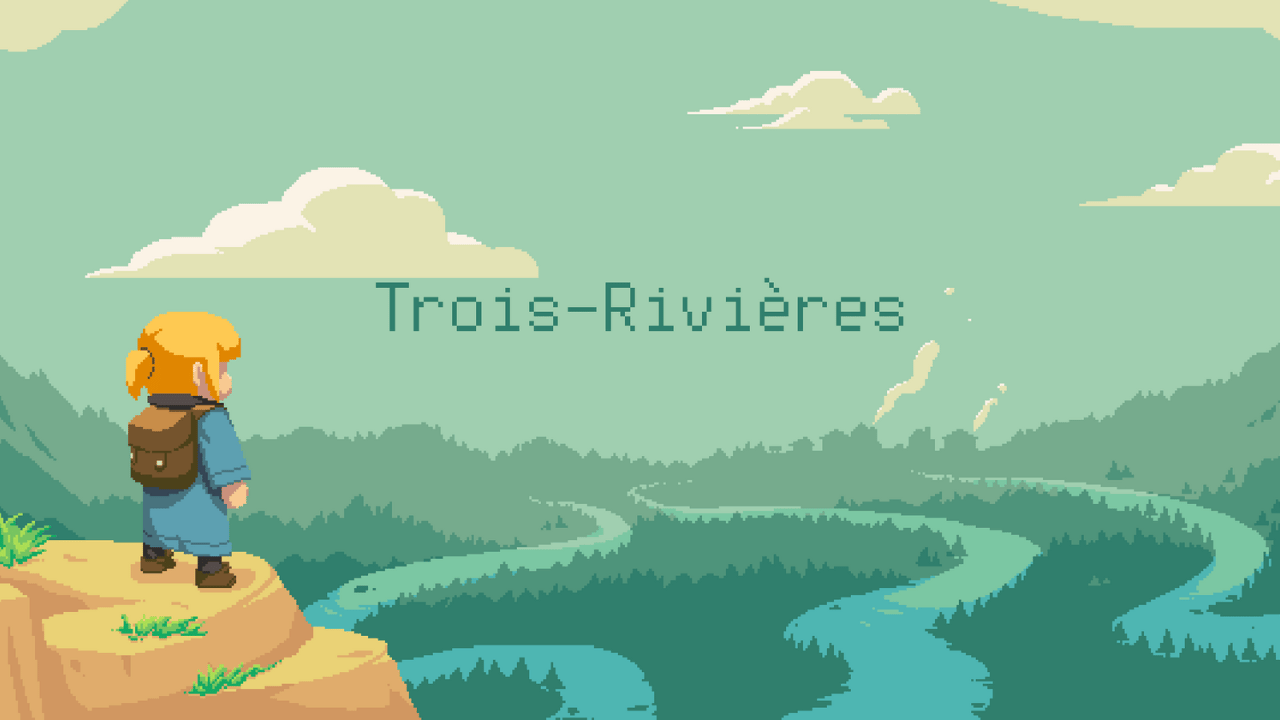
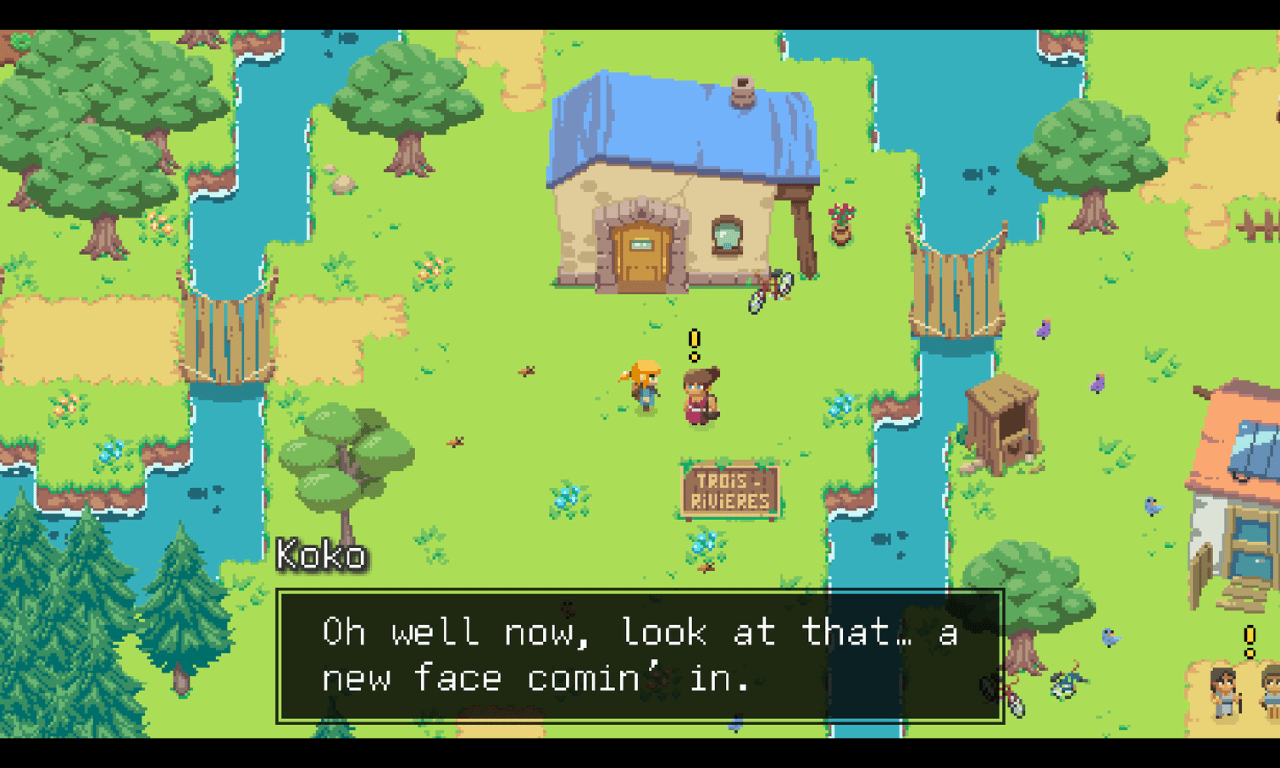
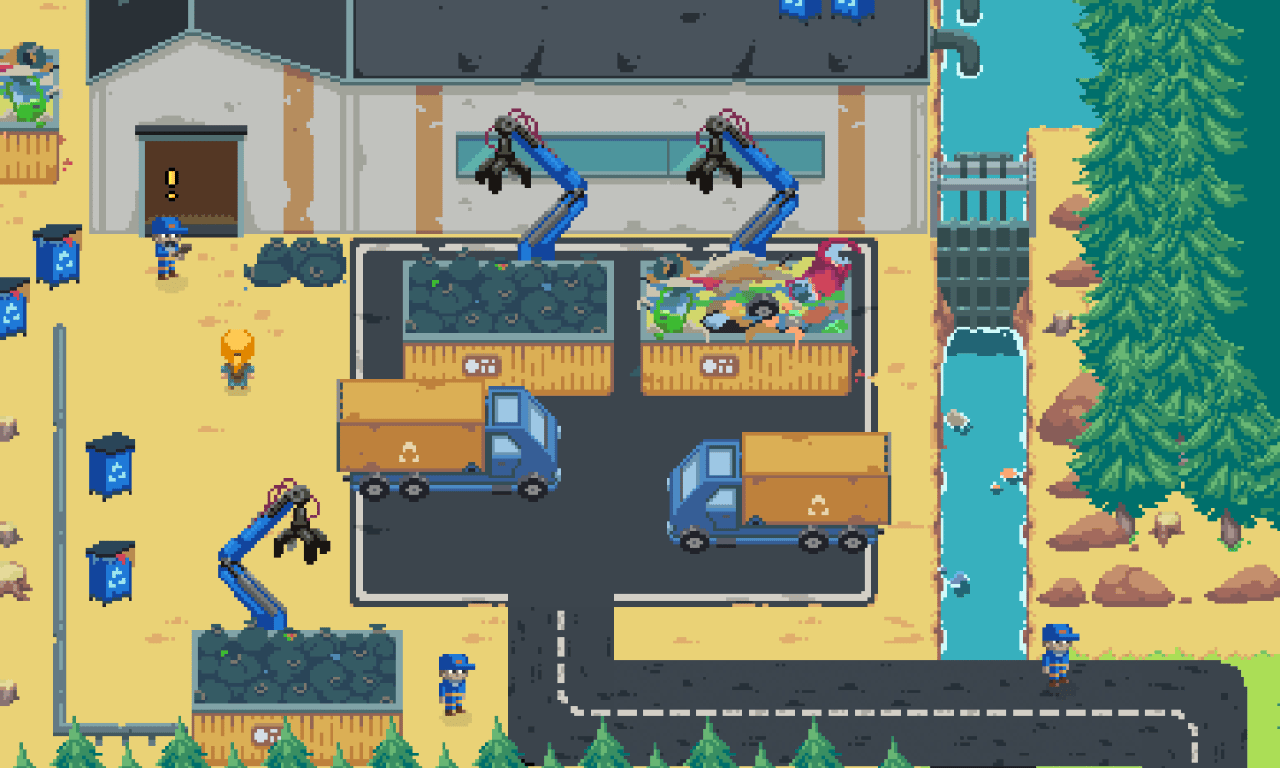
Trois-Rivières (Three Rivers) is a pixel-art adventure game created with Phaser that tells the story of Maï, a hiker who discovers a charming village disrupted by river pollution. Behind its cozy aesthetic lies a powerful message about the environmental impact of our digital lifestyle.
The Story
Maï arrives in the peaceful village of Trois-Rivières and begins getting to know its inhabitants. But something is wrong: one of the rivers is polluted, disrupting the tranquillity of the village.
Maï sets out to investigate and understand the origin of this disaster, uncovering truths about the hidden costs of our modern, supposedly "dematerialized" world.
Gameplay
The game features exploration and interaction with village inhabitants as players navigate through a charming pixel-art environment. While the visual style initially presents a cozy, nostalgic atmosphere, the tone gradually shifts darker as the story unfolds, reflecting the serious themes at the game's core.
The game is accessible via web browser, playable on both keyboard and touchscreen devices. It includes subtitles and an interactive tutorial for accessibility.
Interview with Richard Hanna
Q: What inspired you to create Trois-Rivières?
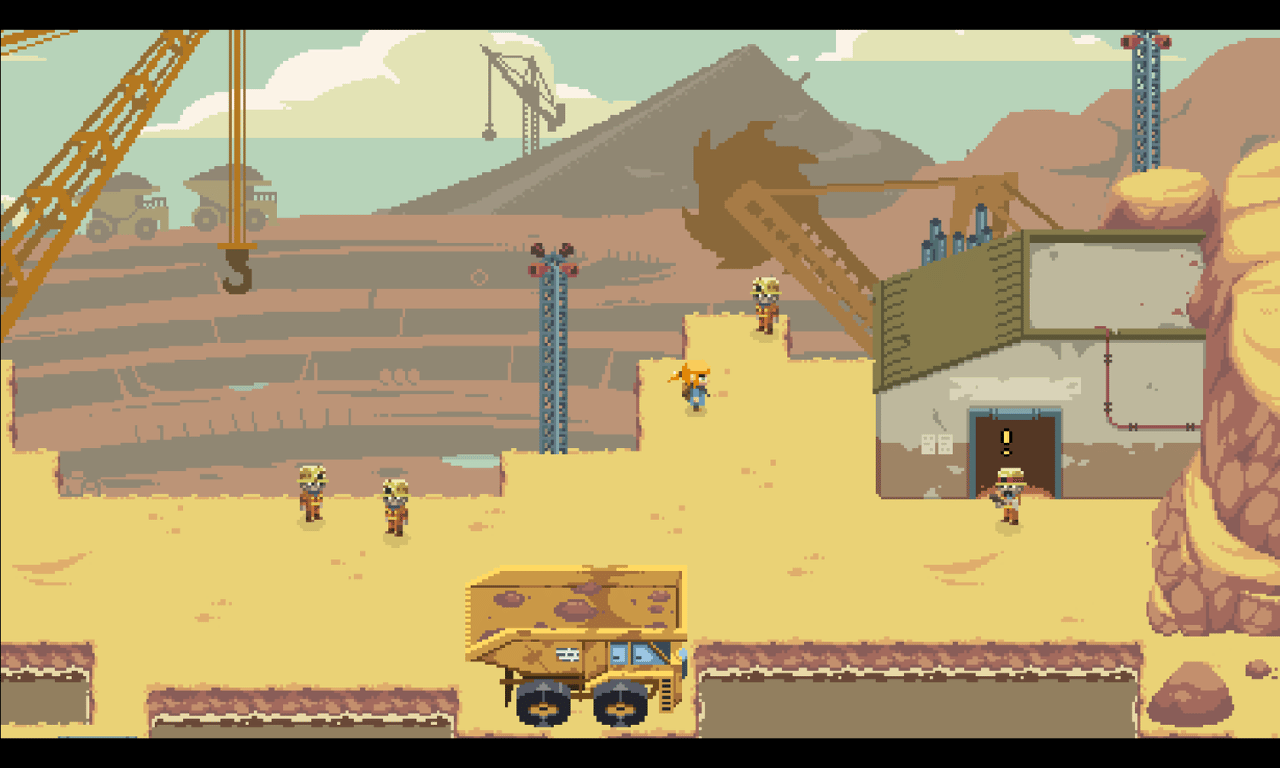
A: My goal was to show the consequences of the industries that underpin our digital world, our video games, which are far from being dematerialized, quite the opposite. We often talk about mining, and indeed, it's present in this game. But through the theme of river pollution, I wanted to focus on the exploitation, even the monopolization, of water in the digital lifecycle (devices, data centers, etc.). The village of Trois-Rivières is fictional. It has no connection to the city of the same name in Canada.
Q: The art style is beautiful. Did you create the art yourself?
A: We're a team of three, all French: Philippe, the game artist; David, the narrative designer and musician; and myself, who handles the concept, game design, and programming. Philippe is the one who created the game's beautiful visual environment. I'm a huge Zelda fan, by the way. I wanted a blend of retro nostalgia and a cute design, but the atmosphere will darken as the game progresses, and I'll let you discover why! The graphics took 15 days to complete, including meetings and prototypes.
Q: Why did you choose Phaser?
A: Trois-Rivières is my first video game with Phaser! I have a long experience as a web developer, mainly creating forms and other web applications! I learned programming by making amateur Flash video games (younger people probably don't know about that, right?). Choosing Phaser was a pretty easy decision. I'd known about it by reputation for a long time. I wanted a lightweight framework to create a video game that would run in a browser and be playable on the oldest devices possible: I tested it throughout development on my current phone, a 2015 iPhone 6S! Getting to grips with Phaser and mastering it was very quick. There are plenty of examples and tutorials that helped me. In keeping with our values, my team and I chose not to use AI tools to create our game. Except for translating this interview from French to English!
Q: Which part of the game are you most pleased with?
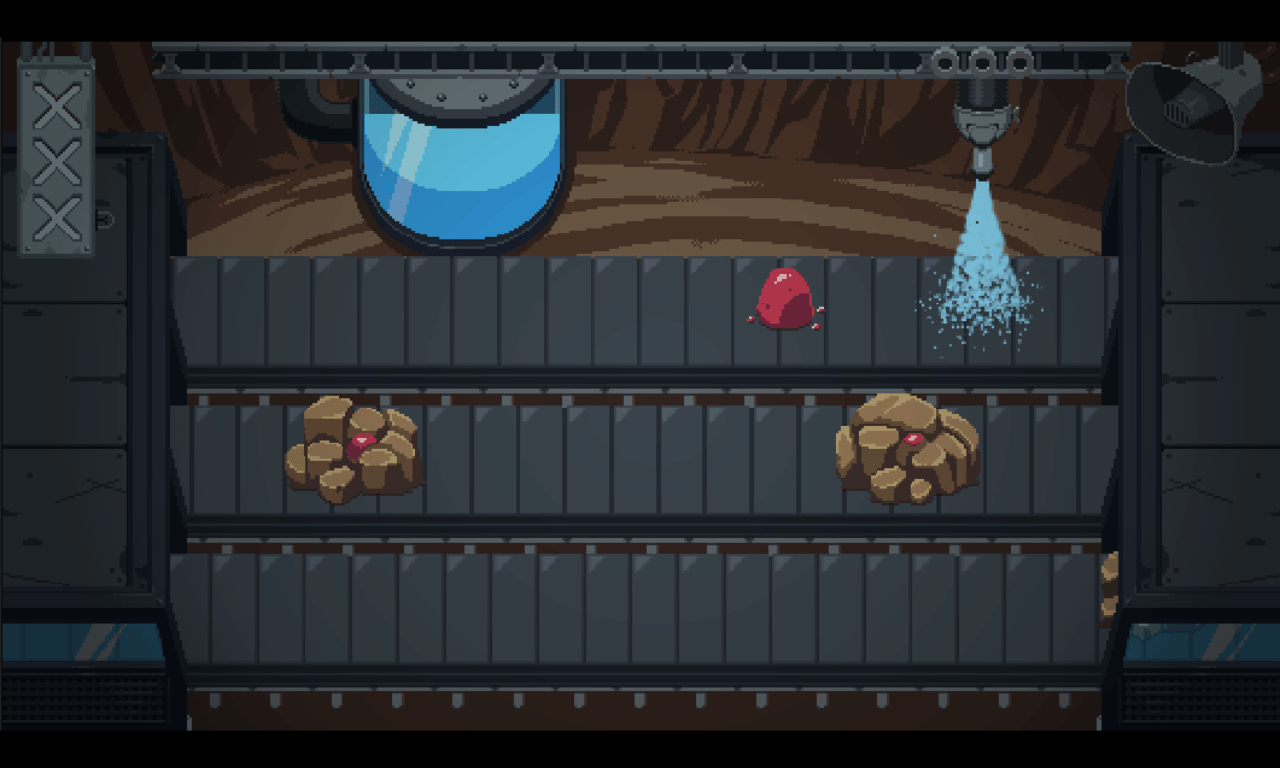
A: My team and I loved creating the little industry games where the pace increases and it becomes torture for the player! I also loved adding little Easter eggs or hidden places in the village.
Q: Where there any tools you found essential?
A: In addition to Phaser, I used Tiled to create the village map and Free Texture Packer for the sprite assets.
Q: What feature or tool do you think Phaser needs?
A: I found Phaser quite open-ended, allowing for pretty much anything you want! I developed my own in-game workflow to easily manage states and characters dialogues. However, I'm still getting to grips with collision detection. I don't know if it's possible to have "softer" collisions that would allow characters to be less restricted by their environment.
Q: What advise do you have for other game-devs just getting started out?
A: My advice is to start by making small, simple games, based on examples or tutorials. For Trois-Rivières, I created a gameplay prototype with a character and a village, using this video tutorial. You can create incredible games with Phaser. In my opinion, the most important thing before starting game development isn't about the technology or the code, it's about asking yourself what message you want to convey to the players.
Q: And what's next for you? Will you be expanding this game, or starting a new project?
A: Today, for Trois-Rivières, the challenge is to continue raising awareness. I want to make it more accessible to people with disabilities. Of course, I'd like to create a new game, focusing on social issues, and for that, I'm reading a lot (comics, essays, etc.) and trying to meet people willing to join the adventure. Another (big) challenge is finding funding for development.
A thought-provoking adventure that reminds us that our digital world has very real environmental consequences.