
What it does
The party moves a whole cell at a time and turns a quarter at a time. Each move takes a set time and can be queued, as in the originals, and the run tells the presenter where the move started and ends and how far along it is, so the camera glides from cell to cell instead of jumping. Walls, shut doors, monsters, obstacles and steps that are too high stop it with a bump; small height changes between cells are walked, and stairs lead to the floors above and below.
The floors are sector-map maps, usually painted as rows of characters, so they bring sector heights, doors that
rise, triggers, lamps and the same renderer as the shooters. The crawler lays its own features over the cells:
pressure plates that the party, monsters or items press by weight, levers and buttons on a cell's wall, pits that
open and close and drop to the floor below, teleporters, spinners, alcoves that want an object, secret walls behind
loose bricks, torch sconces, locks with keys, writing, monster spawners, healing crystals, breakable barricades and
water that slows you and puts out your torch. Their actions are the map's own trigger actions, so a lever opens a
door the way a switch does in a shooter.
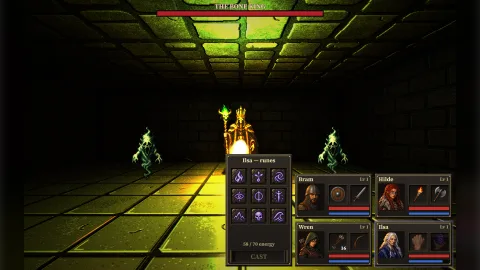
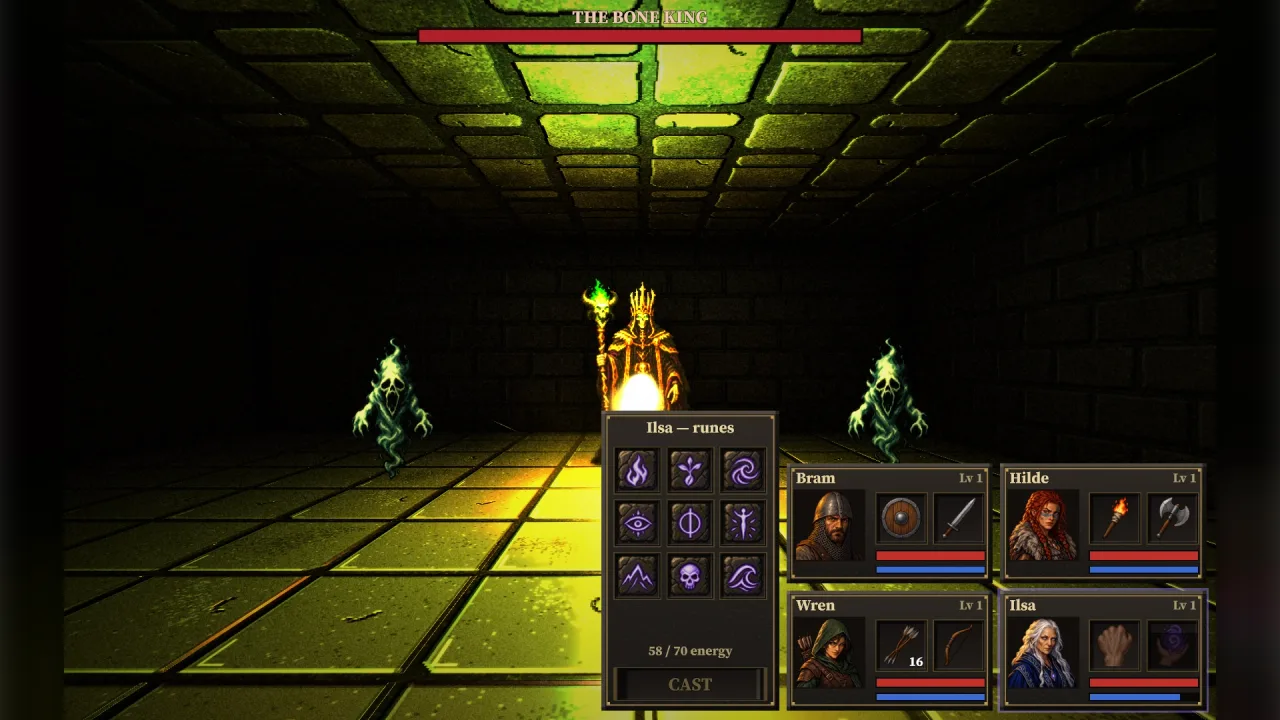
The party stands in a formation of rows, two by two by default. Each character has hit points, energy, food, a level with experience, an inventory and two hands that attack on their own cooldowns: melee from the front row, bows, throws and spells from anywhere. Spells are cast as rune combinations from a grid and fly down the corridors as missiles, or heal, light and shield. Monsters move cell by cell on their own timers, turn to face you, see you along open cells, hear you through open doorways, hunt where they last heard you, guard their posts and go back to them, and strike whichever side of the formation they stand on.
Features
- Cell-by-cell movement — steps four ways and quarter turns, queued, timed and exposed as a glide for the camera.
- A party in rows — any formation size, from four in a two-by-two to a lone explorer, with front-row melee.
- Two hands each — weapons, bows with ammunition, throwables, food, potions and scrolls, each hand on its own cooldown.
- Rune magic — spells as rune combinations in any order, with energy, levels and cooldowns, missiles that glide or jump.
- Real-time monsters — sight, hearing, memory, guards, floaters, strafers, ranged attackers, drops and resistances.
- Puzzle props — plates by weight, levers, hidden buttons, alcoves, sconces, locks and secret walls.
- Traps and travel — pits to the floor below, stairs, teleporters for party, monsters, items and missiles, spinners.
- Survival — food and starving, resting, torches that burn down and dim, water that douses them, healing crystals.
- Sector-map floors — heights, doors, lamps and triggers from the map, on painted grids or map data.
- Two dungeons and an autopilot — a three-floor crypt and a flooded vault, both finished by the autopilot.
Good for
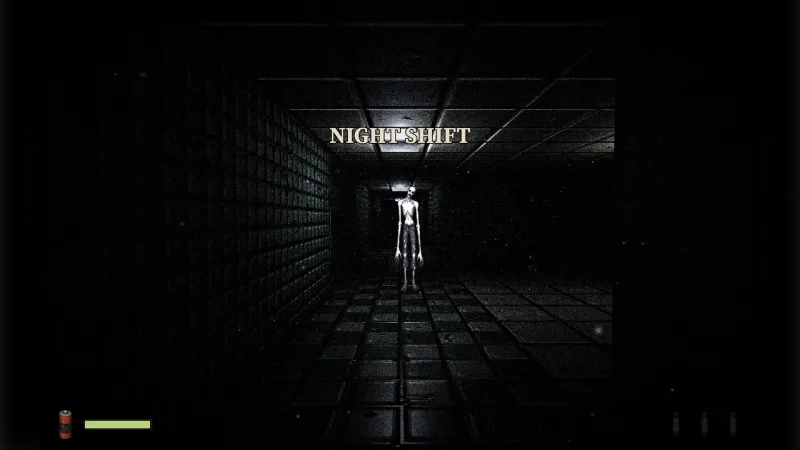
- A party-based crawler — four characters in a dark crypt, as in Legend of Grimrock or Dungeon Master.
- A lone explorer — one character, darkness and water, a slower and tenser game from the same rules.
- A puzzle dungeon — plates, levers, alcoves and secret walls wired to doors and pits with plain data.
- An attract mode — the autopilot plays a dungeon through, fights included.
- A level editor's test bed — any grid floor plays at once, and
checkDungeonexplains what is wrong.
Make it yours
Everything is data: the floors and their features, the item, monster and spell kinds, the rune grid, the party and its formation, armour slots and pack size, and the rules' timings, queue length, hunger, regeneration, experience curve, noise and light. The Rune Crypt is four characters with magic over three floors, with a two-floor option and three skill levels; the Flooded Vault is one explorer in a one-by-one formation with no magic, pitch darkness, water that slows every step and douses torches, faster hunger, slower steps and a goal of carrying an idol back to the start. Both play from the same rules.
A quick look
Start the crypt and feed it moves and attacks; draw the map and the view each frame.
const G = gridCrawler;
const run = G.createCrawlerRun(G.runeCrypt());
input.on('w', () => run.move('forward'));
input.on('1', () => run.attack(0, 1));
input.on('space', () => run.interact());
game.step('play', dt => {
    for (const e of run.step(dt)) present(e);
    draw(run.floor.map, run.view());
});
Works with
sector-map— the floors, with their heights, doors, lamps and triggers.sector-shooter— the same maps played with free movement and guns.cell-dungeon— a simpler single-height grid map for corridor shooters and crawlers.world-3dandlighting-3d— meshes for the floors and a light that follows the party's torch.
Good to know
- The pack draws nothing: the presenter draws the map, the props, the monsters and the hands.
- Only the party's floor runs; monsters and spawners on other floors wait.
- One monster to a cell, and monsters do not open doors.
- There is no carrying weight, poison or skill tree; experience raises levels.
- The autopilot sees the whole dungeon; it is for demos and tests, not an opponent.