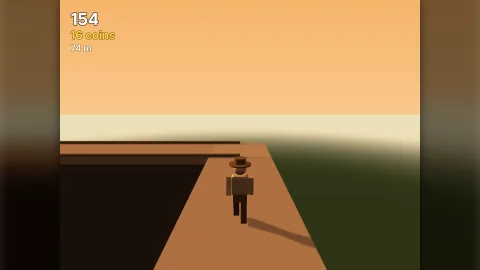

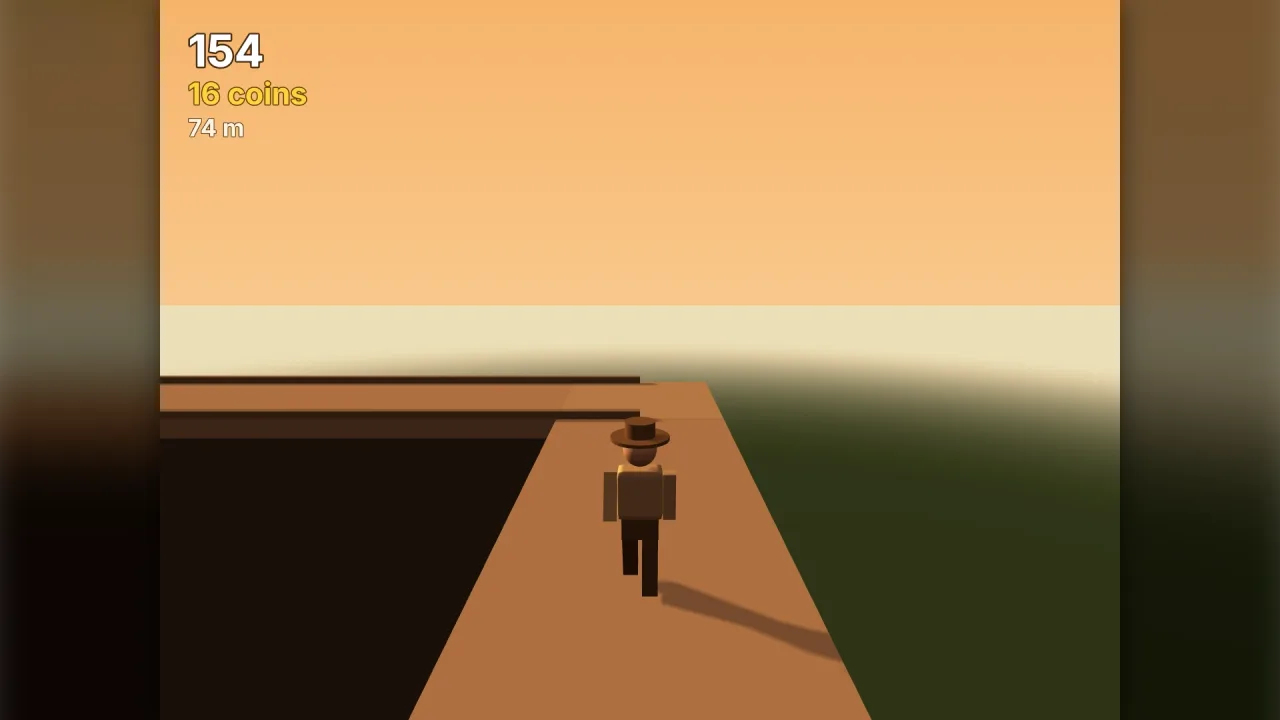
The pack
turnRunner3d
function turnRunner3d(): Pack<{ turnRunner: TurnRunnerApi }>The turn-runner-3d pack: game.turnRunner, Temple Run's rules on runner-core. No options.
Helpers
createTurnAutopilot
function createTurnAutopilot(game: TurnRunner, options: TurnAutopilotOptions = {}): TurnAutopilotA turn run's autopilot. It only reads game; give its moves to game.input and its tilt to game.steer.
createTurnRunner
function createTurnRunner(options: TurnRunnerOptions = {}): TurnRunnerStart a turn run. Throws, with every fault, on options it refuses.
templeChunks
function templeChunks(options: { width?: number } = {}): RunnerChunk<TurnItem>[]Temple Run's path as chunks: a start, straight stretches of roots to jump, fire, arches to slide under, gaps and broken edges, trees to steer round, weaving coin lines and power-ups, and stretches that end at a corner or a T-junction. Harder ones come further along. Every stretch leaves room after its last obstacle to swipe a corner.
turnBodyDefaults
const turnBodyDefaults: TurnBodyThe body defaults.
turnRunnerPowerUps
const turnRunnerPowerUps: Record<string, RunnerPowerUp>The built-in power-ups: Temple Run's.
validateTurnRunner
function validateTurnRunner(options: TurnRunnerOptions = {}): string[]Check a turn run's options and chunks. Empty when it can be run.
Types
TurnAutopilot
interface TurnAutopilotA player that picks the next moves and the tilt.
next(): TurnAutopilotPlan— What to do now. Call it before each step: it plans once everyevery, and steers every call.
TurnAutopilotOptions
interface TurnAutopilotOptionsHow the autopilot looks ahead.
horizon?: number— Seconds a plan must live through. Default 1.6.beyond?: number— Seconds it looks on past that, to choose between plans that live. Default 1.times?: number[]— When a plan's jump or slide can come. Default[0, 0.2, 0.4].every?: number— Seconds of run between decisions. Default 0.1.
TurnAutopilotPlan
interface TurnAutopilotPlanWhat to do now.
moves: TurnMove[]— Moves to giveinput.tilt: number— The tilt to givesteer.
TurnBarrier
interface TurnBarrierSomething to jump, slide under or steer round, across part or all of the path.
kind: 'barrier'— Item type tag; always'barrier'(a barrier).at: number— Where it stands along the stretch, from its start.bottom: number— The height of its underside: a sliding runner passes below it.top: number— The height of its top: a jumping runner passes over it.depth?: number— Its depth along the path. Default 0.4.left?: number— Its left edge, across the path from the middle (negative is left). Default the path's left edge.right?: number— Its right edge. Default the path's right edge.look?: string— What it is, for the drawing: 'root', 'fire', 'arch', 'tree' or a game's own.hit?: 'crash' | 'stumble'— What running into it does. Default'crash'; a trip is'stumble'.
TurnBarrierView
interface TurnBarrierView extends TurnThingViewA barrier, as drawn: where its middle is and its size.
width: number— Its extent across the path, in world units: its right edge less its left.depth: number— Its depth along the path, in world units.bottom: number— Height of its underside above the path, in world units.top: number— Height of its top above the path, in world units.look: string— What it is, for the drawing: the barrier'slook, or'barrier'when it has none.
TurnBody
interface TurnBodyThe runner's body and moves.
height: number— Standing height. Default 1.8.slideHeight: number— Height while sliding. Default 0.8.halfWidth: number— Half its width. Default 0.3.halfDepth: number— Half its depth along the path. Default 0.3.jumpHeight: number— How high a jump goes. Default 1.5.jumpTime: number— How long a jump is in the air. Default 0.7 s.slideTime: number— How long a slide lasts. Default 0.75 s.steerSpeed: number— How fast a full tilt moves the runner across. Default 5 units a second.turnEarly: number— How far before a corner's middle a swipe takes it. Default 9.
TurnCoins
interface TurnCoinsA line of coins along the stretch, at one place across it or weaving.
kind: 'coins'— Item type tag; always'coins'(a line of coins).at: number— Where the first is.count?: number— How many. Default 1.every?: number— The spacing. Default 2.5.across?: number— Where across the path. Default 0, the middle.weave?: number— Weave from side to side this far either way, one sway percount. Default 0.y?: number— Height. Default 1.arc?: number— An arch this high over the middle coins. Default 0.
TurnCorner
interface TurnCornerHow the stretch ends: a corner one way, or a T-junction either way. Without one, the path runs straight on.
kind: 'turn'— Item type tag; always'turn'(a corner).dir: 'left' | 'right' | 'both'— Which way the path goes on.
TurnEvent
type TurnEvent = | RunnerEvent<TurnItem> | { kind: 'jump' } | { kind: 'slide' } | { kind: 'land' } | { kind: 'turn'; dir: 'left' | 'right'; heading: number } | { kind: 'trip'; id: string } | { kind: 'crash'; id: string; what: string } | { kind: 'fall' } | { kind: 'pickup'; id: string; x: number; y: number; z: number; power?: string }Something that happened in a turn run: runner-core's events, and the motor's own.
TurnGap
interface TurnGapA hole in the path: across all of it (a gap to jump) or part of it (a broken edge to steer past).
kind: 'gap'— Item type tag; always'gap'(a gap).at: number— Where it starts along the stretch.length: number— How long it is.left?: number— Its left edge across the path. Default the path's left edge.right?: number— Its right edge. Default the path's right edge.
TurnItem
type TurnItem = TurnBarrier | TurnGap | TurnCoins | TurnPickup | TurnCornerWhat a chunk of path holds.
TurnMove
type TurnMove = 'left' | 'right' | 'jump' | 'slide'A move.
TurnPickup
interface TurnPickupA power-up to pick up.
kind: 'power'— Item type tag; always'power'(a power-up pickup).at: number— Where along the stretch.across?: number— Where across. Default 0.power: string— The power-up it starts.y?: number— Height. Default 1.
TurnPoint
interface TurnPointA point on the ground: x across, z along the start's heading.
x: number— World units across, to the right of the start's heading.z: number— World units along the start's heading.
TurnRunner
interface TurnRunnerA turn run.
readonly run: Runner<TurnItem>— runner-core's run under it.readonly state: TurnRunnerState— Where the runner is.readonly options: Readonly<{ width: number; body: TurnBody; coinRadius: number }>— The options, defaults filled in.input(move: TurnMove): void— A swipe or a button:'left'and'right'take a corner inside its window; jumps and slides need the ground.steer(tilt: number): void— The tilt, -1 (full left) to 1 (full right): how fast the runner moves across.step(dt: number): void— Advancedtseconds, in fixed steps of 1/120 s.canTurn(): boolean— True inside a corner's turn window, before the turn is taken.view(): TurnView— What is where.drain(): TurnEvent[]— Events since the last call.snapshot(): TurnRunnerSave— The run as plain JSON.restore(save: TurnRunnerSave): void— Pick up a saved run made with the same options.clone(): TurnRunner— A separate run with the same options at the same point.
TurnRunnerApi
interface TurnRunnerApiWhat the turn-runner-3d pack adds to a game: game.turnRunner.
create: typeof createTurnRunner— Start a turn run.validate: typeof validateTurnRunner— Check a turn run's options; empty when it can be run.chunks: typeof templeChunks— The built-in path as chunks.powerUps: typeof turnRunnerPowerUps— The built-in power-ups.body: typeof turnBodyDefaults— The runner's body defaults.autopilot: typeof createTurnAutopilot— A player that looks ahead, for an attract mode or a test.
TurnRunnerOptions
interface TurnRunnerOptionsA turn run's options: the path, the body, and runner-core's run.
width?: number— The path's width. Default 4.2.body?: Partial<TurnBody>— The runner's body and moves.chunks?: RunnerChunk<TurnItem>[]— The chunks. DefaulttempleChunks().opening?: string[]— Chunk ids played first. Default['start']with the built-in chunks.powerUps?: Record<string, RunnerPowerUp>— The power-ups. Besides runner-core'sshield,invulnerable,multiplierandspeed, the motor readsdata.reach(a magnet's pull) anddata.auto(a boost: corners are taken and gaps crossed by themselves). DefaultturnRunnerPowerUps.coinRadius?: number— How far from a coin the runner takes it. Default 0.8.run?: Omit<RunnerOptions<TurnItem>, 'chunks' | 'opening' | 'powerUps' | 'hits'>— runner-core's options for the run.
TurnRunnerSave
interface TurnRunnerSaveA turn run saved as plain JSON.
run: RunnerSave— runner-core's save of the run underneath.state: TurnRunnerState— The runner's state when the save was made.taken: string[]— Ids of the coins and power-ups already picked up.struck: string[]— Ids of the barriers already struck (and, with:side, struck from the side), so each hits once.choices: [number, 'left' | 'right'][]— The turn taken at each T-junction passed, as[chunk index, direction].origin: [number, number, number, number]— Where the first stretch kept starts: x, z, heading, and its chunk's index.
TurnRunnerState
interface TurnRunnerStateWhere the runner is and what it is doing.
across: number— Across the path from its middle (negative is left).y: number— Height of its feet; below 0 it is falling.vy: number— Vertical speed.distance: number— Distance along the path: runner-core's.heading: number— Which way it runs: 0 the start's way, then a quarter turn right per 1 (0 to 3).grounded: boolean— On the ground.sliding: number— Seconds of slide left.tilt: number— The tilt, -1 (full left) to 1.committed: 'left' | 'right' | null— A turn taken at the next corner, before reaching it.missed: { index: number; at: number } | null— A corner run past without turning: its chunk and where its middle is. Half a width on, the path ends.falling: boolean— Falling off the path.jumps: number— Jumps made.slides: number— Slides made.turns: number— Corners taken.
TurnStretchView
interface TurnStretchViewA stretch of path, as drawn: from from, length long, heading heading, width wide.
id: string— The index of its chunk in the run, with:leftor:rightadded on a branch beyond a T-junction not yet taken.from: TurnPoint— Where its middle line starts.heading: number— Its heading, 0 to 3.length: number— Its length along the path, in world units: its chunk's length.width: number— Its width across the path, in world units.end: 'straight' | 'left' | 'right' | 'both'— How it ends.gaps: { at: number; length: number; left: number; right: number }[]— Holes in it, as spans along and across.branch?: 'left' | 'right'— A stretch beyond a T-junction not yet taken: drawn on both branches until the runner chooses.
TurnThingView
interface TurnThingViewAn obstacle, coin or pickup, as drawn.
id: string— Unique within a view: its chunk index and item index, such as'3:1', then:and the coin's place in a line, and:leftor:righton a branch not yet taken.x: number— World x of its middle, to the right of the start's heading.y: number— Height of its middle above the path, in world units.z: number— World z of its middle, along the start's heading.heading: number— The heading of the stretch it stands on, 0 to 3.across: number— Where it lies across the path from the middle line, in world units; negative is left.power?: string— For a pickup, the name of the power-up it starts; unset on barriers and coins.
TurnView
interface TurnViewWhat is where, for a presenter. Positions are world points (x across, z along the start's heading).
runner: TurnRunnerState & { x: number; z: number; height: number; speed: number }— The runner.stretches: TurnStretchView[]— The stretches laid.barriers: TurnBarrierView[]— Barriers.coins: TurnThingView[]— Coins not yet taken.pickups: TurnThingView[]— Power-ups not yet taken.chaser: number— How close the monkeys are, 1 on the runner's heels to 0 gone.canTurn: boolean— True inside a corner's turn window.