
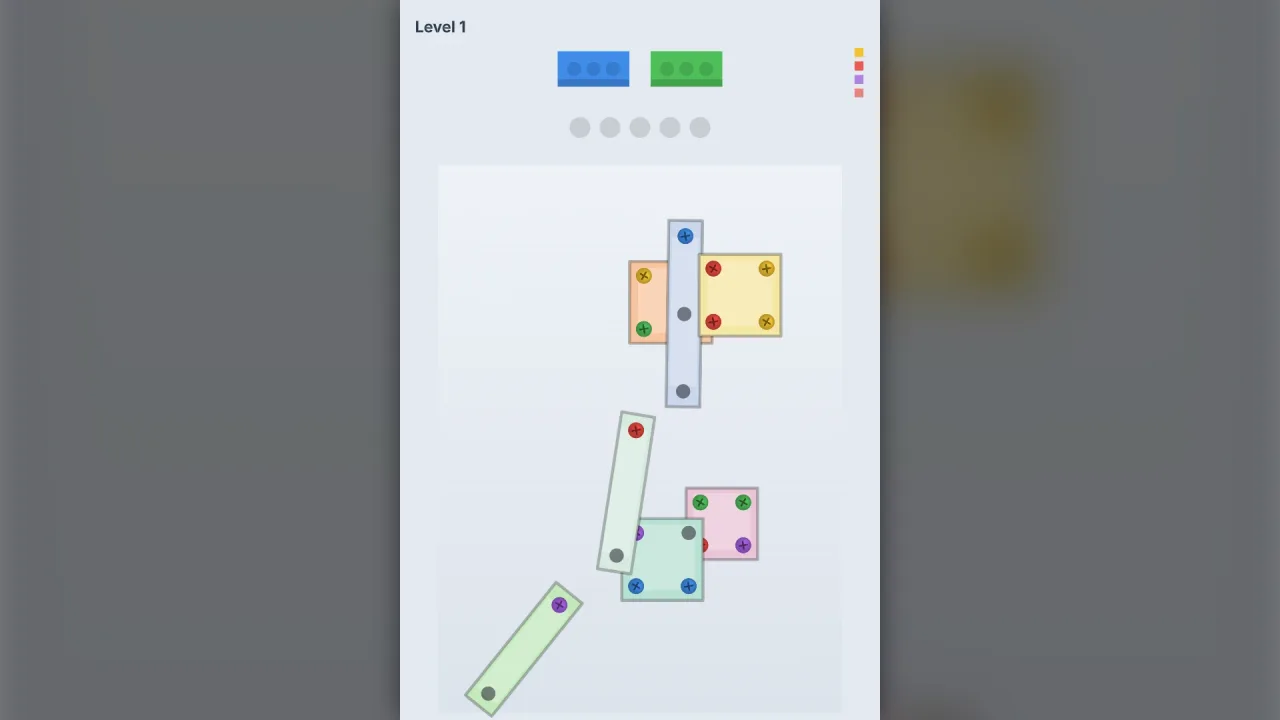
The pack
screwSort
function screwSort(): Pack<{ screwSort: ScrewSortApi }>The screw-sort pack: game.screwSort, Screw Jam's rules on plates and screws of plate-stack's.
Functions
createScrewSort
function createScrewSort(level: ScrewSortLevel): ScrewSortGameMake a game of a level. Throws, listing every problem, on a level validateScrewSortLevel refuses.
generateScrewSort
function generateScrewSort(options: ScrewSortGenerateOptions = {}): ScrewSortLevelMake a level: plates in layers over the board, screws through their holes in colours that fill whole boxes, and a box queue the search can clear. Throws when no clearable level comes of the options.
solveScrewSort
function solveScrewSort(level: ScrewSortLevel, options: { maxStates?: number } = {}): string[] | nullSearch for an order to take the screws in that clears the board without overflowing the buffer. Coverage is taken
from the plates where they start (a plate covers while it still has a screw), so the search is exact and quick; the
real plates swing as they lose screws, which can only uncover more, or now and then less, than this. Returns the
screw ids in order, or null when none is found within maxStates (default 50,000).
validateScrewSortLevel
function validateScrewSortLevel(level: ScrewSortLevel): string[]Check a level and say what is wrong with it, as plain sentences; empty when it can be played.
Types
ScrewBox
interface ScrewBoxAn open box.
colour: string— Its colour.count: number— Screws in it.
ScrewSortApi
interface ScrewSortApiWhat the screw-sort pack adds to a game: game.screwSort.
create: typeof createScrewSort— Make a game of a level.generate: typeof generateScrewSort— Make a clearable level.solve: typeof solveScrewSort— Search for an order that clears a level.validate: typeof validateScrewSortLevel— Check a level; empty when it can be played.
ScrewSortEvent
type ScrewSortEvent = | { kind: 'take'; screw: string; colour: string; to: 'box' | 'buffer'; slot: number } | { kind: 'board'; colour: string; from: number; box: number } | { kind: 'full'; box: number; colour: string } | { kind: 'open'; box: number; colour: string } | { kind: 'fall'; plate: string } | { kind: 'won' } | { kind: 'lost'; cause: 'overflow' }What happened, for the presenter.
ScrewSortGame
interface ScrewSortGameA game of one level.
readonly level: Readonly<ScrewSortLevel>— The level, as played (a copy).readonly state: Readonly<ScrewSortState>— The state, live.readonly stack: PlateStack— The plates and screws. Replaced by a restart or a restore.tap(screw: string): 'box' | 'buffer' | null— Tap a screw: where it went, or null when it is covered, gone, or the game is over.step(dt: number): void— Advance bydtseconds: plates pivot and fall.drain(): ScrewSortEvent[]— What happened since the last drain, oldest first.view(): ScrewSortView— Everything to draw.restart(): void— Start the level again.snapshot(): ScrewSortSave— The game as plain JSON: its moves, replayed on restore.restore(save: ScrewSortSave): void— Resume a snapshot of this level. Throws on another level's, and leaves the game as it was.
ScrewSortGenerateOptions
interface ScrewSortGenerateOptionsHow to make a level.
seed?: number— The seed. The same options and seed give the same level. Default 0.id?: string— An id for the level. Defaultscrew-sort-<seed>.width?: number— The board's width. Default 600.height?: number— The board's height. Default 820.plates?: number— How many plates. Default 8.layers?: number— How many layers they lie in. Default 4.shapes?: 'bars' | 'squares' | 'discs' | 'mix'— The plates' shapes: bars, squares, rounded discs or a mix. Default the mix.colours?: ReadonlyArray<string>— The screw colours to use. Default five.capacity?: number— Screws per box. Default 3.open?: number— Boxes open at once. Default 2.buffer?: number— The buffer's size. Default 5.plateColours?: ReadonlyArray<string>— The plates' colours.
ScrewSortLevel
interface ScrewSortLevelA level.
id?: string— Its id, which saves carry.name?: string— A name to show.stack: PlateStackSpec— The board, plates and screws (each screw with a colour).boxes: string[]— The colour of every box, in the order they open. Each colour needscapacityscrews per box.capacity?: number— Screws per box. Default 3.open?: number— How many boxes are open at once. Default 2.buffer?: number— How many screws the waiting buffer holds. Default 5.solution?: string[]— A known solution: screw ids in the order to take them.
ScrewSortMove
type ScrewSortMove = { kind: 'advance'; seconds: number } | { kind: 'tap'; screw: string }A move: time passing, or a screw tapped.
ScrewSortSave
interface ScrewSortSaveA saved game.
format: 'phaser-ae-screw-sort'— Always'phaser-ae-screw-sort'.version: 1— The save format's version, 1.level: string— The level's id ('' for a level without one).history: ReturnType<History<unknown, ScrewSortMove>['snapshot']>— The moves, as the kernel's history saves them.
ScrewSortState
interface ScrewSortStateThe game's state, to read.
phase: 'playing' | 'won' | 'lost'—'playing','won'or'lost'.cause: 'overflow' | null— Why a lost game was lost.boxes: (ScrewBox | null)[]— The open boxes, by slot; null where the queue has run out.opened: number— How many boxes of the queue have opened.buffer: (string | null)[]— The waiting buffer, by slot: a screw's colour, or null.taken: string[]— The screws taken, in order.time: number— Seconds played.
ScrewSortView
interface ScrewSortViewEverything a presenter draws.
plates: PlateView[]— The plates as they are now (the plate-stack's view).screws: ScrewView[]— The screws still in the board, and whether each is covered.boxes: (ScrewBox | null)[]— The open boxes.queue: string[]— The boxes still to open, in order.buffer: (string | null)[]— The waiting buffer.capacity: number— Screws per box.