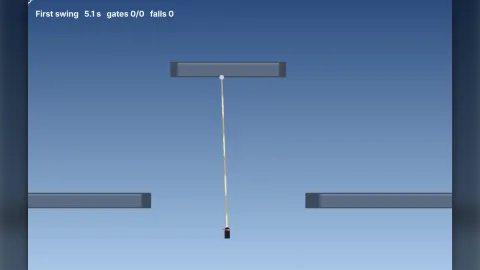

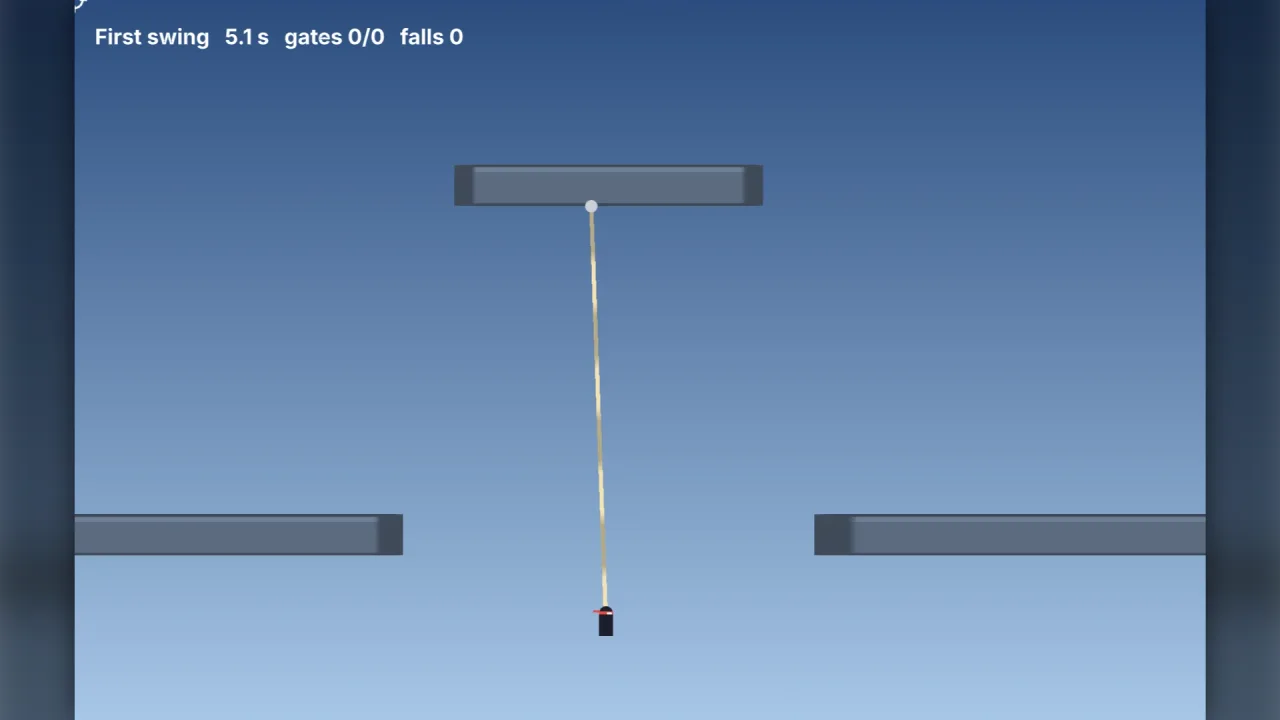
The pack
ropeSwing
function ropeSwing(): Pack<{ ropeSwing: RopeSwingApi }>The rope-swing pack: game.ropeSwing, swinging ropes for bodies on a physics-2d world.
Functions
createRopeSwing
function createRopeSwing(world: World, body: number, options: RopeSwingOptions): RopeSwingMake a rope for a body on a world.
segmentEnters
function segmentEnters(ax: number, ay: number, bx: number, by: number, s: SwingSurface): number | nullWhere a segment first enters a convex surface, as a fraction along it, or null when it does not. Edges do not count.
surfaceCorners
function surfaceCorners(s: SwingSurface): [number, number][]A surface's corners, in order.
Constants
ropeSwingPresets
const ropeSwingPresets: { readonly ninja: { readonly range: 420; readonly wrap: true; readonly payOut: true; readonly mantle: 0; readonly reelSpeed: 220; }; readonly grapple: { readonly range: 340; readonly wrap: false; readonly payOut: false; readonly mantle: 64; readonly reelSpeed: 260; }; }The two presets: the Worms ninja rope, and a straight grapple arm with a mantle.
Types
RopeSwing
interface RopeSwingThe rope, live.
readonly attached: boolean— Whether the rope is hooked.readonly mantling: boolean— Whether the body is climbing onto a ledge (a mantle); the rope has let go once it is up.fire(target: SwingPoint): { surface: string; x: number; y: number } | null— Fire at a point: hook the first hookable surface along the line within range. Lets go of any rope first.release(): void— Let go: the body keeps its momentum.reel(direction: number, dt: number): void— Reel in (1) or pay out (-1), any amount between, fordtseconds.step(dt: number): void— After each world step: wrap and unwrap, move the bend, set the length.readonly length: number— The rope's whole length (hook to body, along its bends), or 0 when not hooked.line(): SwingPoint[]— The rope's line: hook, bends, then the body; empty when not hooked.readonly taut: boolean— Whether it is pulled straight between its last bend and the body.readonly hook: { surface: string; x: number; y: number } | null— Where it is hooked, and to what.drain(): RopeSwingEvent[]— What happened since the last drain, oldest first.
RopeSwingApi
interface RopeSwingApiWhat the rope-swing pack adds to a game: game.ropeSwing.
create: typeof createRopeSwing— Make a rope for a body on a physics-2d world.presets: typeof ropeSwingPresets— The ninja rope and the grapple arm.
RopeSwingEvent
type RopeSwingEvent = | { kind: 'hook'; surface: string; x: number; y: number } | { kind: 'miss' } | { kind: 'wrap'; x: number; y: number } | { kind: 'unwrap'; x: number; y: number } | { kind: 'release' } | { kind: 'jam' } | { kind: 'mantle'; surface: string }What happened, for the caller and the presenter.
RopeSwingOptions
interface RopeSwingOptionsHow the rope behaves.
surfaces: SwingSurface[]— The surfaces it hooks and wraps round. A surface is hookable unless it sayshookable: false.range?: number— The furthest it reaches, and the longest it pays out to. Default 420.shortest?: number— The shortest it reels in to, beyond its bends. Default 16.reelSpeed?: number— How fast it reels, units per second. Default 220.wrap?: boolean— Wrap round corners (the ninja rope). False is a straight arm that lets go when terrain crosses it. Default true.payOut?: boolean— Allow paying out, past the length it hooked at. Default true.mantle?: number— Mantle: reeled in to within this of a hook on a ledge's top, or near one of its top corners (within 40 on any face), the body climbs up over the edge onto the top and lets go. Default 0 (off). The grapple preset uses 64: a body pressed against the ledge below its hook is about that far from it.mantleTime?: number— Seconds a mantle takes. Default 0.3.bends?: number— The most bends the rope keeps; past it the rope jams and lets go. Default 24.
SwingPoint
interface SwingPointA point.
x: number— Across.y: number— Down.
SwingSurface
type SwingSurface = | { id: string; kind: 'box'; x: number; y: number; width: number; height: number; hookable?: boolean } | { id: string; kind: 'polygon'; points: ReadonlyArray<readonly [number, number]>; hookable?: boolean }A surface the rope can hook and wrap round: a convex polygon, or a box (centre and size, unturned).