
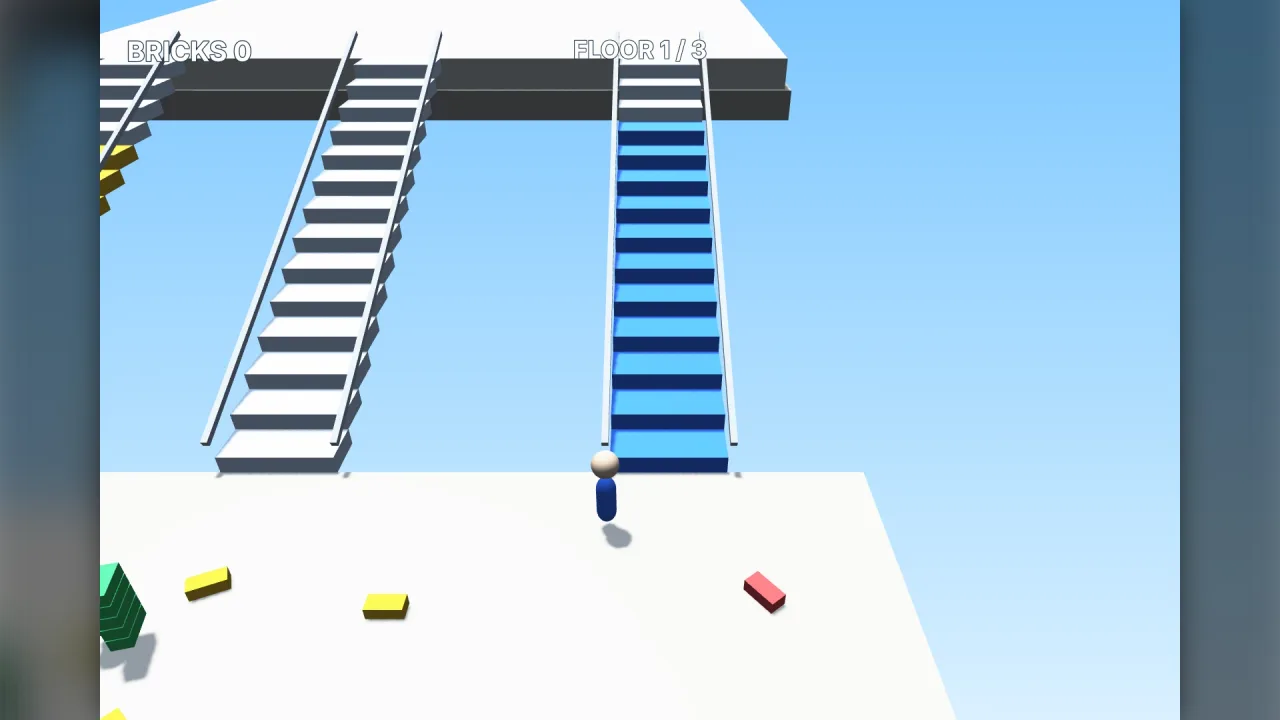
The pack
collectBuild
function collectBuild(): Pack<{ collectBuild: CollectBuildApi }>The collect-build pack: game.collectBuild, Bridge Race's rules. No options.
Helpers
courseDefaults
const courseDefaults: Required<CourseOptions>The value used for each course option left out of CourseOptions.
createBridgeAutopilot
function createBridgeAutopilot(game: BridgeRaceGame, id = 'you'): BridgeAutopilotThe player's autopilot.
createBridgeRace
function createBridgeRace(options: BridgeRaceOptions = {}): BridgeRaceGameStart a race. Throws, with every fault, on options validateBridgeRace refuses.
planCourse
function planCourse(options: CourseOptions, colours: number, rng: Rng): CourseLay out a course for colours players.
validateBridgeRace
function validateBridgeRace(options: BridgeRaceOptions = {}): string[]Check a race's options. Empty when it can be played.
Types
BridgeAutopilot
interface BridgeAutopilotA player that picks the way to go.
next(): { x: number; y: number }— The way to go now: x across, y up the course.
BridgeEvent
type BridgeEvent = | { kind: 'pick'; runner: string; loose: boolean } | { kind: 'lay'; runner: string; stair: number; step: number; over: number } | { kind: 'blocked'; runner: string; stair: number } | { kind: 'floor'; runner: string; floor: number } | { kind: 'knock'; runner: string; victim: string; dropped: number } | { kind: 'finish'; runner: string; place: number } | { kind: 'end'; winner: string }Something that happened.
BridgeRaceGame
interface BridgeRaceGameA race.
readonly state: BridgeRaceState— The live state, changed in place as the race advances; useview().statefor a copy.readonly course: Course— The course laid out from the seed and the course options.readonly options: Readonly<{ speed: number; climb: number; carry: number; knock: boolean; players: number }>— The speed, climb, carry, knock and players actually in use, after defaults are filled in.move(x: number, y: number): void— The player's way to go: x across, y up the course (towards the finish).step(dt: number): void— Advance, in fixed steps of 1/60 s.suggest(id: string): { x: number; y: number }— The way a rival would go now, for any runner: what the autopilot plays by.view(): BridgeView— What is where now: a copy of the state and the bricks lying on floors.drain(): BridgeEvent[]— Take the events since the last drain, oldest first (at most the latest 512), and clear them.snapshot(): BridgeRaceSave— Save the race as plain JSON; the course is not included, as it follows from the seed and options.restore(save: BridgeRaceSave): void— Return to a saved race and discard pending events; the save must come from a race with the same seed and options.
BridgeRaceOptions
interface BridgeRaceOptionsA race's options.
seed?: number— Default 1.players?: number— Runners, the player's first. Default 4.course?: CourseOptions— The course.speed?: number— Units a second on a floor. Default 6.climb?: number— Speed on a staircase, as a share ofspeed. Default 0.75.respawn?: number— Seconds before a picked-up brick comes back. Default 3.carry?: number— The most bricks a runner carries. Default 40.knock?: boolean— Runners knock each other down. Default true.stun?: number— Seconds a knocked runner lies down. Default 1.2.skill?: number— How sharp the rivals are, 0 to 1. Default 0.7.names?: string[]— Runners' names.
BridgeRaceSave
interface BridgeRaceSaveA race saved as plain JSON (the course follows from the seed).
state: BridgeRaceState— The race state: time, phase, winner, runners and the colour laid on each step.spots: SpotState[]— Whether each brick spot has its brick and, if not, the seconds until it returns; inCourse.spotsorder.loose: Loose[]— The scattered bricks lying where runners fell, each with its floor and position.serial: number— Count of scattered bricks made so far, used to give each a fresh id.rng: RngState— State of the random generator that scatters bricks and varies the rivals' thinking time.carry: number— Seconds ofsteptime not yet spent, less than one 1/60 s tick.
BridgeRaceState
interface BridgeRaceStateWhere the race stands.
time: number— Seconds of play so far; stops when the race is over.phase: 'play' | 'over'—'play'while the race runs,'over'once the first runner reaches the finish.winner: string | null— Id of the first runner to finish, or null while the race is on.runners: Runner[]— Every runner, the player's first; the runner's index is its colour.steps: number[][]— Each staircase's steps, by the colour laid on them (-1 for none).
BridgeView
interface BridgeViewWhat is where.
state: BridgeRaceState— A deep copy of the race state, safe to keep after the race moves on.bricks: { id: number; floor: number; x: number; y: number; z: number; colour: number }[]— Bricks lying on floors: a colour's own, or loose (colour -1) after a fall.
CollectBuildApi
interface CollectBuildApiWhat the collect-build pack adds to a game: game.collectBuild.
create: typeof createBridgeRace— Start a race.validate: typeof validateBridgeRace— Check a race's options.course: typeof courseDefaults— The built-in course's numbers.autopilot: typeof createBridgeAutopilot— A player for an attract mode or a test.
Course
interface CourseA course.
floors: Floor[]— The floors from the ground up; the last is the finish platform, so there areoptions.floors + 1.stairs: Stair[]— Every staircase, floor by floor;options.bridgesleave each floor but the finish.spots: Spot[]— Every brick spot on every floor but the finish:options.bricksof each colour per floor.options: Required<CourseOptions>— The layout options after filling incourseDefaults.
CourseOptions
interface CourseOptionsHow a course is laid out.
floors?: number— Floors to cross before the finish. Default 3.bridges?: number— Staircases from each floor to the next. Default 3.steps?: number— Steps on a staircase. Default 14.width?: number— A floor's width, across. Default 26.depth?: number— A floor's depth, from its bottom edge to the staircases. Default 20.run?: number— A staircase's length on the ground. Default 14.rise?: number— How high each floor is above the last. Default 6.stairWidth?: number— A staircase's width. Default 2.6.bricks?: number— Brick spots of each colour on a floor. Default 10.
Floor
interface FloorA floor: a rectangle at a height. The last is the finish platform.
index: number— Position inCourse.floors, 0 for the ground floor; the last is the finish platform.x: number— Left edge across the course, in world units; 0 for every floor.y: number— Near edge, in world units along the course (the y axis); the next floor startsdepth + runfurther on.w: number— Width across (the x axis), in world units.h: number— Depth along the course (the y axis), in world units; the finish platform is 8.z: number— Height of the floor's surface, in world units:index * rise.finish: boolean— Whether this is the finish platform at the top, which has no staircases leading up from it.
Runner
interface RunnerA runner.
id: string— Stable identifier:'you'for the player,'rival1','rival2'and so on for the rest.name: string— Display name fromBridgeRaceOptions.names(cycled if there are fewer names than runners).colour: number— Its colour: its place in the list of runners.player: boolean— Whether the player steers this runner; true only for the first.x: number— Position across the course, in world units.y: number— Position along the course (towards the finish), in world units, measured from the course start.z: number— Its height: a floor's, or partway up a staircase.floor: number— The floor it is on, or last left; the highest it has reached.reached: number— Index of the highest floor it has reached, 0 at the start; its colour's bricks show on floors up to this one.stair: number | null— The staircase it is on, and the top step it stands on (-1 at the foot).step: number— Index of the top step it stands on while climbing; -1 at the foot of a staircase or when on no staircase.stack: number— Bricks it carries, up to thecarryoption.stunned: number— Seconds it still lies down, and still cannot be knocked again.immune: number— Seconds before it can be knocked down again; set to the stun time plus 1 s after a knock.place: number— Its place at the finish, or 0.dx: number— The way it is going.dy: number— Its heading along the course, positive towards the finish; a heading longer than 1 is cut to 1 when it moves.plan: { mode: 'collect' | 'climb'; want: number; stair: number | null; think: number }— A rival's plan.
Spot
interface SpotA brick spot.
id: number— Unique within the course, counting from 1; a brick lying on the spot reports this id.floor: number— Index of the floor the spot is on.colour: number— Colour of the runner who may pick the brick up: that runner's place in the race, from 0.x: number— Position across the course (the x axis), in world units.y: number— Position along the course (the y axis), in world units, measured from the course start rather than the floor's edge.
Stair
interface StairA staircase from floor from to the next, up the y axis from y0 to y1.
index: number— Position inCourse.stairs; also the staircase's row in the race'ssteps.from: number— Index of the floor this staircase leaves; it arrives on the next one up.x: number— Centre of the staircase across the course (the x axis), in world units.y0: number— Where the staircase starts along the course (the y axis), in world units: the far edge of floorfrom.y1: number— Where the staircase ends along the course (the y axis), in world units: the near edge of the next floor.z0: number— Height at the foot, in world units: the surface of floorfrom.z1: number— Height at the head, in world units: the surface of the next floor.width: number— Width across the course (the x axis), in world units.steps: number— Number of steps, each(y1 - y0) / stepslong.